Introduction
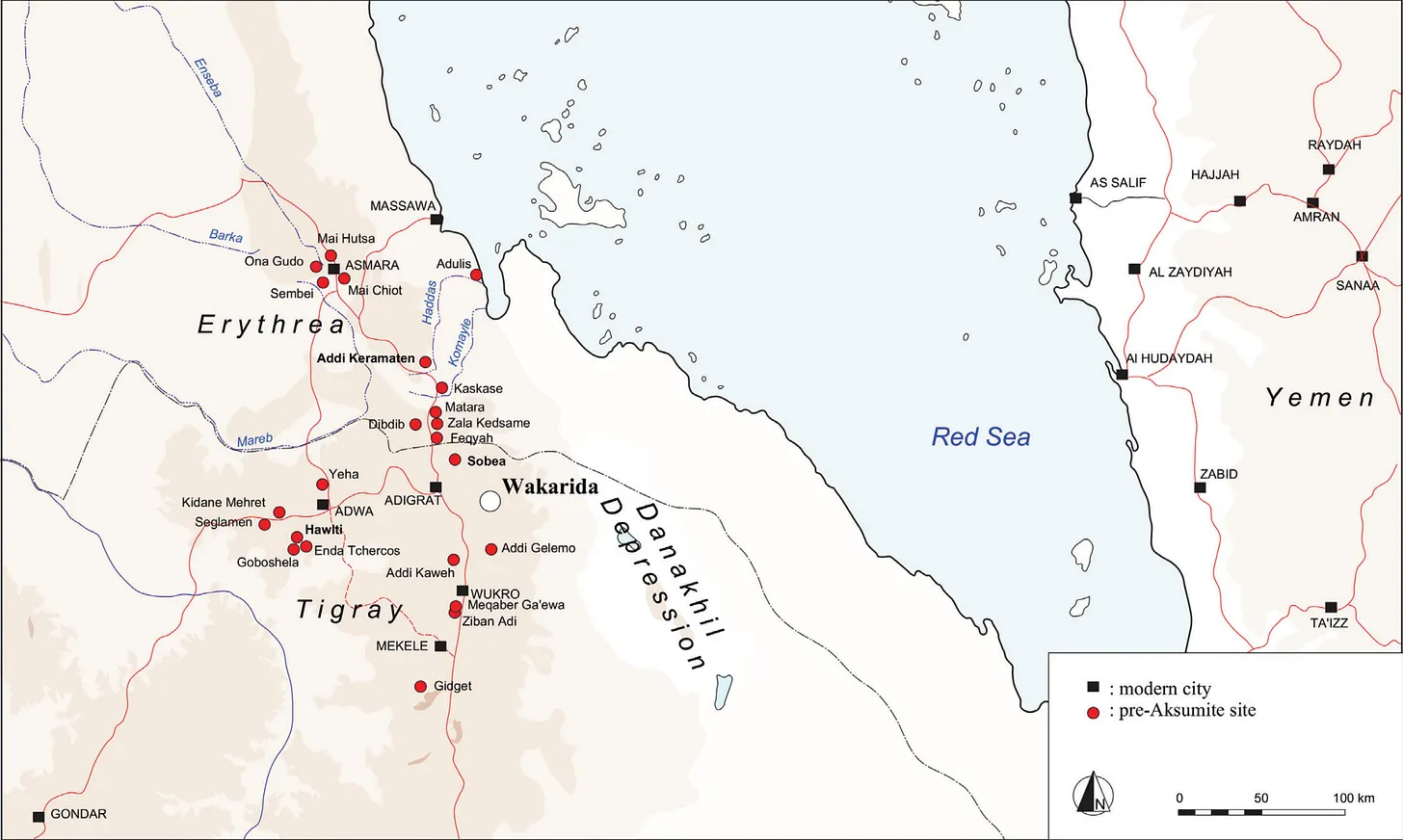
At the dawn of the 3rd century AD, the earliest Aksumite ruler attested in historical records emerges. He is named as Emperor GDR (possibly vocalised Gadar or Gadarat1 or Gedur, Gadura, Gedara2) in the inscription from Addi Gelemo in Tigray. While in the inscriptions discovered in Yemen, his name is GDRT (possibly vocalised Gadarat3). These are the same person4.
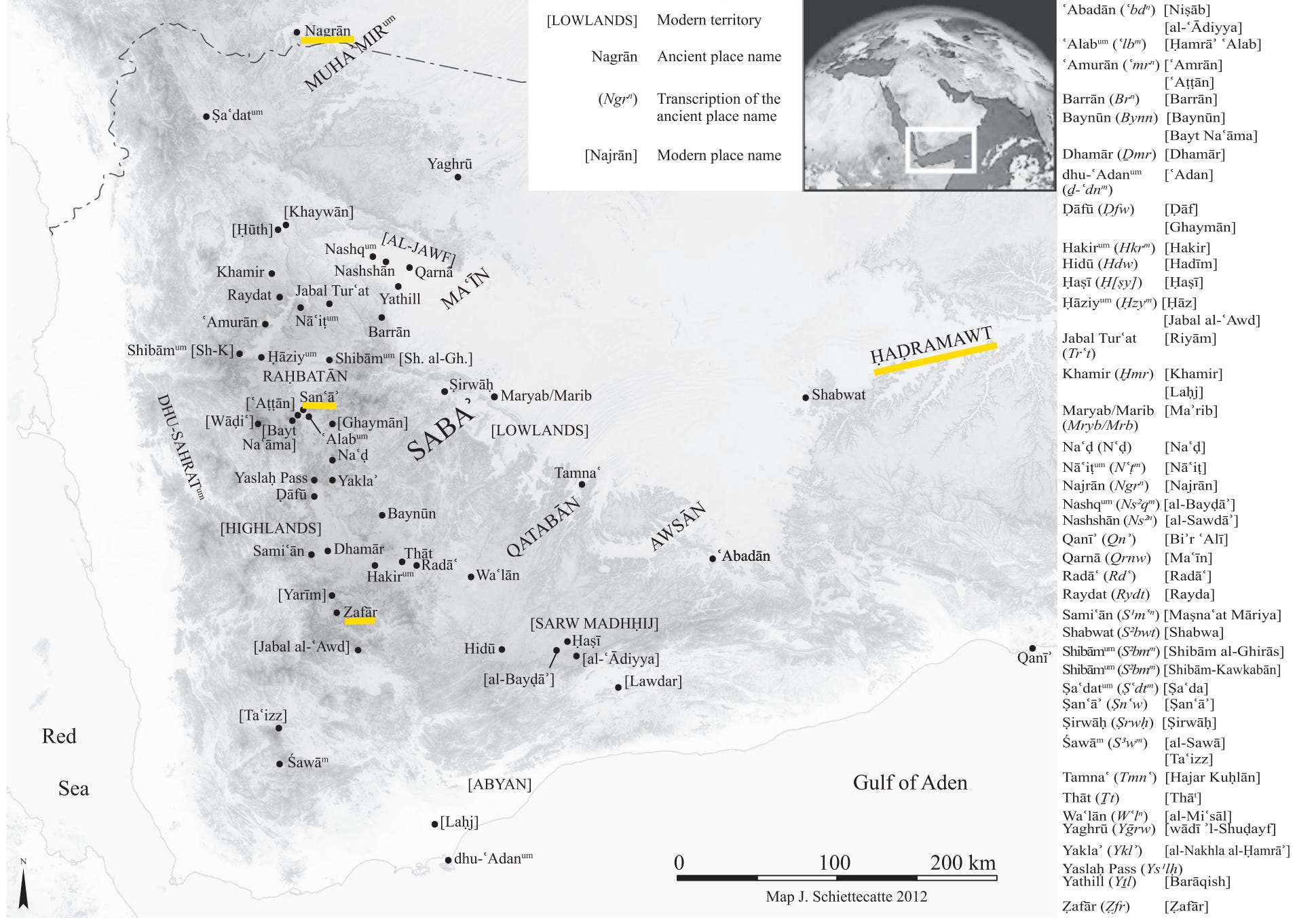
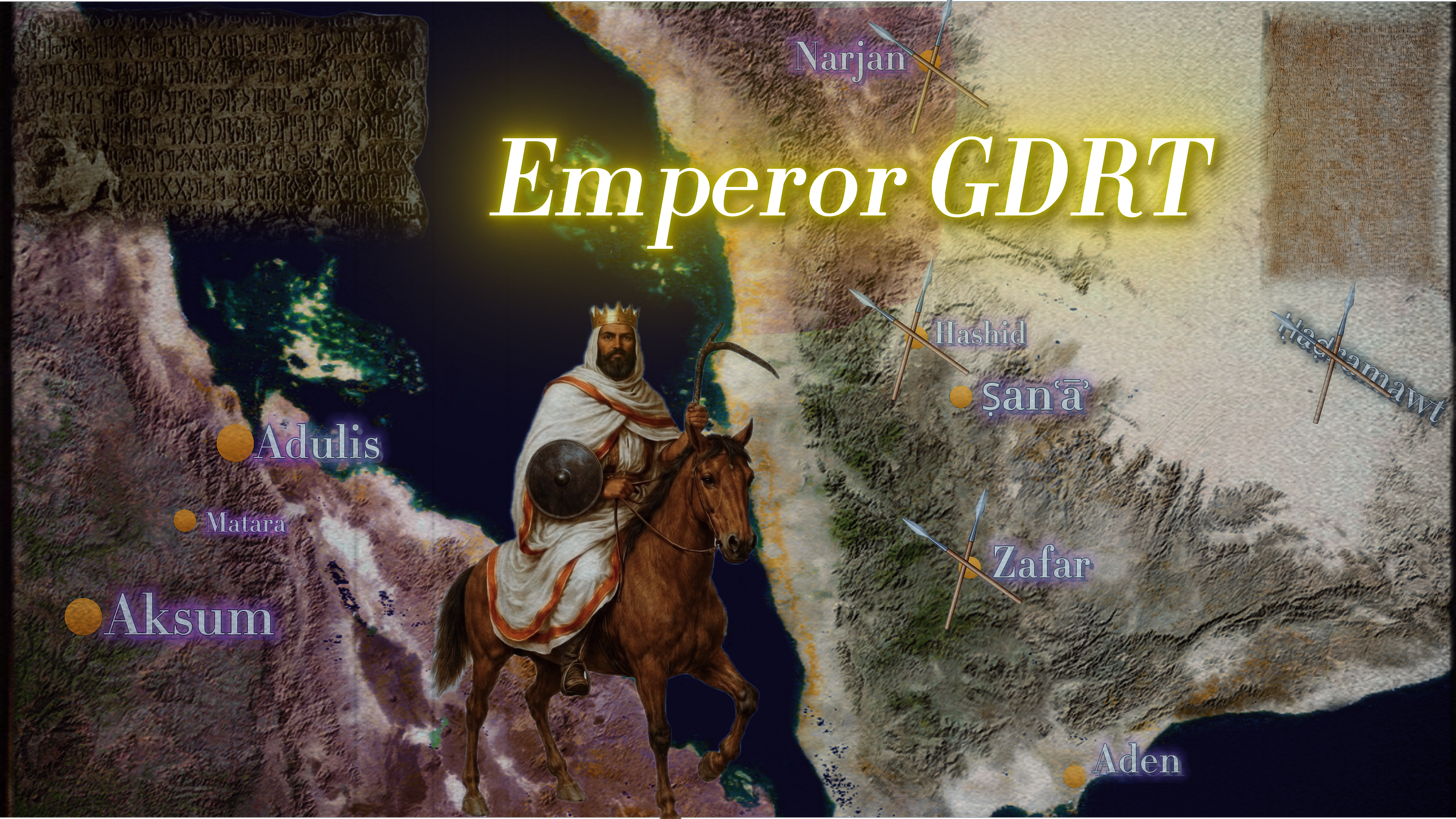
During his reign, he became deeply involved in conflicts across South Arabia. In the north, around Najrān5, and further south near Ṣanʿāʾ6, he confronted the forces of Saba. In the west, he occupied the Himyarite capital of Ẓafār7, while to the east, he supported the Sabaeans in their struggle against Ḥaḍramawt8.
As will become clear later in this article, his engagements were not confined to military confrontation alone. Emperor GDR also pursued an active diplomatic policy, brokering alliances with rival South Arabian kingdoms when it suited his interests and dispatching delegations as part of his political strategy9.
Indigenous Inscription
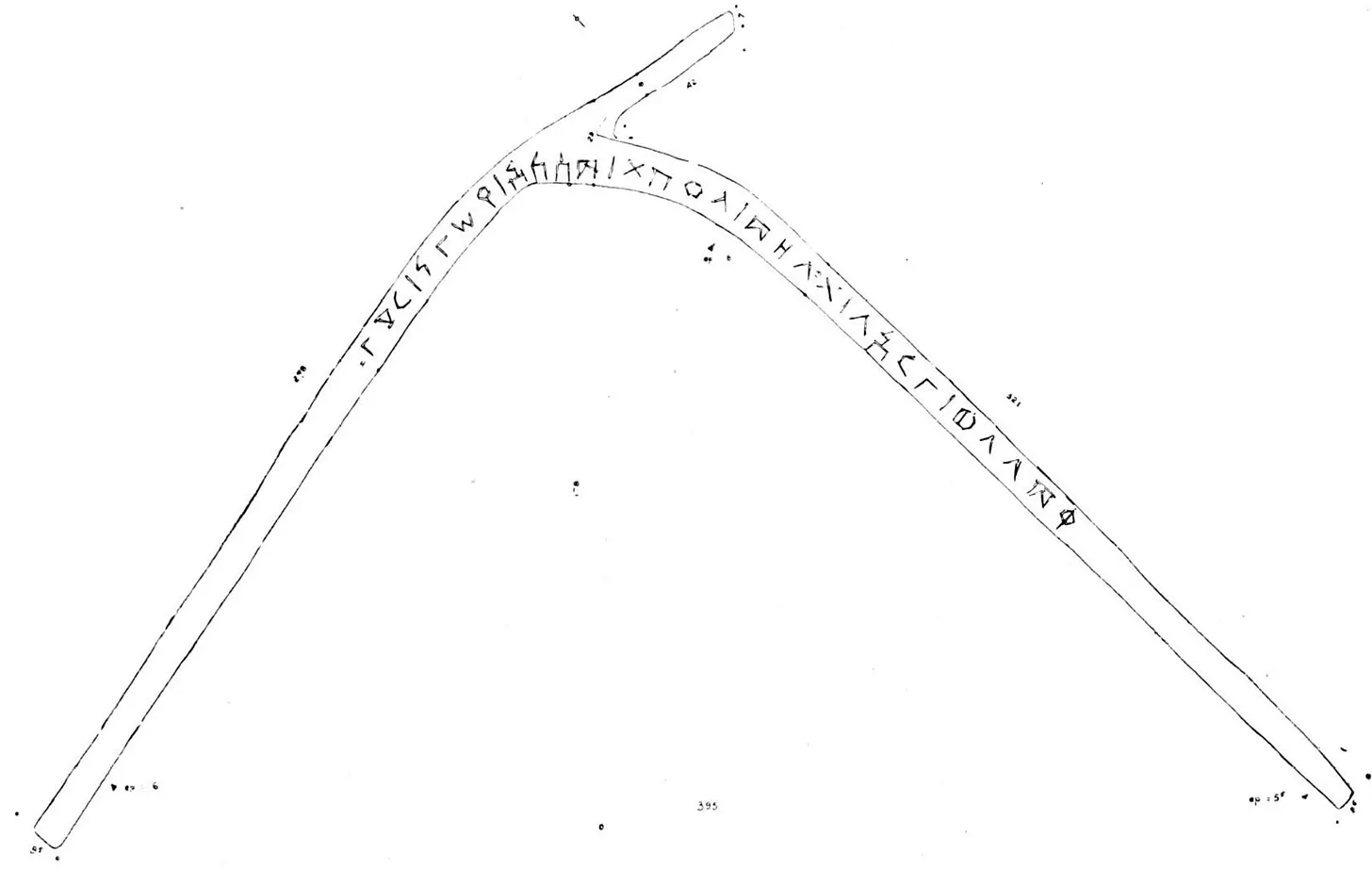
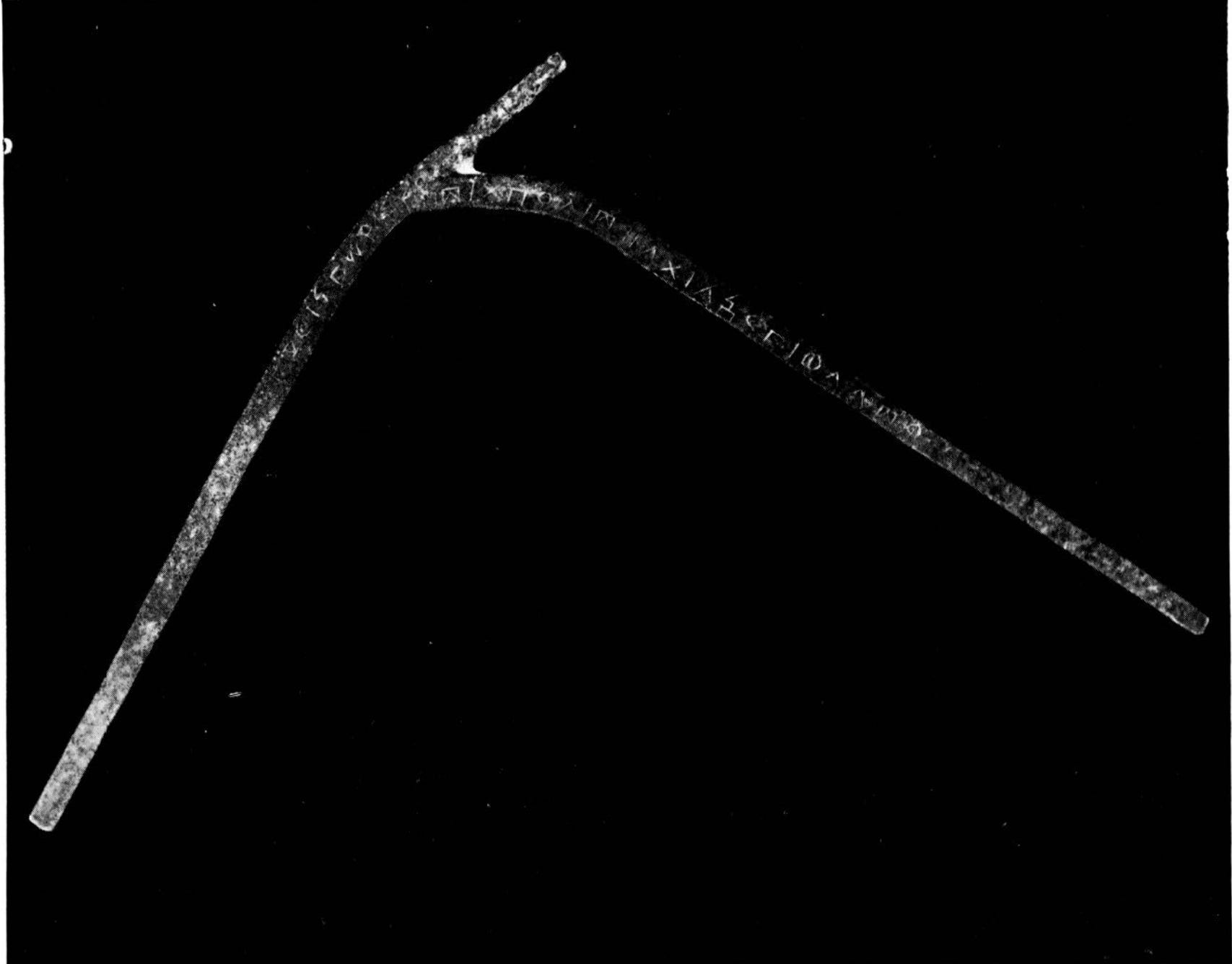
In 1953–54, at Addi Gelemo in eastern Tigray, a bronze sceptre-like object, measuring 55 cm and weighing 455 grams, was discovered10. The piece bears an inscription in unvocalised proto-Geʿez that mentions a king of Aksum named GDR.
The inscription on the sceptre is as follows:
“gdr / ngśy / ʾksm / tbʿl / mzlt / lʾrg / wllmq” - Encyclopaedia Aethiopica D-Ha, pg 718.
There have been several different interpretations by scholars regarding the deciphering of the inscription on the sceptre. I will first present some of them and then make an educated guess on what it might have meant.
Interpretations
A. J. Drewes & A. Caquot
“GDR, king of Aksum, seized the passages of RG and LMQ” - Source: Les monuments recueillis à Maqallé (Tigré), pg 37.
Manfred Kropp
“GDR, King of Aksum, may the mzlt of those of RG and LMQ enrich him”
or
“GDR, King of Aksum, may his mzlt enrich RG and LMQ”
Sources: Collection of Ethiopian Inscriptions of the Pre-Aksumite and Aksumite Periods, pg 160.
&
Ein Gegenstand und seine Aufschrift RIE 180 = JE 5, pg 141.
23 more words
Alexander Sima
“GDR, king of Aksum, gave (this) sceptre into the possession of (the sanctuaries) ʾRG and LMQ.” - Alexander Sima
Source: Encyclopaedia Aethiopica D-Ha, pg 719.
My opinion
To decipher the inscription, we must first break the sentence down word by word and establish the meaning of each term.
GDR → is likely a reference to the same king GDRT known from South Arabian inscriptions dated to the early 3rd century AD. He may also correspond to the ruler recorded in several Ethiopian king lists under names such as Agdar, ʿAgdar, ʿAgdor, ʿAgdur, or Za-Gadur/Gadur11. Notably, in some regnal/kings list traditions, Agdur appears as a predecessor of Abreha and Asbeha (Ezana and Saizana)12, which aligns well with the proposed historical placement of GDR roughly a century before the reign of Ezana and Saizana.
ngsy → This one is straightforward: it is the Geʿez term ነጋሢ (nǝgśi), meaning “king”13.
ʾksm → is another straightforward term, simply referring to the city of Aksum14.
tbʿl → Scholars such as Manfred Kropp, André Caquot, and D. A. Johannes have theorised that this word derives from a root meaning “to possess”, comparable to Hebrew baʿal (“master of”, “to have control over”) and በዓል (bälaʾ) in Geez15, which likewise means “master of”16.
mzlt → Here, Manfred Kropp suggests that the term refers to the object itself, comparable to Sabaean ZLT, which can denote a votive object17. This is also the conclusion reached by Abraham J. Drewes.
lʾrg → There are two main theories. The first holds that lʾrg refers to a place-name. During the campaigns of Ezana and Saizana in the early 4th century AD (DAE no. 9)18, conducted against the Agʷēzāt, a locality named እርግ (ʾEreg [?]) is mentioned. Some scholars have hypothesised that this may be identical with lʾrg19. The location of the Agʷēzāt isn’t completely known; however, some scholars theorise that this might be a term for the Agazi20, hence the location of lʾrg might be in southern Eritrea or northern-eastern Tigray.
wllmq → This term doesn’t appear in other inscriptions; therefore, the meaning isn’t certain. However, some scholars theorise that it is likely a toponym23, since it appears contextually alongside lʾrg, which itself is probably a place name. However, A. Jamme proposed that it refers instead to the god Ilumquh, a suggestion with which I disagree with as it’s never attested to in the form wllmq24.
After analysing each word individually, a plausible conclusion emerges: the inscription on the sceptre likely records a dedication by an Aksumite king named GDR to the important locations of lʾrg (situated somewhere in the Agazi/Agaw lands) and wllmq (unknown location).
Therefore, I propose the following:
“GDR, king of Aksum, possesses the sceptre for lʾrg and wllmq.”
Another plausible interpretation might be that of scholar Alexander Sima:
“GDR, king of Aksum, gave (this) sceptre into the possession of (the sanctuaries) ʾRG and LMQ.” - Alexander Sima
Source: Encyclopaedia Aethiopica D-Ha, pg 719.
South Arabian Inscriptions
CIH 308/CIH 308 bis
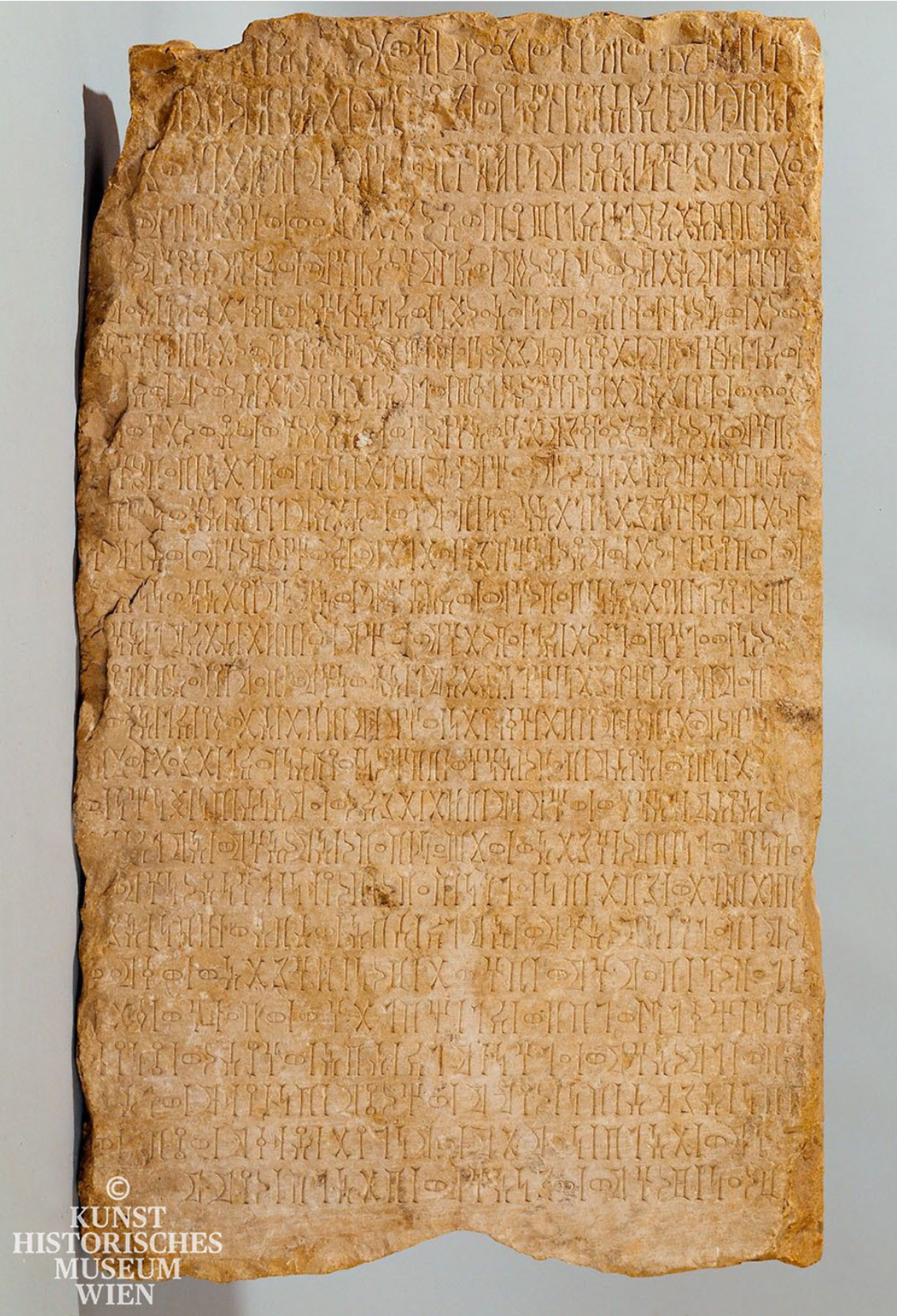
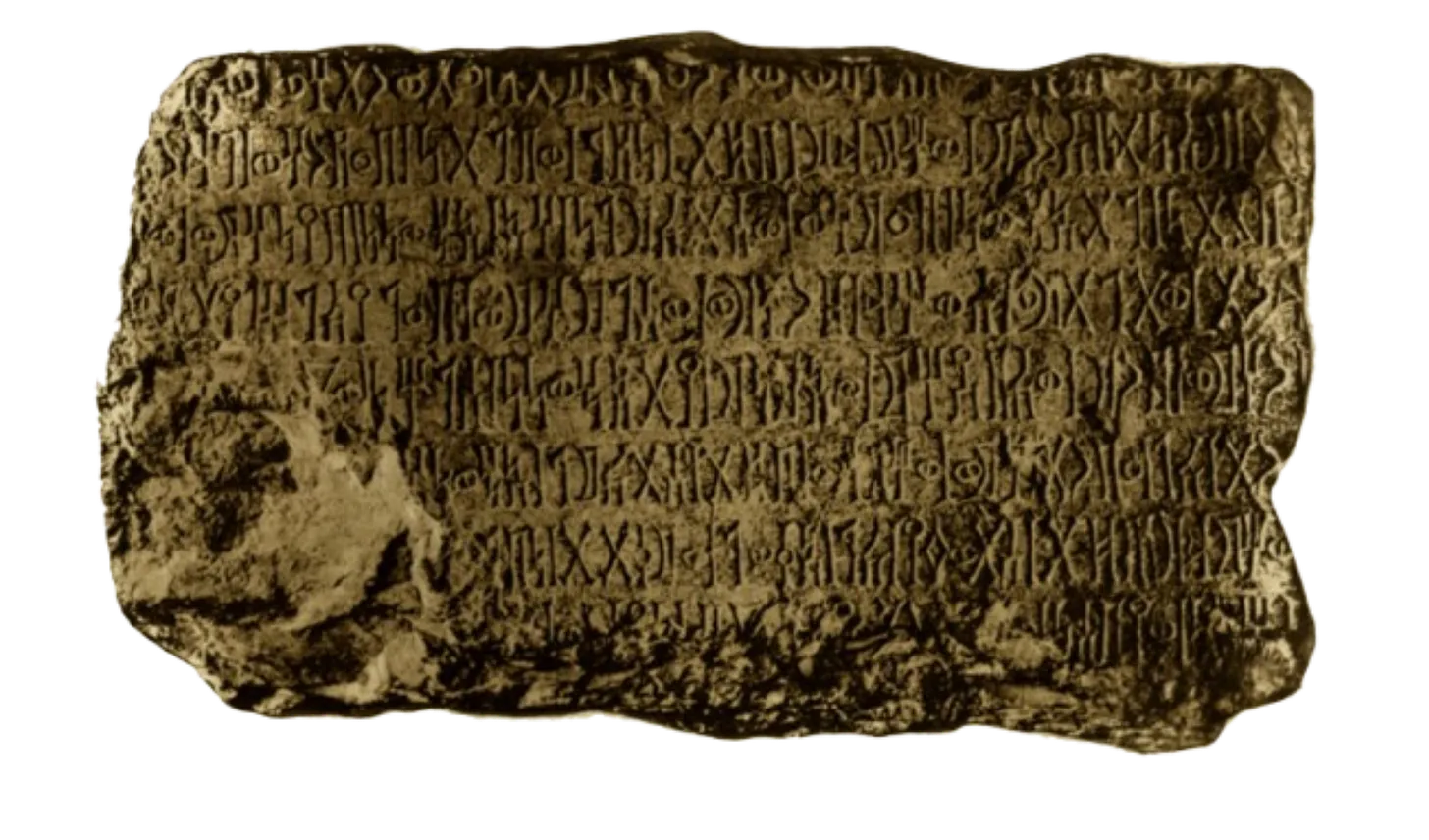
The earliest South Arabian inscription referring to GDR dates to around 200 AD and was discovered at Riyām, in present-day Yemen (CIH 308 and CIH 308 bis). In total, sixteen closely related inscriptions have been identified at the site25. Most are fragmented and difficult to reconstruct; however, two survived in a comparatively well-preserved state.
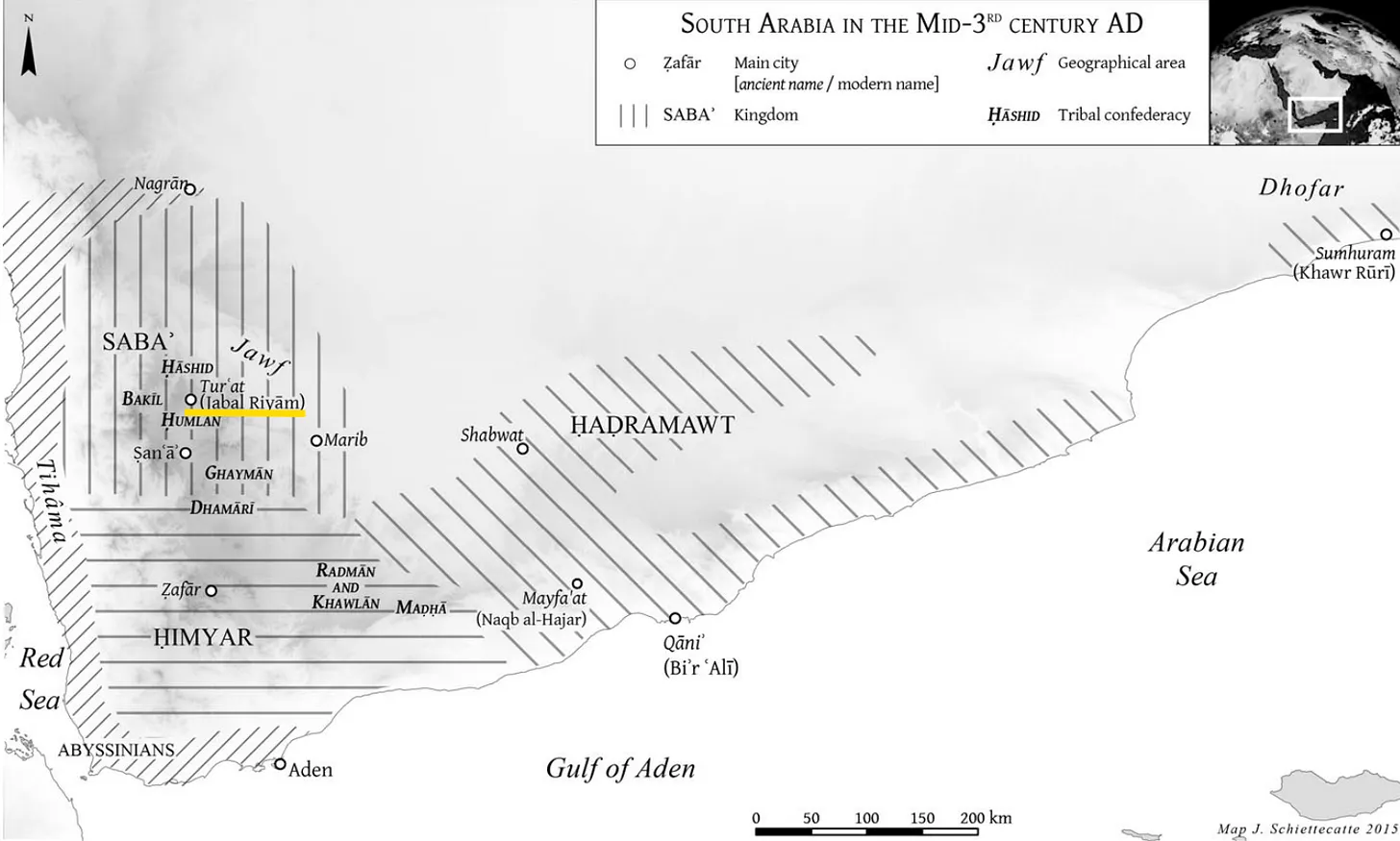
These inscriptions were composed during the reigns of Sabaean King ᶜAlhān Naḥfān & his sons ŠaʿirumʿAwtar and YarīmʿAyman26. The inscription records, among other events, the establishment of a treaty with GDRT, the king of the Habshites (mlk Ḥbstn).
The inscription reads as follows:
ʿlhn Nhfn and his son S²ʿrm ʾwtr king of Sabaʾ and
Yrm ʾymn king of Sabaʾ dedicated to their Patron Tʾlb Rymm Lord
of Trʿt thirty statues of bronze in praise because Tʾlb favoured them
by completing (the collection of) the incense (ṭyb and ṣrf) which they asked for (?) and planted for their place
(sanctuary?) Yhgl, a hundred measures of ṣrf and all their plantations and
all the irrigation devices and supports up to the watered ground (or, ʿmid trees) and young plantations and all the channels (?) and vegetable gardens up to the watered ground (or, ʿmid trees),
and all the channels of the watering gear and the drinking place up to the well, and the ...(?)... of Qyhrn which
they ..(?).. towards the north, towards the city Lqṭ; and for the cella (or, peristyle) eight srwr (measures) and all their
presses (?) (or, plantations?) altogether and the irrigation of the orchard (or, vegetable garden) and its channels and its sluices (?) and its ..(?).., and all
the mid part of this cella (or, peristyle) altogether. In gratitude because, when a mission had been sent to him
by Gdrt king of the Habashites seeking an alliance with him, this alliance was duly concluded between the Sabaeans and
Gdrt and the army of the Habashites; whereby they swore to keep a united front, for war or peace,
in relation to anyone committing aggression against them, and that in truth and good faith there should be an alliance between Silḥīn
and Zrrn, that is to say, between ʿlhn and Gdrt for the rest of their lives. In gratitude because their alliance
with the Habashite king was thus concluded according to the model of the alliance they had (earlier) concluded with Ydʿʾb Ġyln
king of Ḥaḍramawt, before this present dedication. In gratitude also because he protected all the ʾqwl and
mqtt whom the contracting parties sent to each other, on sea or land, and all the subventions and gifts
which they exchanged with each other. Also in gratitude because a defeat was inflicted to ʿmʾns¹ of Sanḥān and
the commune of Ḫwln in the war which the latter instigated and sought against their lords the kings of Sabaʾ:
for they had despatched S²bt bin al-ʿAlī to the Raydanites in order to gain the latter’s support for
war against their lords the kings of Sabaʾ, and some (Sabaean) communes campaigned
in order to take reprisals on them for this war which they had initiated, and overcame
the folk of al-Ḥaql and ravaged all its lands; and subsequently these pledged faith
to their lord ʿlhn and despatched two
hostages, named ʾs²ms¹ of Rymm and Ḥārith of Ydm. And may Tʾlb grant
them favours and good luck and put to rout and
defeat their wars and their enemies; by Tʾlb Rymm.
Source: CIH 308
408 more words
Analysis
From this inscription, we gain valuable insight into the reign of Emperor GDR around 200 AD. His involvement in South Arabian politics implies that he had already consolidated control over his own dominion (the northern highlands of Ethiopia and Eritrea). Furthermore, his command over Adulis is evident, as a substantial naval force would have been necessary to transport troops across the Red Sea. This aligns with the conquests described in the Monumentum Adulitanum, which likely took place only a few decades before 200 AD.
We can also infer that GDRT was a pragmatic ruler who valued diplomacy. Lines 10 and 11 of the inscription indicate that it was GDRT himself who initiated a diplomatic mission to seek an alliance, and that this treaty served both offensive and defensive purposes.
Lines 13 and 14 refer to Silḥīn (possibly vocalised as Salhen), the palace of King ᶜAlhān Naḥfān in Maib, Yemen, and contrast it with the palace of GDR, located in a place called Zrrn (possibly vocalised as Zararan), presumably somewhere within Aksum or its periphery27.
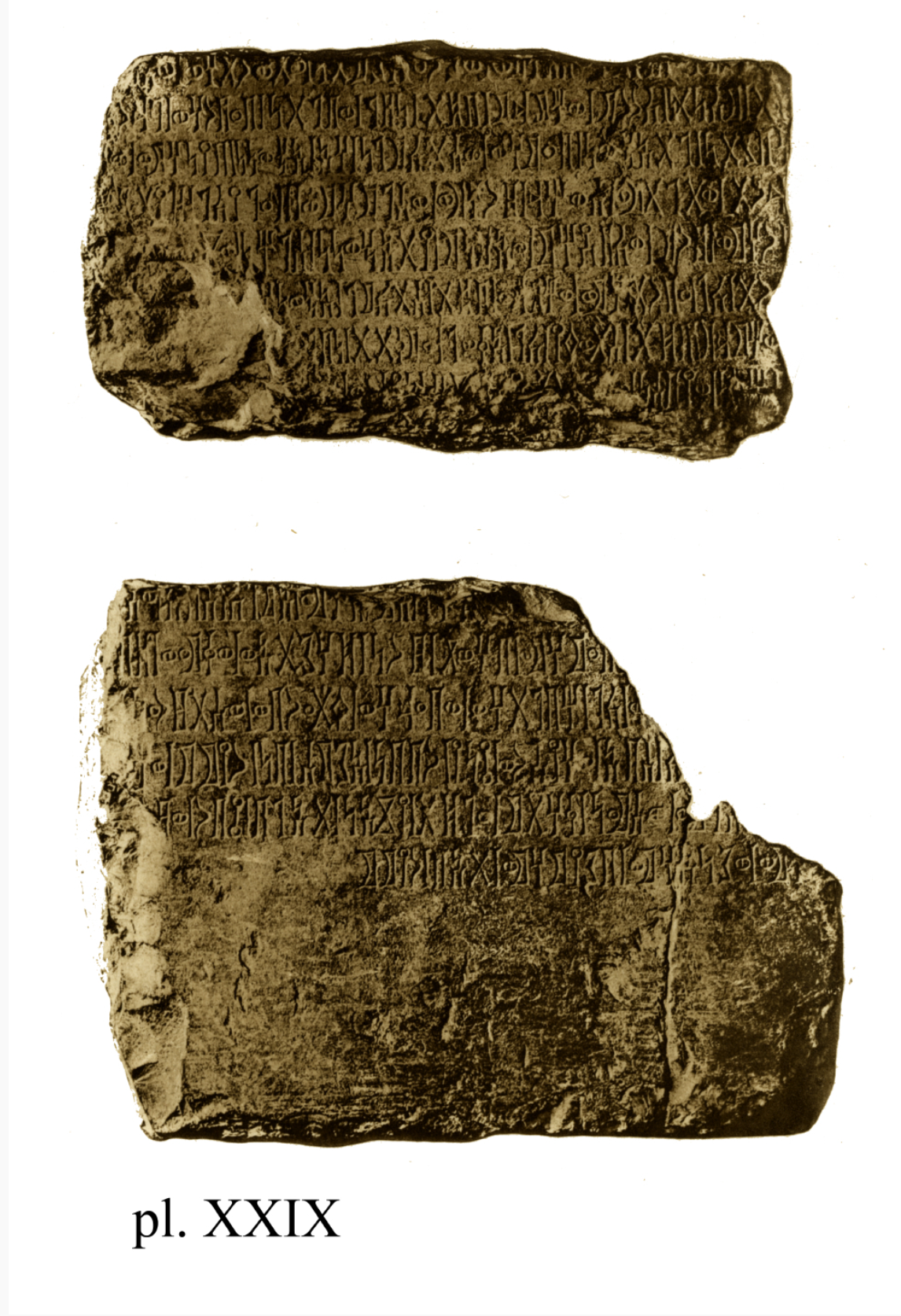
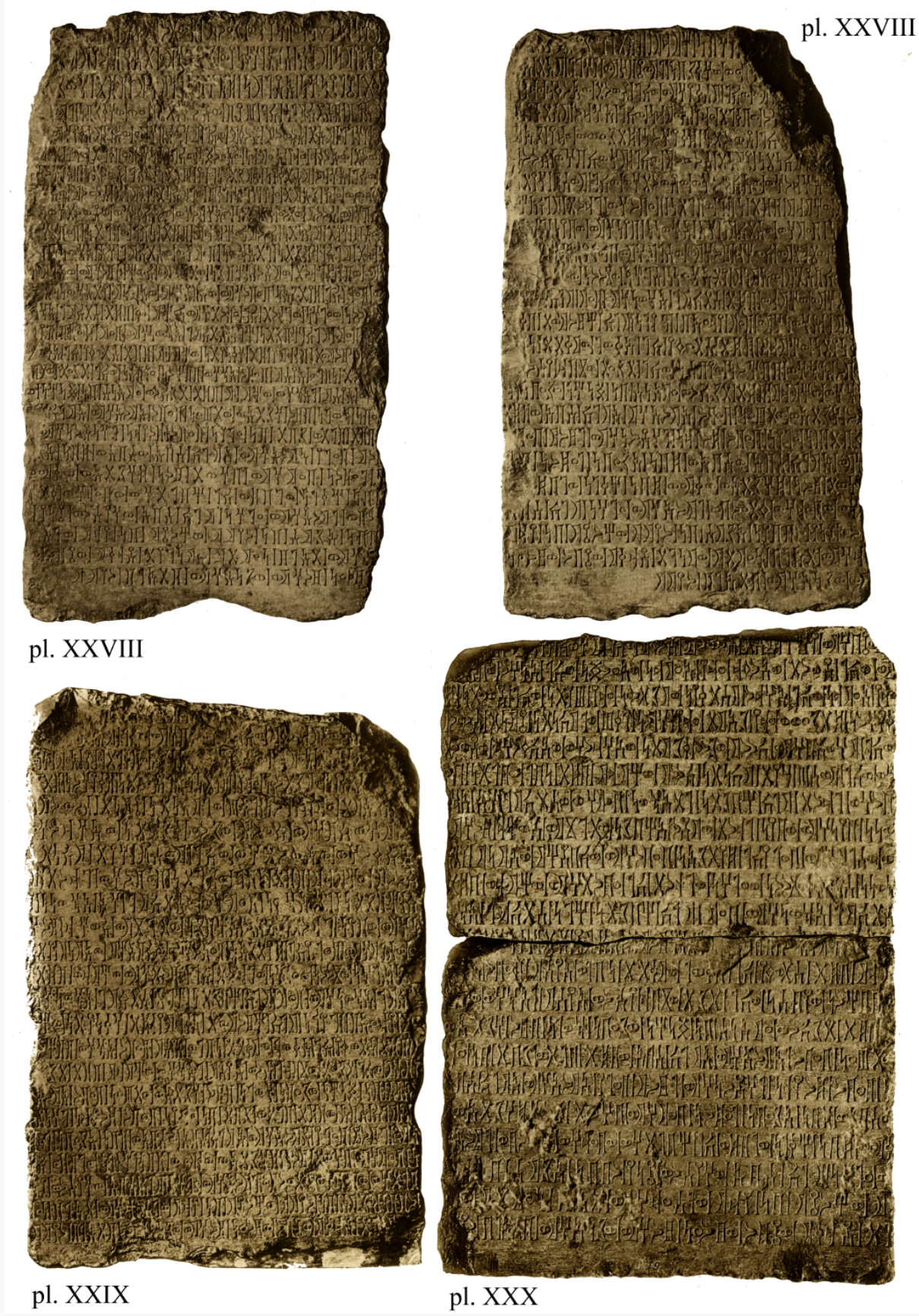
NNAG 13+14
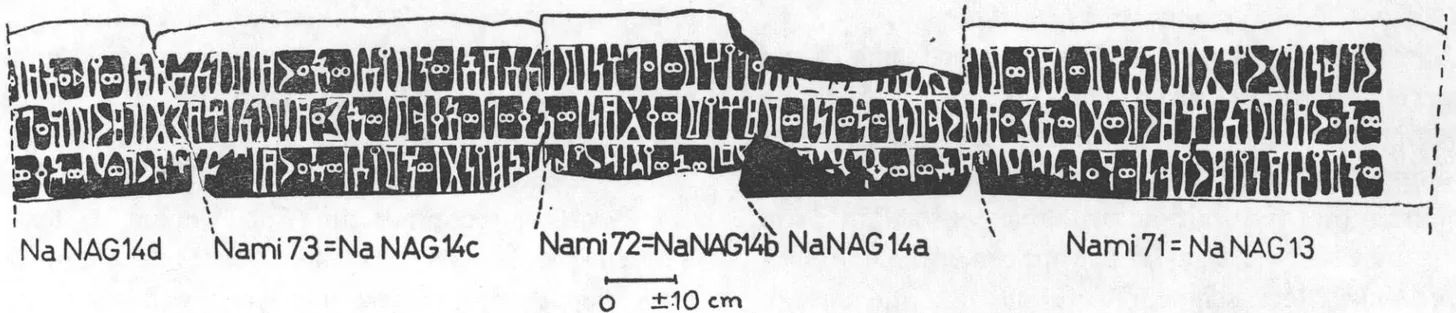
Chronologically, the second South Arabian inscription datable to the reign of GDRT is NNAG 13+1428. Although brief, this inscription is significant in that it reflects a Himyarite perspective. At this time, Himyar was ruled by the dū-Raydān tribal group, and in inscriptions of the 3rd century AD, the polity of Himyar is frequently referred to simply as dū-Raydān29.
1. … dū-Raydān, for the protection of their territory, when there rose up against them: ʿAlhān, king of Sabaʾ, and the armies and the Bedouins of the king of Sabaʾ; and Yadaʿʾab, and [(the subjects) and the armies]
2. and the Bedouins of the king of Ḥaḍramawt; and the tribes: Radmān, Ḥawlān, Maḍḥiyy, and Qatabān; and the chiefs, the officials, and the tribes of the king of Abyssinia—for a war against [(the land of) dū-Raydān]
3. and the armies of the Banū dū-Raydān. And after they had carried out a campaign and had driven out from the land and the vineyards (?) of dū-Raydān the subjects and the armies and the Bedouins of the king of Ḥaḍramawt, and the chiefs and the officials
4. and the tribes of the king of Abyssinia …
- Source: לכתובת דרום-ערבית / L'INSCRIPTION SUD-ARABE NAMI N A G 13–14, pg 102.
101 more words
Analysis
The analysis of this inscription is brief. During the reign of GDRT, as attested in CIH 308 / CIH 308 bis, an alliance was concluded with Saba under ᶜAlhān Naḥfān, king of Saba, around 200 AD. This inscription demonstrates that the alliance was subsequently put into effect, with a joint military campaign launched against Himyar in the south. The king of Ḥaḍramawt, along with several other tribes, also appears to have participated in this coalition against Himyar.
Lines 3–4 indicate that these combined forces were ultimately unsuccessful and driven back from the Himyarite territory.
Ir 12
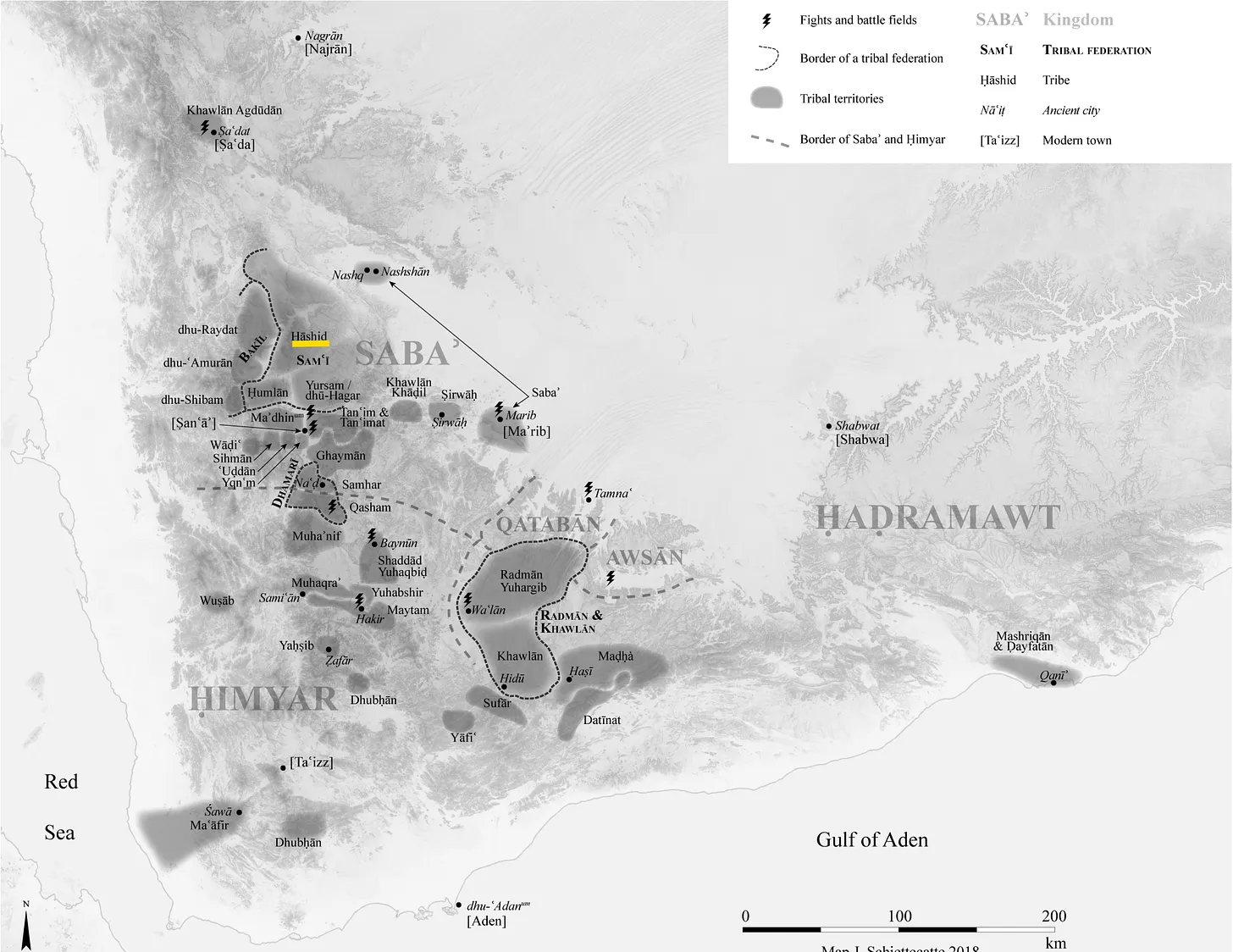
Another little-known text, Ir 12, is dated to the era of Emperor GDR (during the reign of ŠaʿirumʿAwtar - son of ᶜAlhān Naḥfān30). It records a contingent of Emperor GDR’s army operating on the borders of Ḥashid (north of Ṣanʿāʾ31) and fighting there against the Sabaeans.
The inscription reads as follows:
1 Wfym ʾḏrḥ, son of [… …] dedicated to ʾlmqh Ṯhwn, Lord of ʾwm, the statue and the bull in bronze when his lord S²ʿrm ʾwtr, king of Sabaʾ and ḏu-Raydān, appointed him to protect and perform garrison duty on the borders of the tribe Ḥs²dm in the war that the Abyssinians and their supporters from S¹whrn and Ḫwln waged,
2 and he protected all the borders of the town and of the population of the tribe Ḥs²dm and those that were with them among the descendants of the bedouins in all the years in which he received commendation for the service and the garrison duty he performed on the borders of the Ḥs²dm, until the Abyssinians made peace, except for the time that the Abyssinians advanced and made an assault with two thousand and five hundred men and some bedouins too made an assault in the valley ḏ-Wʿrm in the west of Ḥs²dm;
3 Wfym ʾḏrḥ mounted an offensive against them - and with him there were one hundred and seventy men among the bedouins - and he pursued them on the second night in pursuit (?) of the protection force (?) and they did an assault in the middle of their camp during the night and they killed and took them from their camp and they seized among them five hundred prisoners and abundant equipment and garments that they appropriated,
4 and when his lord S²ʿrm ʾwtr king of Sabaʾ and ḏu-Raydān and his brother Ḥywʿṯtr Yḍʿ, sons of ʿlhn Nhfn king of Sabaʾ, appointed him to go on an expedition and lead a vanguard detachment from the army of six hundred men to wage war on the troops of a detachment and of a … (?) (sent) from those of Ḫwln,
5 and they waged war on their troops on the pass of Mḥrbn (?) in the camp of ḏ-S¹hrtn, and ʾlmqh Ṯhwn, Lord of ʾwm, granted to His servant Wfym ʾḏrḥ and to the men who are with him the return in soundness and with spoils and loot and booty in abundance,
6 and their killings were two hundred and ten wounded warriors, and one hundred and thirty prisoners, and four hundred children and women that they killed, and three hundred camels, and one thousand and three hundred bovines, and two hundred and seventy asses, and ten thousand small cattle.
7 May ʾlmqh Ṯhwn continue to grant him the goodwill and the satisfaction of their lords S²ʿrm ʾwtr, king of Sabaʾ and ḏu-Raydān, and his brother Ḥywʿṯtr Yḍʿ, sons of ʿlhn Nhfn, king of Sabaʾ,
8 and may ʾlmqh Lord of ʾwm continue to grant his servant Wfym spoils and booty in whatever occasion they will perform service for their lords S²ʿrm ʾwtr, king of Sabaʾ and ḏu-Raydān, and his brother Ḥywʿṯtr Yḍʿ, and (whatever) occasion he will dispatch them to lead protection near and far;
9 may ʾlmqh grant them soundness of faculties and material resources and may ʾlmqh Lord of ʾwm deliver them from the malice and the maleficence of any enemy, far and near, by ʾlmqh Lord of ʾwm and by their lords S²ʿrm ʾwtr king of Sabaʾ and ḏu-Raydān and his brother Ḥywʿṯtr Yḍʿ sons of ʿlhn Nhfn king of Sabaʾ.
-Source: Ir 12
Analysis
The conflict appears to have flared at least twice: peace was brokered temporarily, then war resumed, with 2,500 Habashite troops and some Bedouin allies raiding the valleys west of Hsdm. This provides evidence of Emperor GDR likely controlling territory much further south than Narjan, possibly having a strong influence in the territory between Ṣanʿāʾ & Narjan.
Ry 533
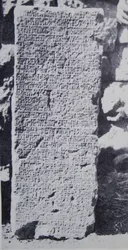
Ry 533 is a little-known inscription from the era of Emperor GDR that records the Aksumites assisting Saba in a war against Ḥaḍramawt, specifically during the reign of Shaʿrum Awtar (~215–225 AD32).
The inscription reads as follows:
1 and ʾs¹dm ʾs¹ʿd son of Hʿn ʾẓlm, from the people of
2 S²ʿrm ʾwtr, king of Sabaʾ and ḏu-Raydān, son of ʿlhn Nhfn,
3 were the commanders of the group of the king of Sabaʾ and of Ḥaḍramawt in the vicinity of the town
4 of Qnʾ, because their S²ms¹ favoured them, when they campaigned in the service (of the king).
5 From the abovementioned town they campaigned in service of their lord
6 and the tribes of Qatabān, Rdmn, Mḍḥy and Awsān and
7 some troops of their own tribe Bklm from this campaign, particularly
8 [from] Raydān to the town of Qnʾ against them, so they
9 proceeded against Ḥrmtm, with forty-seven small and large transport vessels
10 in killings, captives and booty enough to satisfy
11 their lord, the king S²ʿrm, and his group and his servants in the territory of
12 [Rdʿ] as far as the coast, and they furthermore subdued al-Qaryatan (?). So thanks
13 are offered by ʾs¹dm, because his lord S²ʿrm ʾwtr returned
14 from this campaign in safety with spoils, captives and
15 booty in abundance. They also give thanks to their S²ms¹, the Lady of Tlqm,
16 because Rbbm ʾḫṭr and ʾs¹dm ʾs¹ʿd
17 and their tribe Bklm, portion of Rydt, returned from this campaign
18 in good health and (because) of the booty and the prisoners (taken), which gave them satisfaction.
19 Also in gratitude because his brother Rbbm ʾḫṭr
20 ibn S¹ʾrn [...] and their strongholds, and [...]
21 [...] from the detachments and auxiliaries of the Habashites, when
22 they had campaigned against Ḥaḍramawt previously to the present dedication;
23 and may S²ms¹ grant them the goodwill and satisfaction of their lord S²ʿrm
24 ʾwtr king, of Sabaʾ and ḏu-Raydān, son of ʿlhn Nhfn
25 king of Sabaʾ, and may S²ms¹m grant them good crops and
26 fruit crops in their land and their fields, and may S²ms¹m
27 grant favour to them in the prosperity of faculties and resources, and in
28 [all] the battles in which their lord S²ʿrm ʾwtr ordered them (to fight)
29 and may S²ms¹m deliver them from the harm, mischief,
30 maleficence, malice and slander of any enemy [... ...]
31 [... ...] by their S²ms¹, Mistress of Tlqm.
-Source: Ry 533
Analysis
It is important to note that detachments or auxiliaries are explicitly mentioned in connection with Emperor GDR’s army. This most likely refers to an indirect support provided to the kingdom of Saba during the reign of Shaʿrum Awtar, during their campaigns against Ḥaḍramawt, rather than a direct Aksumite invasion.
JA 635
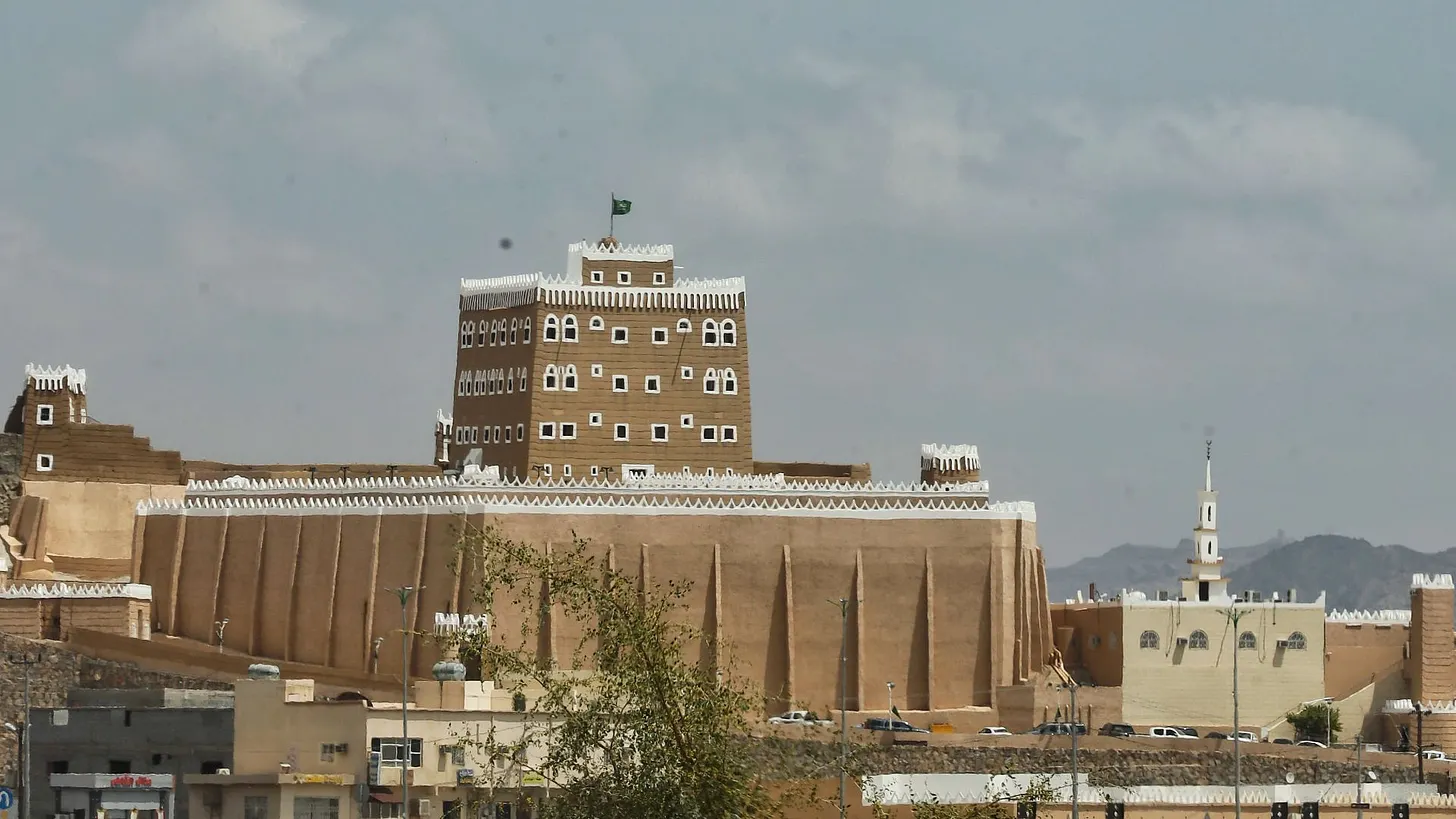
JA 635 was inscribed during the reign of Shaʿrum Awtar (~215–225 AD33), king of Saba. In it, he recounts a battle against the Habeshas in Narjan. This is particularly significant, as Narjan was historically an Aksumite stronghold, suggesting that by the early 3rd century AD, the Aksumites had already controlled this strategic gateway to the Tihama trade routes.
The inscription reads as follows:
[Sym- ˁAbkarib ˁA]hras, descendant of ˁAblum
[bol and Yahamḍil] has dedicated to ˁIlumquh Ta-
hwân, master of ˁAwwâm, this statue which [is] in bronze, which
he enjoyed from [the sale of] excellent qârit-musk and ṭanuf,
in praise because He has vouchsafed and helped their
lord Šaˁirum ˁAwtar, king of Sabaˁ and
Raydân, son of ˁAlhân Nahfân, king of Sa-
baˁ, in coming back in safety and (with) strength
and praise from all the encounters and the engagements [which]
they have fought and combatted and [in which]
they have taken part and given aid againstall the armies and the tribes [which] raised up war against
their lord from south and from north
and from sea and land; and that
ˁIlumquh may continue to crush and humiliate and humble
and wither every foe and enemy of their lord;
and in praise because ˁIlumquh has vouchsafed and assisted
His worshipper ˁAbkarib ˁAḥras, descendant of ˁAblum
in coming back in safety and (with) booty and
animals and captives from all the military campaigns and engagements
and the auxiliary operation [in which] they fought and assisted their lord Šaʿirum
ʾAwtar, king of Sabaʾ and Raydān, in Sa-
haratum against ʾAšʿarān and Baḥrum and those who
[w]ere with them, as well as in the region of the city [of] Nagrān
[agai]nst the fighting men of the Ḥabašites and those who were
with them, and [also] in the city [of] Qaryatum, that of Kahilum,
[during] the two engagements against Rabīʿat, him of ʾIl-
tawrum, king of Kindat and Qaḥṭān, and [also] against
the masters of the city [of] Qaryatum; and in praise be-
cause ʾIlumquh has vouchsafed to His worshipper ʾAbkarib
to come back with animals and captives and riches
and booty and horses which they took away and which they captured
alive, everywhere his lord has sent him to fight
and to take command of some of Ḥawlān Ḥaḍlum
and some of Nagrān and some of the Arabs in order to fight the
groups [which] have seduced those [who] were the
descendants of Yaw-
[ān]um and of Qaryatum; and he fought them at
the border of the land of
ʾIpasad Magūzat Mawnahān, him of Timāl; and came
back all their troop in safety from this
campaign; and in praise because ʾIlumquh has vouchsafed to
His worshipper the esteem and grace of his lord
Šaʿirum ʾAw-
tar, king of Sabaʾ and Raydān; and that may con-
tinue ʾIlumquh Ṭahwān, to vouchsafe to His worshipper desirable
animals and prisoners [in (all)] the military campaigns [in which] he will continue to assist his lord; and that ʾIlumquh may preserve him from the hostility and wickedness and fear and calamities and unexpected attack of [any] enemy. By ʾIlumquh, master of ʾAwwām.
-Source: Sabaean inscriptions from Maḥram Bilqîs (Mârib), pg 136-137.
Analysis
There is little more to add, other than that this evidence demonstrates beyond any reasonable doubt that, during the reign of Emperor GDR, the Aksumites exercised control over Najrān and its surrounding regions. This aligns well with the earlier inscription (Ir 12), which already places them in conflict with the Sabaean Kingdom much further south, near the northern approaches to Ṣanʿāʾ.
JA 631
Another South Arabian inscription referencing Emperor GDR dates to the reign of the Sabaean king of Sumhuram, Yhwld, who ruled around 230 AD34. It records a delegation sent to the Aksumite Empire during the reign of Emperor GDR, though it appears this mission failed to achieve its intended goal, as the inscription later mentions a war being waged against Aksumite forces.
The inscription reads as follows:
Qṭbn ʾwkn, of the family Grt, qyl of the tribe S¹mhrm Yhwld, dedicated
to ʾlmqh Ṯhwn, Lord of ʾwm, two statues in bronze, in praise
because He granted favours to His servant Qṭbn ʾwkn, of the family Grt, and to their tribe
S¹mhrm Yhwld in killing, destroying, crushing, humbling and
routing, in numerous attacks in which they had assaulted and fought to death the kings and the
tribes who had waged war against their lord S²ʿrm ʾwtr, king of Sabaʾ
and ḏu-Raydān, from the coast and from the land, when they performed service for their lord
S²ʿrm ʾwtr, king of Sabaʾ and ḏu-Raydān. And they appropriated and seized and killed and
captured and plundered and looted: dead and captives and spoils in a considerable number in
numerous campaigns in which they performed service for their lord S²ʿrm ʾwtr, king of Sabaʾ and ḏu-Raydān.
And because He granted favour to His servant Qṭbn ʾwkn, of the family Grt, when
their lord S²ʿrm ʾwtr, king of Sabaʾ and ḏu-Raydān, sent him into the land of
Abyssinia to Gdrt, king of Abyssinia and of the Aksumites; and they came
back from there in safety, he and all those performing service, and they brought back to their lord
S²ʿrm ʾwtr, king of Sabaʾ and ḏu-Raydān from the whole of their embassy from the negus
a proper answer that satisfied their lord in respect to everything they had been charged with (in that mission). And because
ʾlmq Ṯhwn, Lord of ʾwm, granted favours to His servant Qṭbn ʾwkn, of the family
Grt and to their tribe S¹mhrm Yhwld, when they conducted a military expedition, Qṭbn
ʾwkn of the family Grt and their tribe S¹mhrm Yhwld, from the city of Nʿḍ
to the city of Ẓfr as their patron ʿṯtr-ʿzzn had ordered in the oracle, when
Bygt, son of the negus, and the Abyssinian army moved and marched to the
city of Ẓfr and encamped near the town of Ẓfr; then Qṭbn ʾwkn,
of the family Grt, and their tribe S¹mhrm Yhwld moved to the city of Ẓfr,
from the agreed place, with the favour of the night; and then the Abyssisians withdrew from there, towards (or, from) the “citadel
of the god”, in the middle of the city. And Qṭbn ʾwkn, of the family Grt, and their tribe
S¹mhrm Yhwld moved so as to meet with Lʿzzm Yhnf Yhṣdq, king of
Sabaʾ and ḏu-Raydān, and the ʾqwl and the tribes of ḏu-Raydān killed, massacred and
routed the Abyssinians from the center of the city. And on the third day
some of the tribe of Ḏmr and the vanguard of the troops and some tribes of ḏu-Raydān made a sally and assaulted
during the night the encampment of the Abyssinians and they killed among the Abyssinians four hundred
soldiers in combat. And on the third day Qṭbn ʾwkn,
of the family Grt, and their tribe S¹mhrm Yhwld made a sally and engaged at close quarters with
Abyssinians and with them (there were) some of the cavalry of Mʿfrm and they killed some of the Abyssinians
at close quarters. And the Abyssinians withdrew from them into their encampment and after another
day the Abyssinians moved from the territory of Ẓfr, hungry, and came back to
Mʿhrtn. And may ʾlmqhw Ṯhwn, Lord of ʾwm, continue to grant them the goodwill
and the satisfaction of their lord Lḥyʿṯt Yrḫm, king of Sabaʾ and
ḏu-Raydān, and soundness of faculties and material resources; may He crush, humiliate and defeat
their enemy and their adversary; and may ʾlmqhw Ṯhwn, Lord of
ʾwm, grant them abundance of summer crops and harvests in their lands and their valleys and
their fields in summer and winter and may He deliver them from the malice and the maleficence
of any enemy. By ʾlmqh Ṯhwn, Lord of ʾwm.
Source: JA631
528 more words
Analysis
This inscription, discovered in the temple of Maḥram Bilqīs at Marib35, Yemen, offers several valuable insights into the reign of Emperor GDR. Firstly, the text identifies him not only as the King of the Ḥabashat (mlk Ḥbst) but also as the King of the Aksumites (mlk ʾksmn)36. This dual title indicates that by at least around 230 AD, the Aksumites had emerged as the dominant power among the Habesha peoples of the northern Ethiopian and Eritrean highlands.
It also highlights a distinction between the two terms at this time, Habesha appears to have functioned as a broader, more inclusive term encompassing various Semiticised populations of northern Ethiopia and Eritrea, whereas Aksumites referred more specifically to the population centred on Aksum and its immediate periphery.
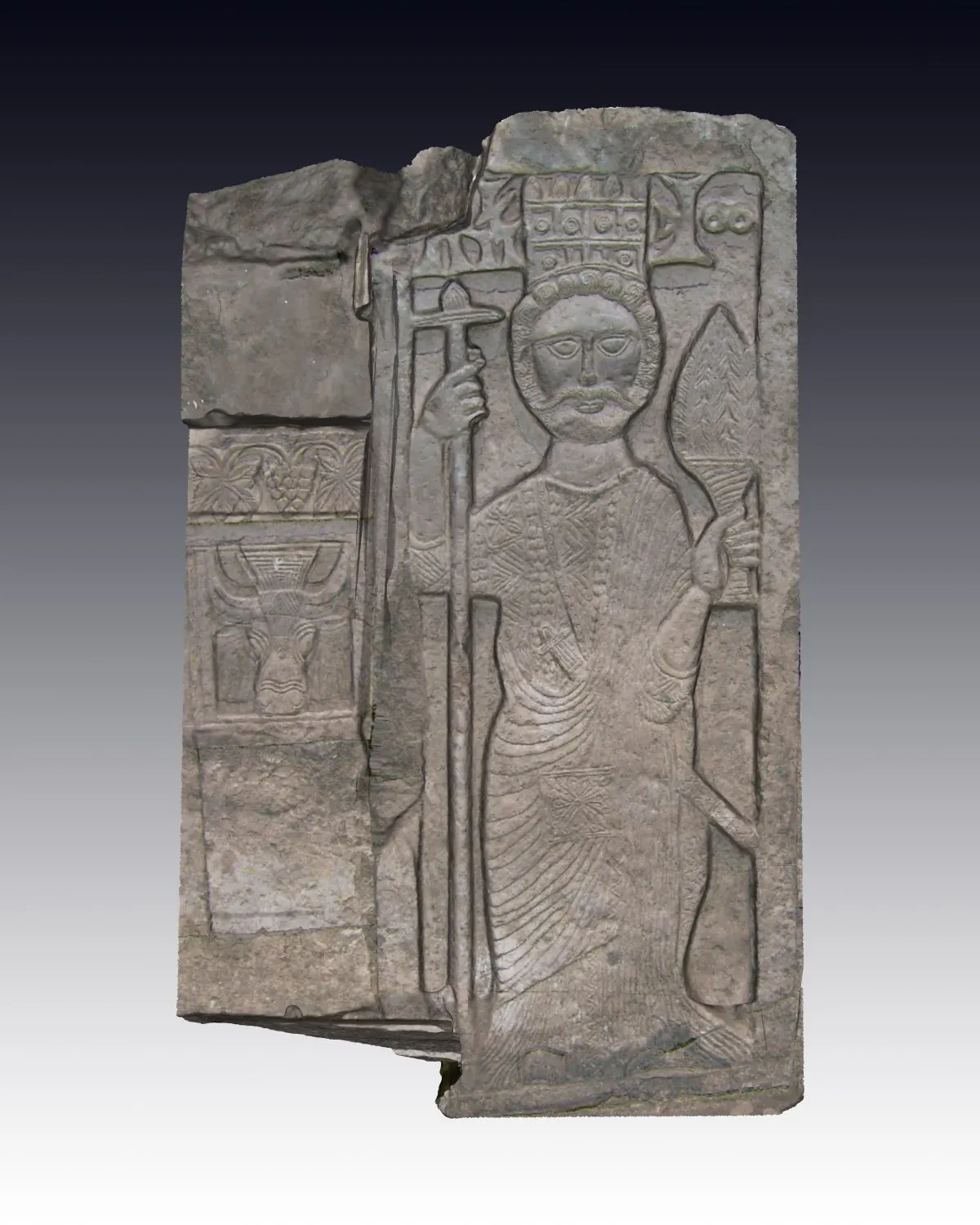
Secondly, the inscription records that a diplomatic mission was dispatched from the kingdom of Saba to Aksum, likely to negotiate a new alliance similar to that previously arranged during the reign of Alhan Nahfan, as discussed earlier. However, whatever agreement was reached soon collapsed38. The subsequent events described in the text state that GDRT’s son, BYGT (possibly vocalised as Beyga or Baygat39), captured Ẓafār, the capital of the Himyarite Kingdom and established an Aksumite encampment in the centre of the city. In response, the Sabaeans launched a counteroffensive, initiating a fierce engagement that lasted more than three days.
According to the inscription, the first and second days of battle ended with the Aksumites being routed. In the early hours of the third day, the Sabaeans launched a surprise assault, resulting in the deaths of over 400 Aksumite soldiers40. This figure provides a rough indication that the Aksumite army at this time might have numbered several thousand. The fighting continued through the third day in close combat until, by the fourth day, the Aksumites, who were cut off from trade routes and provisions, were forced to withdraw from Ẓafār to a nearby location referred to as Mʿhrtn41.
Footnotes
Collection of Ethiopian Inscriptions of the Pre-Aksumite And Aksumite Periods - Volume I-III, pg 156.
Collection of Ethiopian Inscriptions of the Pre-Aksumite And Aksumite Periods - Volume I-III, pg 158.
Les monuments recueillis à Maqallé (Tigré), pg 36. & Ein Gegenstand und seine Aufschrift RIE 180 = JE 5 , pg 138.
Les monuments recueillis à Maqallé (Tigré), pg 36, Collection of Ethiopian Inscriptions of the Pre-Aksumite And Aksumite Periods - Volume I-III, pg 160.
Ein Gegenstand und seine Aufschrift RIE 180 = JE 5, pg 139.
Aksum : an African civilisation of late antiquity, pg 244 & ncyclopaedia Aethiopica A-C, pg 145.
Encyclopaedia Aethiopica A-C, pg 145.
Ein Gegenstand und seine Aufschrift RIE 180 = JE 5, pg 139 & Collection of Ethiopian Inscriptions of the Pre-Aksumite And Aksumite Periods - Volume I-III, pg 160.
Ein Gegenstand und seine Aufschrift RIE 180 = JE 5, pg 140
Encyclopaedia Aethiopica D-Ha, pg 719.
Aksum An African Civilisation of Late Antiquity, pg 72.
Encyclopaedia Aethiopica D-Ha, pg 719
Arabs and Empires Before Islam, pg 127.
Encyclopaedia Aethiopica D-Ha, pg 719
Encyclopaedia Aethiopica D-Ha, pg 719.
Encyclopaedia Aethiopica D-Ha, pg 720.
Aksum An African Civilisation of Late Antiquity, pg 72.
Published comments
Loading discussion…