
Landscapes and Landforms of Ethiopia — illustration 2, PDF page 60
Source record
- Source
- Habesha History book corpus — Landscapes and Landforms of Ethiopia
- Book
- Landscapes and Landforms of Ethiopia
- Source reference
- Landscapes and Landforms of Ethiopia; PDF page 60; embedded illustration 2, exact source rectangle 184.33, 362.27, 544.33, 656.03
- Page
- 60
- Publication year
- 2015
- Type
- Book illustration
Date of image not recorded.
Creator not recorded.
Source-book and PDF-page attribution only. No place, subject, creator or image date is inferred from nearby body text or the publication date.
Source-page captions
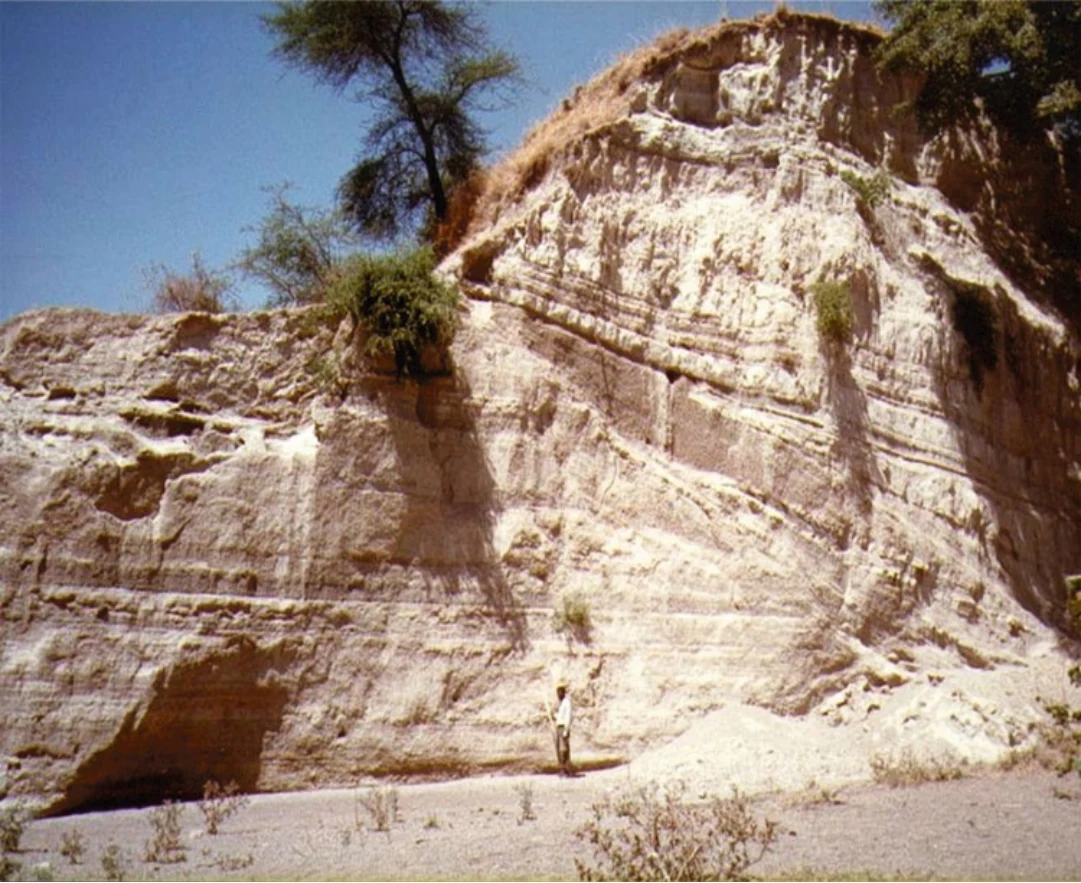
Fig. 2.21 Cyclically arranged lacustrine, lake margin, and fluviatile deposits with tuff horizons in the Hadar basin, Middle Awash, northern Afar (basin 8 in Fig. 2.18). This section is adjacent to the site where the 3.2-million-year-old partial skeleton of “Lucy” was discovered
Fig. 2.22 Late Quaternary lacustrine sediments consisting of massive diatomites (whitish) and thinly stratified, light gray volcanoclastic deposits. A deep erosional surface separates the Holocene from the Late Pleistocene successions. Central Main Ethiopian Rift. Photograph courtesy of Marco Benvenuti
Illustration from the identified source publication. Captions on the source page are preserved separately and are not asserted to belong to this individual crop. Publication year is not the image date.
Image rights
Original publication and credited image creators retain their rights. No open licence has been established for this corpus copy.
User-confirmed permission to use images in the local Habesha History corpus, 2026-09-28; this does not grant visitors a general reuse licence.
Request image removal