
The provenance of obsidian artefacts from the Middle Kingdom harbour of Mersa/Wadi Gawasis, Egypt, and its implications for Red Sea trade routes in the 2nd millennium BC — illustration 1, PDF page 5
Source record
- Source
- Habesha History book corpus — The provenance of obsidian artefacts from the Middle Kingdom harbour of Mersa/Wadi Gawasis, Egypt, and its implications for Red Sea trade routes in the 2nd millennium BC
- Book
- The provenance of obsidian artefacts from the Middle Kingdom harbour of Mersa/Wadi Gawasis, Egypt, and its implications for Red Sea trade routes in the 2nd millennium BC
- Source reference
- The provenance of obsidian artefacts from the Middle Kingdom harbour of Mersa/Wadi Gawasis, Egypt, and its implications for Red Sea trade routes in the 2nd millennium BC; PDF page 5; embedded illustration 1, exact source rectangle 105.73, 57.03, 489.49, 440.79
- Page
- 5
- Publication year
- 2020
- Type
- Book illustration
Date of image not recorded.
Creator not recorded.
Source-book and PDF-page attribution only. No place, subject, creator or image date is inferred from nearby body text or the publication date.
Source-page captions
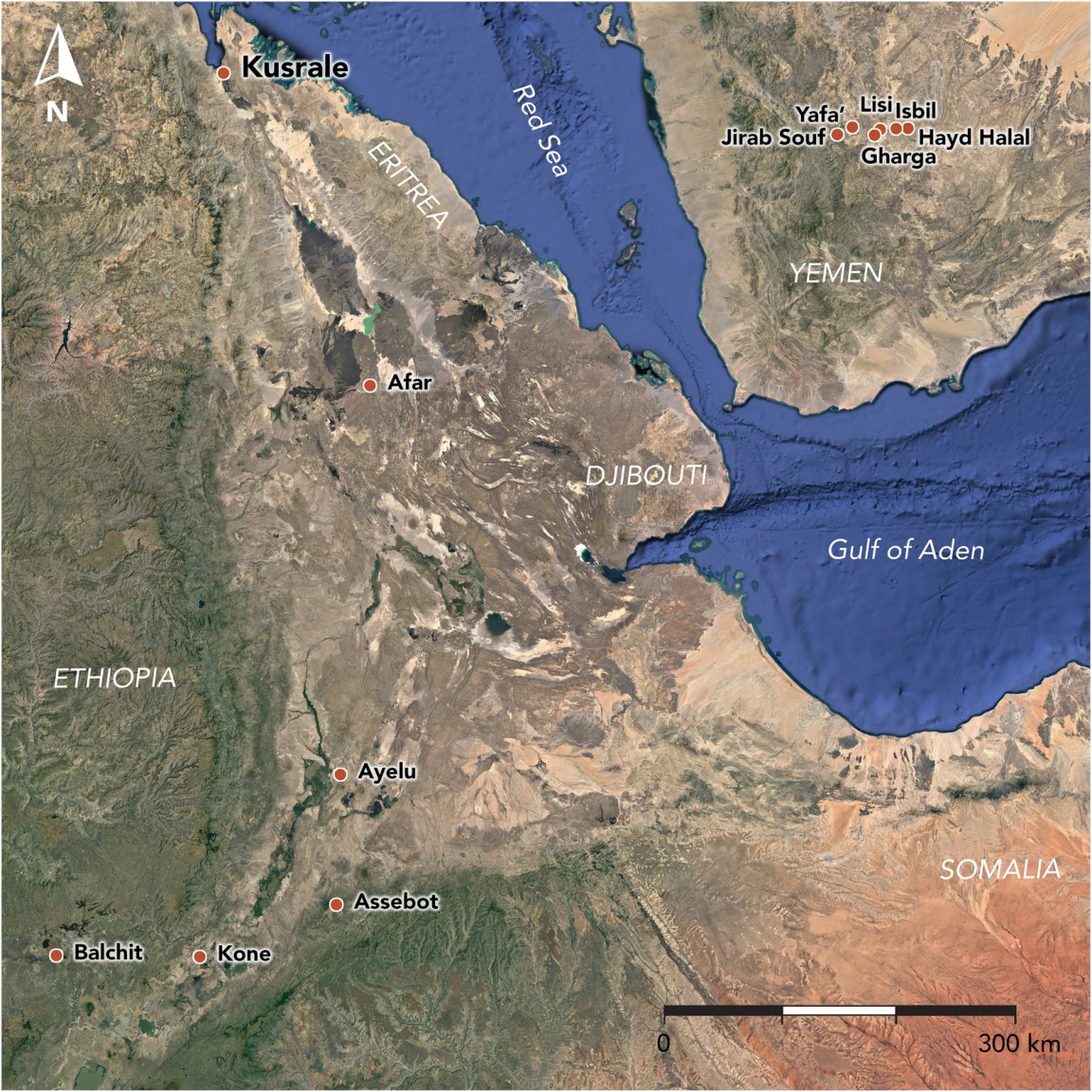
Fig. 5. Map with location of Kusrale (Eritrea) and all the others obsidian outcrops in the Horn of Africa and southern Arabian peninsula, which are mentioned in the text.
Illustration from the identified source publication. Captions on the source page are preserved separately and are not asserted to belong to this individual crop. Publication year is not the image date.
Image rights
Original publication and credited image creators retain their rights. No open licence has been established for this corpus copy.
User-confirmed permission to use images in the local Habesha History corpus, 2026-09-28; this does not grant visitors a general reuse licence.
Request image removal