The Habesha History collection

Architecture & the arts.

Buildings, objects and painted pages. Explore the collection, with the source beside every image.

3,639works to explore4,151 images · books & collections

Architecture 233 works

Open a work to see every view
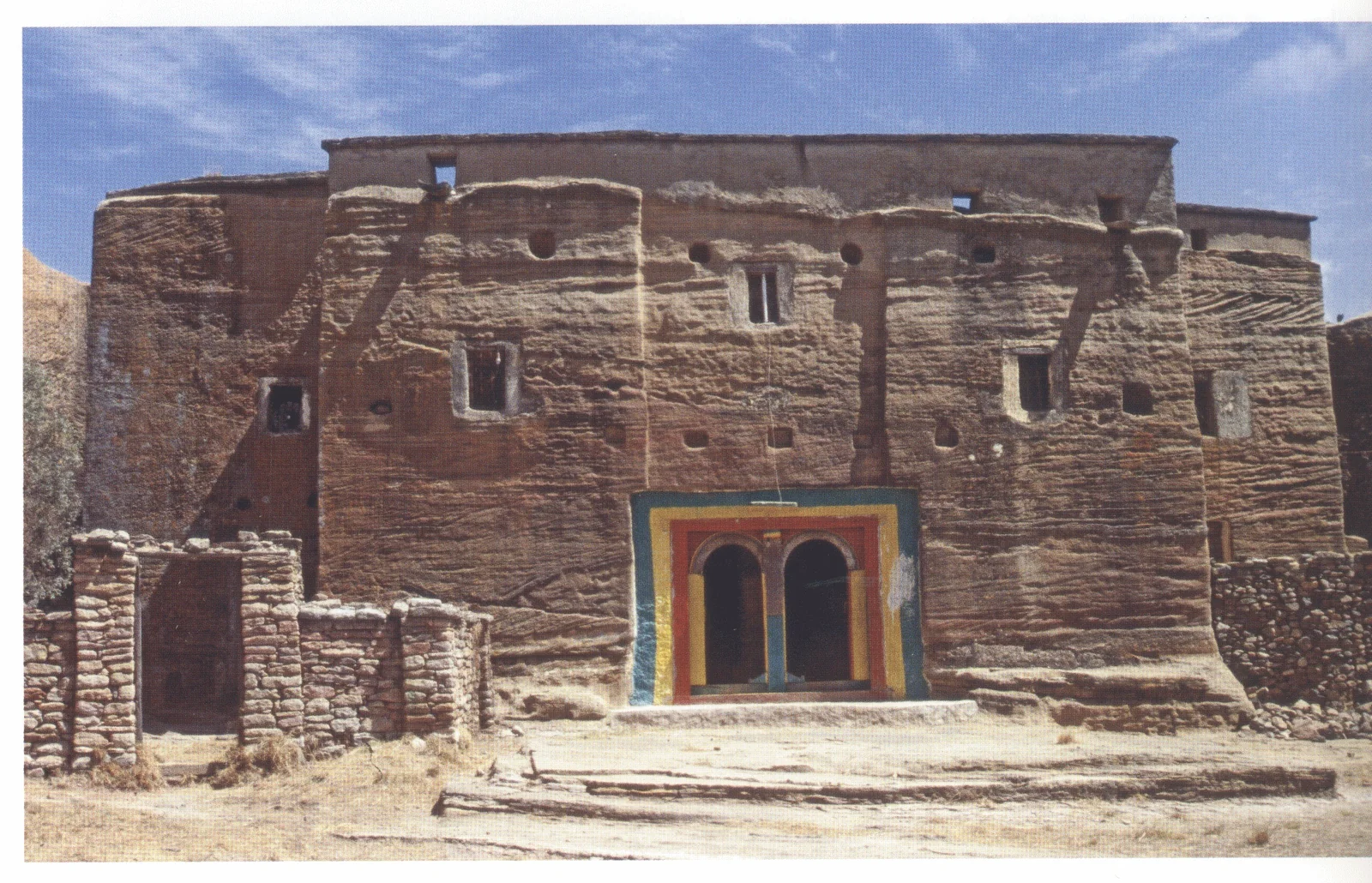
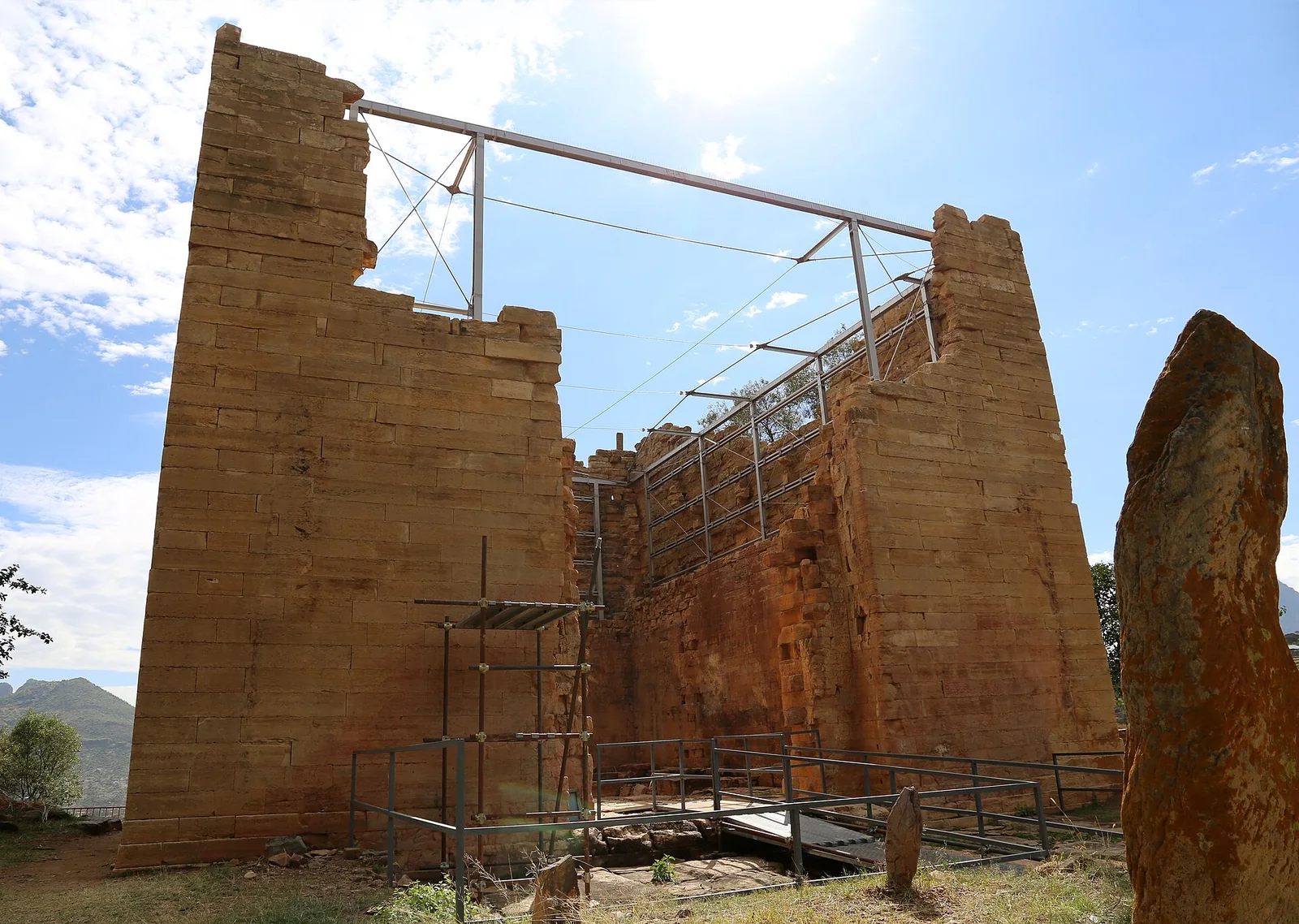
Mika’el Amba, the west façade, showing late twentieth-century alterations to the doorway, 2006.5 views
Architecture & ruins

Mika’el Amba

Atsbi area

Ancient Churches of Ethiopia (2009)p. 96, fig. 135.

David W. Phillipson, Ancient Churches of Ethiopia: Fourth–Fourteenth Centuries (Yale University Press, 2009), p. 96, fig. 135.

Source record ↗
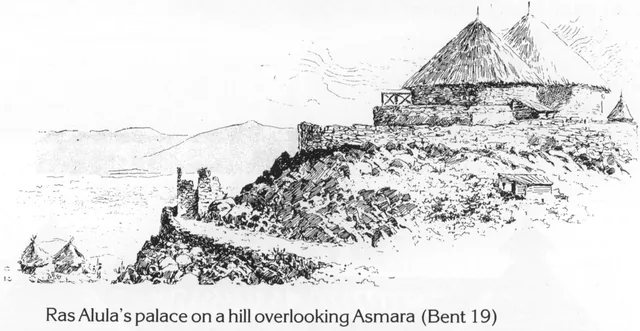
A sketch of the hilltop palace of Ras Alula with thatched-roof buildings overlooking the town of Asmara.View image
Historical illustration19th-century illustration

Ras Alula’s palace on a hill overlooking Asmara

Asmara

The Sacred City of the Ethiopians: Being a Record of Travel and Research in Abyssinia in 1893p. 19

J. Theodore Bent, The Sacred City of the Ethiopians: Being a Record of Travel and Research in Abyssinia in 1893, 1896, p. 19. Image: Ethiopia Engraved / Link Ethiopia.

Source record ↗
East Elevation of the Half-Timbered Church of Agobo Qirqos near Aṣbi, Tigray (Ethiopia), twelfth century(?).View image
Architecturetwelfth century (?)

East Elevation of the Half-Timbered Church of Agobo Qirqos

Ethiopia

Ethiopia at the Crossroads (2023)Printed p. 247, fig. 2 (supplied scan PDF p. 244)

Mikael Muehlbauer, “Ancient Ethiopian Architecture and Its Medieval Legacy,” in Ethiopia at the Crossroads, ed. Christine Sciacca (Baltimore: The Walters Art Museum, in association with Yale University Press, 2023), pp. 245–257. · Printed p. 247, fig. 2 (supplied scan PDF p. 244) · © Mikael Muehlbauer 2018

Source record ↗
Figure 9.2 View of the main wall exposed in Anfray's trench3 views
Architecture & ruins

Main Wall in Anfray's Trench, Adulis

Adulis, Eritrea

The Ancient Red Sea Port of Adulis, Eritrea: Results of the Eritro-British Expedition, 2004-5p. c. 29

David Peacock and Lucy Blue (eds.), The Ancient Red Sea Port of Adulis, Eritrea: Results of the Eritro-British Expedition, 2004-5, (2007), p. c. 29
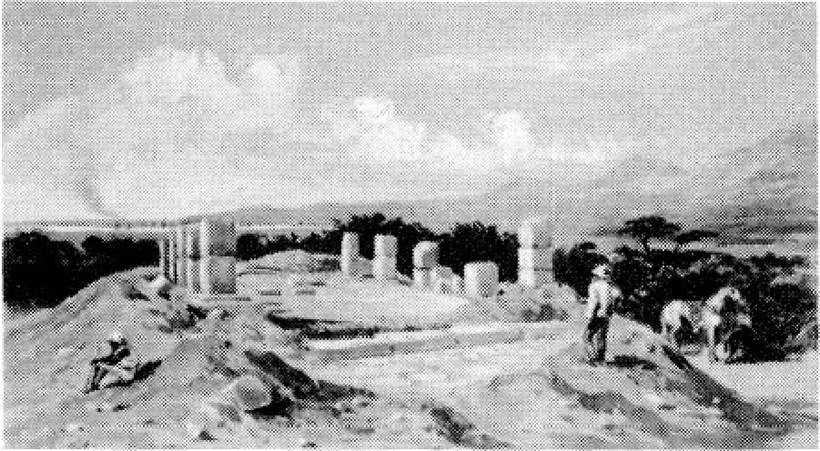
Figure 3.3 A view of the church during the exacavtion by the British Museum2 views
Architecture & ruins

Unidentified Excavated Church, Adulis

Adulis, Eritrea

The Ancient Red Sea Port of Adulis, Eritrea: Results of the Eritro-British Expedition, 2004-5p. 50

David Peacock and Lucy Blue (eds.), The Ancient Red Sea Port of Adulis, Eritrea: Results of the Eritro-British Expedition, 2004-5, (2007), p. 50
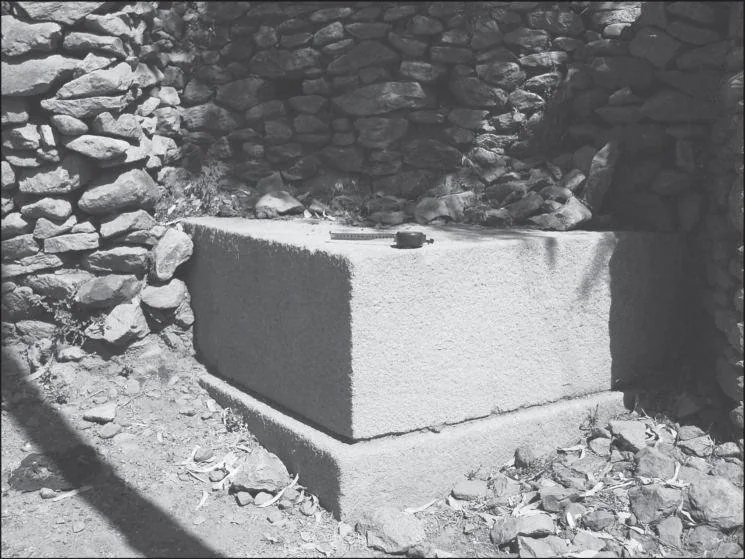
Fig. 29a - Parts of Aksumite monumental buildings in the city-centre of Aksum; corner-stone of Enda SemeonView image
Architecture & ruins

Corner Stone of Enda Semeon, Aksum

Aksum, Ethiopia

Ancient Settlement Patterns in the Area of Aksum (Tigray, Northern Ethiopia) – Ca. 900 BCE–800/850 CEp. 44

Luisa Sernicola, Ancient Settlement Patterns in the Area of Aksum (Tigray, Northern Ethiopia) – Ca. 900 BCE–800/850 CE, (2017), p. 44
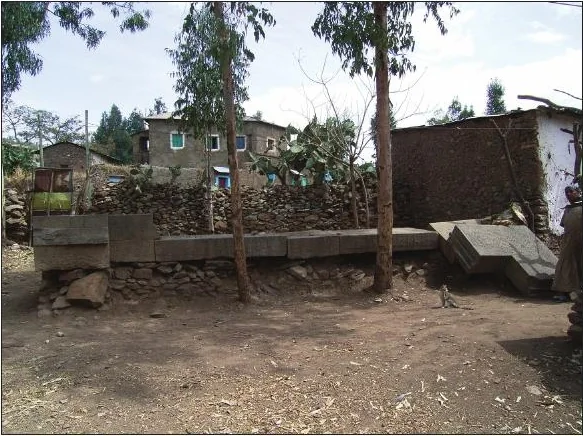
Fig. 29b — Parts of Aksumite monumental buildings in the city-centre of Aksum; threshold of Takha Maryam.View image
Architecture & ruins

Threshold of Takha Maryam, Aksum

Aksum, Ethiopia

Ancient Settlement Patterns in the Area of Aksum (Tigray, Northern Ethiopia) – Ca. 900 BCE–800/850 CEprinted p. 45, fig. 29

Luisa Sernicola, Ancient Settlement Patterns in the Area of Aksum (Tigray, Northern Ethiopia) – Ca. 900 BCE–800/850 CE (2017), printed p. 45, fig. 29b.
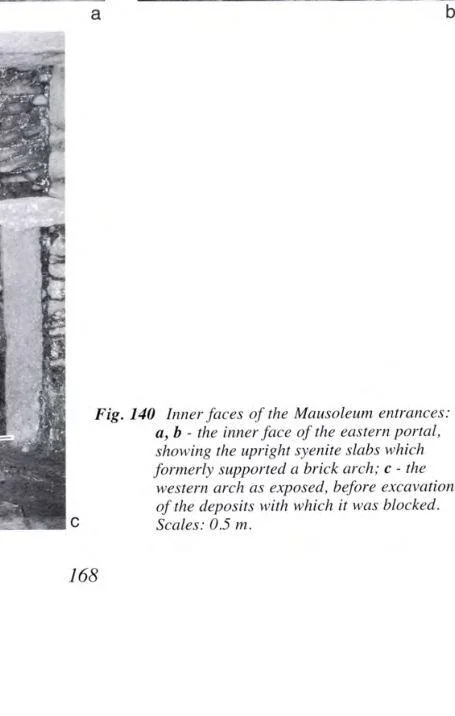
Fig. 140 Inner faces of the Mausoleum entrances: a, b - the inner face of the eastern portal, showing the upright syenite slabs which formerly supported a brick arch; c - the western arch as exposed, before excavation of the deposits with which it was blocked. C Scales: 0.5 m2 views
Architecture & ruins

The Underground Mausoleum, Aksum

Aksum, Ethiopia

Archaeology at Aksum, Ethiopia, 1993-7, Volume Ip. c. 168

David W. Phillipson, Archaeology at Aksum, Ethiopia, 1993-7, Volume I, (2000), p. c. 168
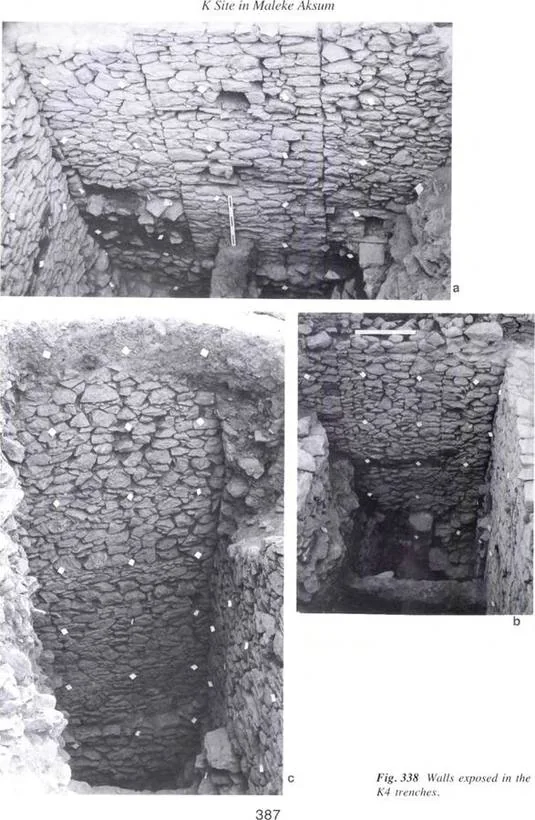
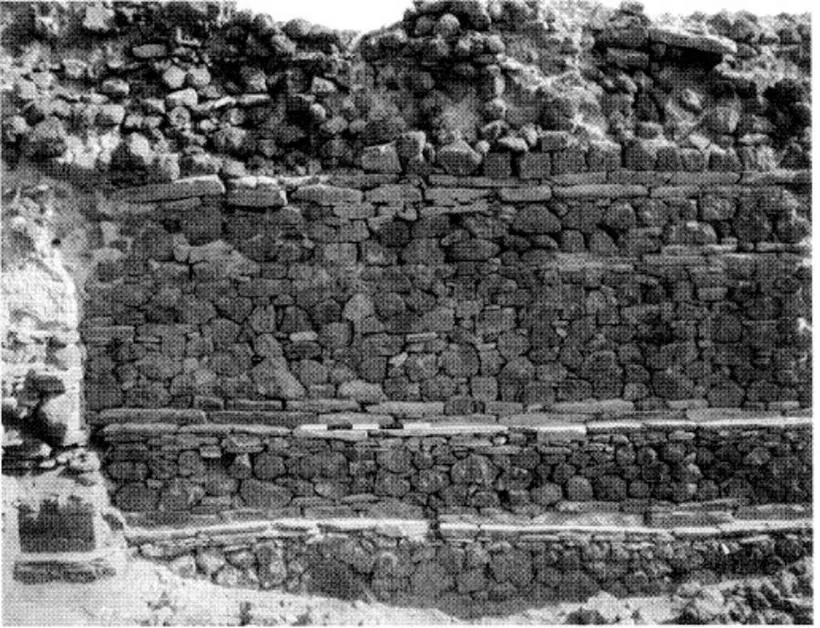
Fig. 338 Walls exposed in the K4 trenchesView image
Architecture & ruins

K4 Trench Walls, Aksum

Aksum, Ethiopia

Archaeology at Aksum, Ethiopia, 1993-7, Volume IIp. c. 387

David W. Phillipson, Archaeology at Aksum, Ethiopia, 1993-7, Volume II, (2000), p. c. 387
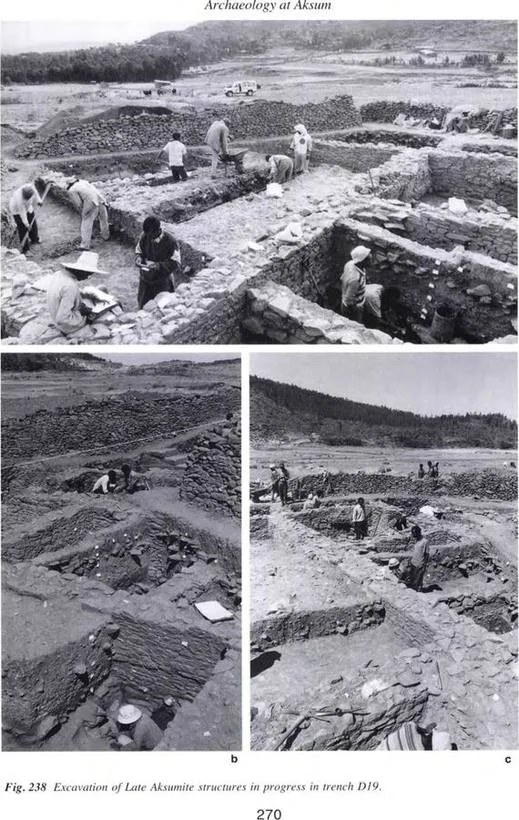
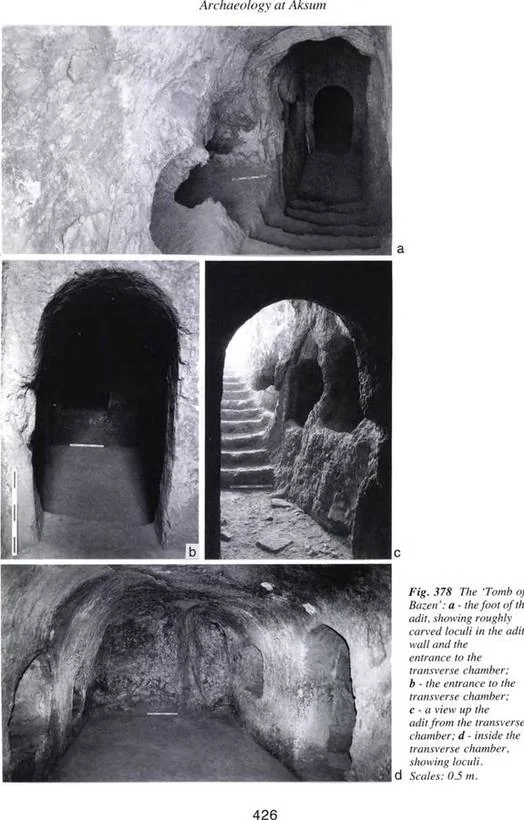
Fig. 378 The'Tomb of Bazen': a - the foot of the adit, showing roughly carved loculi in the adit wall and the entrance to the transverse chamber; b - the entrance to the transverse chamber; c - a view up the adit from the transverse chamber; d - inside the transverse chamber, showing loculi3 views
Architecture & ruins

Tomb of Bazen, Aksum

Aksum, Ethiopia

Archaeology at Aksum, Ethiopia, 1993-7, Volume IIp. c. 426

David W. Phillipson, Archaeology at Aksum, Ethiopia, 1993-7, Volume II, (2000), p. c. 426
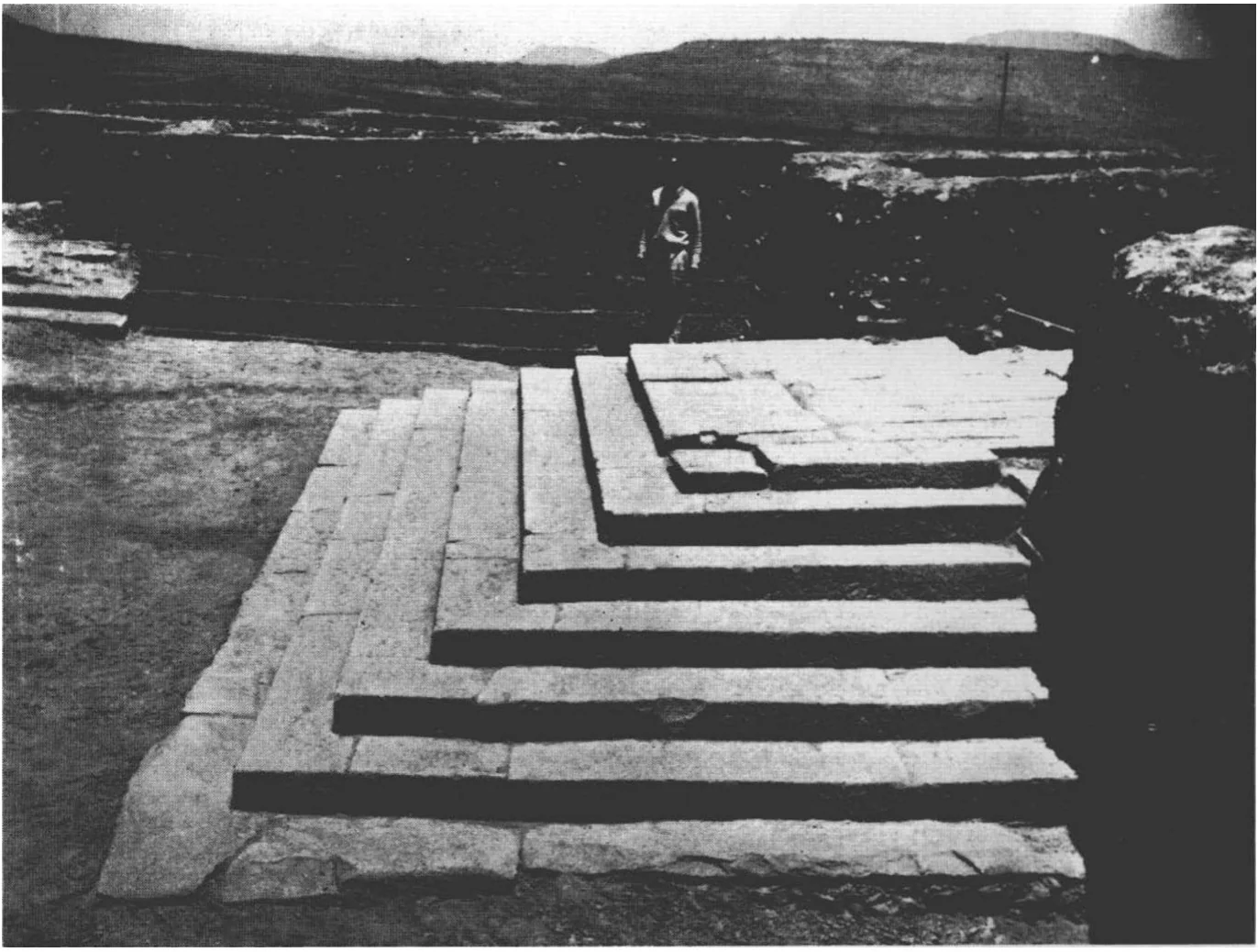
Fig. 19. Axoum. Grand escalier du monument A.2 views
Architecture & ruins

Grand Stairway of Monument A, Aksum

Aksum, Ethiopia

HabeshaHistory printed corpusprinted p. 357

Francis Anfray, Aspects de l'archéologie éthiopienne (1968), printed p. 357, Plate 9, fig. 19, ‘Axoum. Grand escalier du monument A.’
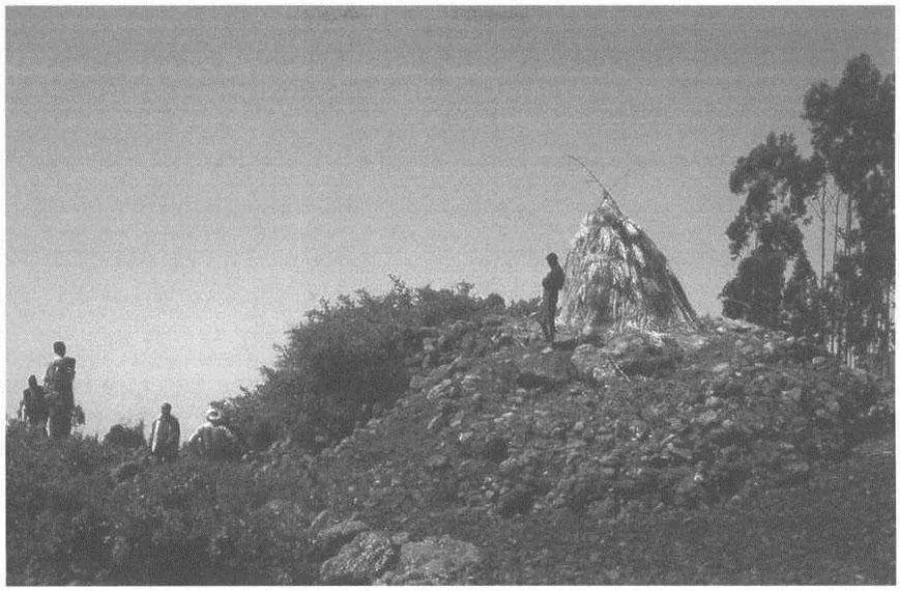
Fig. 5.1 — Mähal Wänz: le tumulus 1 surmonté d'une hutte2 views
Architecture & ruins

Covered Passage of the Mähal Wänz Tumulus

Mähal Wänz, Ethiopia

HabeshaHistory printed corpusprinted p. 121, fig. 5.1.

François-Xavier Fauvelle-Aymar and Bertrand Poissonnier (eds.), La culture Shay d’Éthiopie (Xe–XIVe siècles) (2012), printed p. 121, fig. 5.1.
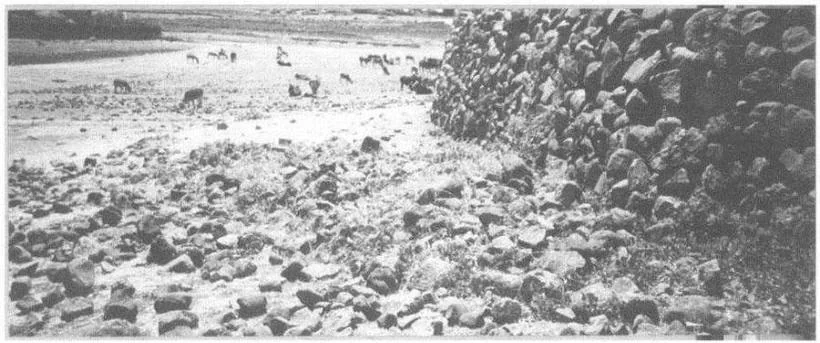
Fig. 2.5 - Qopros. Vestiges arasés d'un tumulus ancien, dépassant au sud du mur d'enceinte récent3 views
Architecture & ruins

Old Tumulus at Qopros

Qopros, Ethiopia

La culture Shay d’Éthiopie (Xe–XIVe siècles): Recherches archéologiques et historiques sur une élite païennep. 31

François-Xavier Fauvelle-Aymar and Bertrand Poissonnier (eds.), La culture Shay d’Éthiopie (Xe–XIVe siècles): Recherches archéologiques et historiques sur une élite païenne, (2012), p. 31
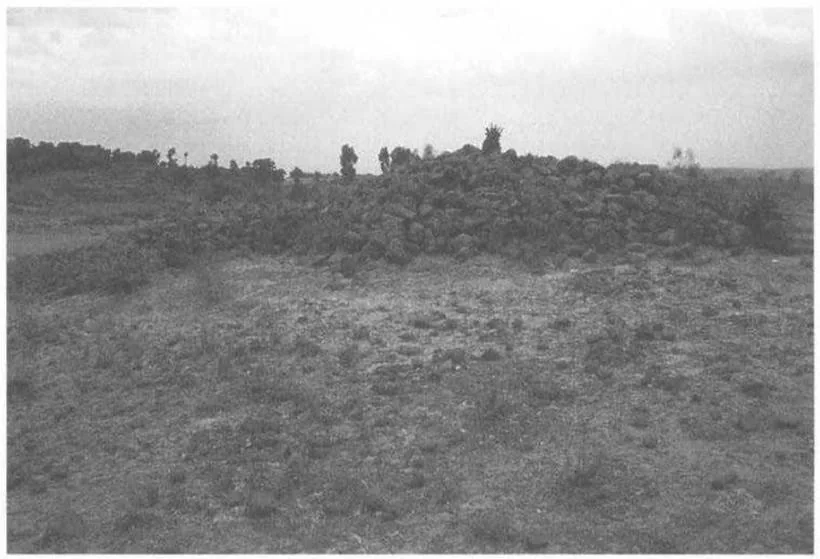
Fig. 3.1 - Tumulus 2 de Meshalä Maryam. Vue du tumulus immédiatement avant la fouille, en direction du SO. L'église de Meshalä Maryam se situe en arrière-plan, à gauche, dans son bois de genévriers géants. La vallée de la Šay est en contrebas du cliché, du côté droit5 views
Architecture & ruins

Tumulus 2 at Meshalä Maryam

Meshalä Maryam, Ethiopia

La culture Shay d’Éthiopie (Xe–XIVe siècles): Recherches archéologiques et historiques sur une élite païennep. 41

François-Xavier Fauvelle-Aymar and Bertrand Poissonnier (eds.), La culture Shay d’Éthiopie (Xe–XIVe siècles): Recherches archéologiques et historiques sur une élite païenne, (2012), p. 41
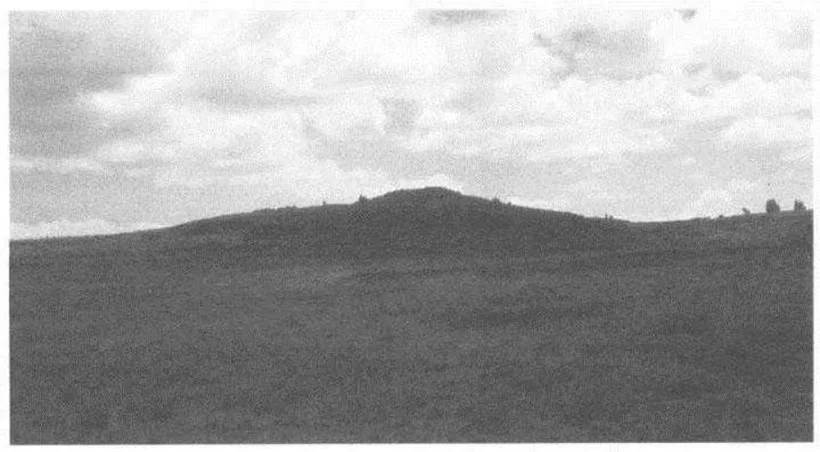
Fig. 4.3 - Vue du tumulus de Tätär Gur depuis la vallée de la Šay3 views
Architecture & ruins

Tätär Gur Tumulus

Tätär Gur, Ethiopia

La culture Shay d’Éthiopie (Xe–XIVe siècles): Recherches archéologiques et historiques sur une élite païennep. 71

François-Xavier Fauvelle-Aymar and Bertrand Poissonnier (eds.), La culture Shay d’Éthiopie (Xe–XIVe siècles): Recherches archéologiques et historiques sur une élite païenne, (2012), p. 71
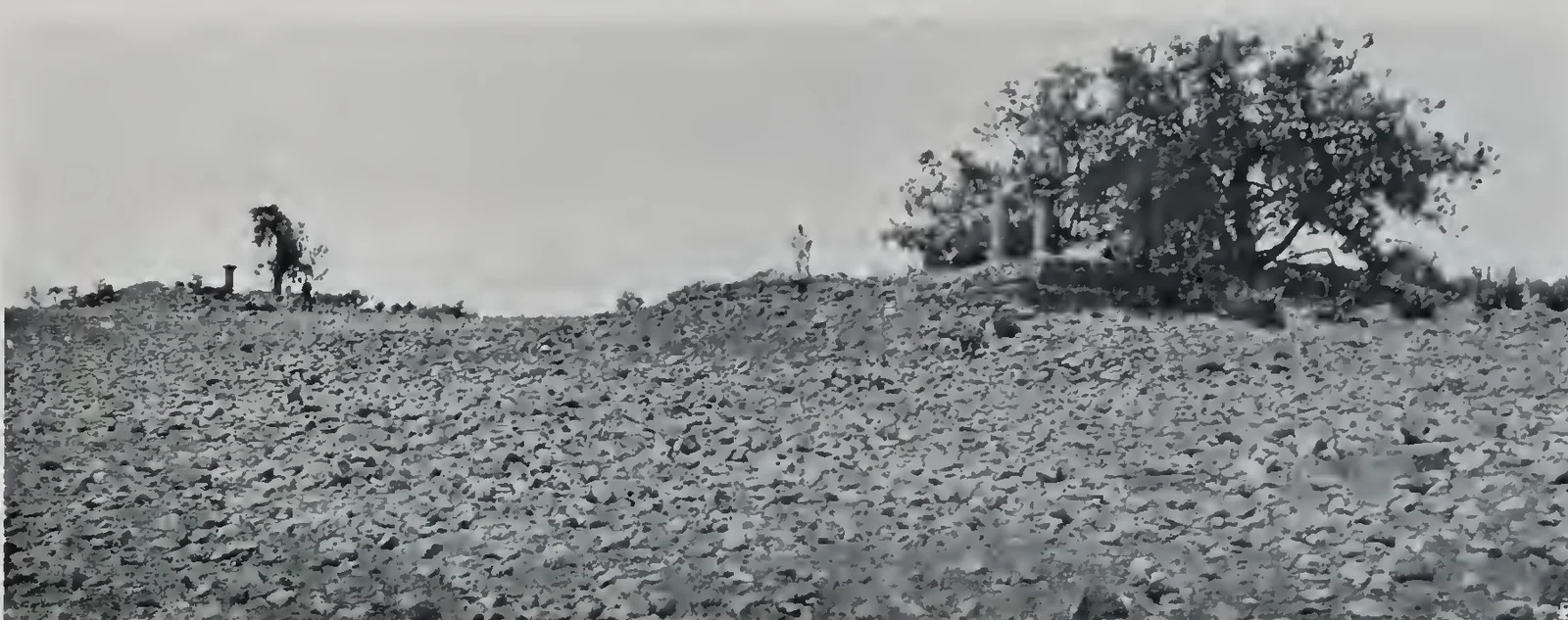
Abb. 321. Kohaito. Rechts Ruine 6, links im Hintergrunde Ruine 7. Blick von Nordosten.3 views
Architecture & ruins

Ruins 6 and 7, Qohaito

Qohaito, Eritrea

HabeshaHistory printed corpusprinted p. 157, fig. 321.

Daniel Krencker, Deutsche Aksum-Expedition, Band II: Ältere Denkmäler Nordabessiniens (1913), printed p. 157, fig. 321.
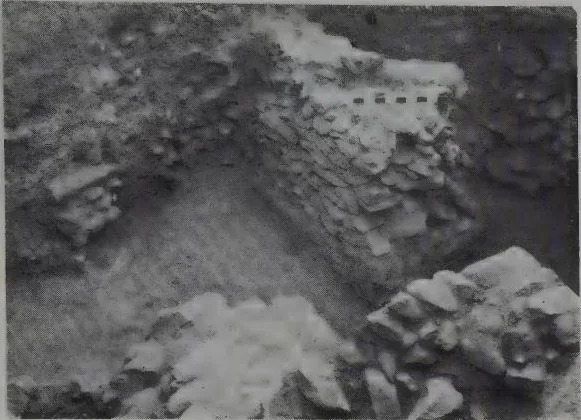
Plate 6.23. ST XXIIH: the steps and first platform extension. In the foreground, wall B to the east, more platform packing to the south, and a possible platform extension wall in the east section almost removed by pit 4d.2 views
Architecture & ruins

Steps and Platform Extension of ST XXIIH, Aksum

Aksum, Ethiopia

Excavations at Aksum: An Account of Research at the Ancient Ethiopian Capitalprinted p. 99

S. C. Munro-Hay, Excavations at Aksum: An Account of Research at the Ancient Ethiopian Capital (1989), printed p. 99, Plate 6.23.
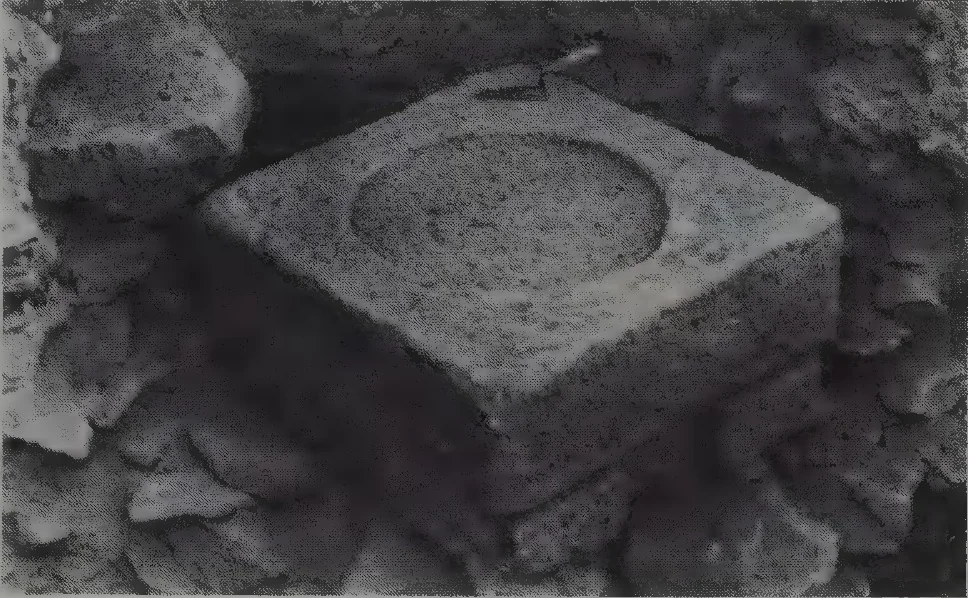
Plate 8.1 (top). ES 1: pillar base (re-used?) resting on rubble foundations at level 7.2 views
Architecture & ruins

ES 1 Pillar Base and Foundations, Aksum

Aksum, Ethiopia

HabeshaHistory printed corpusprinted p. 124

S. C. Munro-Hay, Excavations at Aksum: An Account of Research at the Ancient Ethiopian Capital (1989), printed p. 124, Plate 8.1.

Sources & image credits

Book images retain the cited page or figure number; library images retain their manuscript and folio references. “p. c.” marks an approximate page, and PDF page numbers are labelled separately. Comparative objects retain their recorded place of origin. Permission to display an image here does not grant permission to reuse it elsewhere.

3D reconstructions In progress ↗