The Habesha Collections

Browse artifacts, historic architecture and Ethiopian manuscript painting, with each record linked to its printed or institutional source.

Catalogue879reviewed entries

Artifacts
134
Architecture
102
Manuscript art
643

Choose a collection

Artifacts

Arranged by recorded place

134 records

Africa, East Africa, Ethiopia, unknown silversmith

3 entries

Necklace (ashän ketab) with amulet pendants (tälsäm), late 1800s or early 1900s. The Cleveland Museum of Art, 2025.152.Modernartifact

Necklace (ashän ketab) with amulet pendants (tälsäm)

Silver-alloy necklace composed of numerous box-shaped amulet pendants (tälsäm) meant to ward off the evil eye or other dangers, linked to Islamic amuletic practices and held effective whether empty or containing magical or prayerful texts. The fine filigree and granulation work is characteristic of Harar as well as the Ethiopian Orthodox Christian city of Aksum. Ornate filigree jewelry was historically made in Ethiopia for royals and nobility by specialized silversmiths trained through long apprenticeships.

Date
late 1800s or early 1900s
Type
silver amulet necklace
Holding
The Cleveland Museum of Art
Necklace with beads (sadi?), late 1800s or early 1900s. The Cleveland Museum of Art, 2025.153.Modernartifact

Necklace with beads (sadi?)

Silver-alloy necklace made in Ethiopia in the late 1800s or early 1900s, strung with an abundance of phallic beads representing fertility framed by dozens of smaller silver beads. Specialist smiths melted silver into small balls that were attached to drawn rods of metal, topping each bead with a pile of tiny, grain-like granulations.

Date
late 1800s or early 1900s
Type
silver bead necklace
Holding
The Cleveland Museum of Art
Necklace (ashän ketab) with amulet pendants (tälsäm) and bead, late 1800s or early 1900s. The Cleveland Museum of Art, 2025.154.Modernartifact

Necklace (ashän ketab) with amulet pendants (tälsäm) and bead

Gold-washed necklace of mercury-gilded metal composed of numerous box-shaped amulet pendants (tälsäm) and a bead, made in Ethiopia in the late 1800s or early 1900s. The boxes, linked to Islamic amuletic practices, were meant to ward off the evil eye or other dangers whether empty or containing magical or prayerful texts. Their fine filigree and granulation work is characteristic of Harar as well as the Ethiopian Orthodox Christian city of Aksum.

Date
late 1800s or early 1900s
Type
gilded amulet necklace
Holding
The Cleveland Museum of Art

Africa, East Africa, probably Harar, Ethiopia, unknown silversmith

1 entry

Necklace (muriya or murriyya), late 1800s or early 1900s. The Cleveland Museum of Art, 2025.155.Modernartifact

Necklace (muriya or murriyya)

Gilt-silver necklace from the Ethiopian city of Harar, where it was worn only by Muslim women as part of the bridal trousseau. The spherical silver beads of this muriya necklace resemble Muslim prayer necklaces, while its warm yellow Baltic amber or Zanzibari copal beads conveyed the wearer's married status and her access to imported goods. Ornate filigree jewelry of this kind was made by specialized silversmiths trained through long apprenticeships.

Date
late 1800s or early 1900s
Type
gilt-silver bead necklace
Holding
The Cleveland Museum of Art

Amhara or Tigrinya peoples

1 entry

Hand Cross (mäsqäl)Medievalartifact

Hand Cross (mäsqäl)

Hand Cross (mäsqäl), made in Amhara or Tigrinya peoples and dated 18th century. The Met catalogues it as wood. Its recorded dimensions are H. 16 5/8 in. (42.2 cm)

Date
18th century
Type
Cross
Holding
Metropolitan Museum of Art, New York, NY

Central Ethiopia

2 entries

TriptychMedievalartifact

Triptych

Although Orthodox Christianity has been practiced in the highlands of Ethiopia since the 4th century, this elaborate triptych is rendered in the courtly First Gonderine style, which flourished during the reign of King Iyyasu I (1682-1706) and incorporated bold, richly decorated forms and figures. With its central panel featuring the Virgin Mary and child Jesus flanked by archangels Gabriel and Michael, this icon reflects the popularity of Marian worship within the Ethiopian liturgy. Medium: Tempera on linen, mounted on wood and bound with cord.

Date
Late 17th century
Type
triptych icon
Holding
Art Institute of Chicago
CrossMedievalartifact

Cross

In Ethiopian Christianity processional crosses in wood or metal are carried on tall wooden staffs and draped with rich fabrics during festivals and ceremonies. The blank area in the center of this example, which incorporates copper for the decorative finial, bronze for the shaft, and brass for the joining rivets, may have been intended for an image that was never realized. The stylized bird heads on the sides of the shaft are a symbol of Christ's resurrection. Medium: Copper, bronze, and brass.

Date
Mid-/late 15th century
Type
processional cross
Holding
Art Institute of Chicago

East Africa, probably Harar, Ethiopia, unknown silversmith

1 entry

Necklace with pendant (waqari or wakari?), likely early to mid-1900s. The Cleveland Museum of Art, 2025.151.Modernartifact

Necklace with pendant (waqari or wakari?)

Elaborate silver-alloy and glass pendant necklace (waqari), probably made and worn in the Muslim city of Harar in the early to mid-1900s. Its half-moon pendant takes a protective crescent shape — a talismanic form used in Ethiopia since the Aksumite Empire — and its upper filigreed capsule is an amulet. Such massive jewelry, worn by Muslim women, holds aesthetic links to nearby Yemen.

Date
likely early to mid-1900s
Type
silver pendant necklace
Holding
The Cleveland Museum of Art

Ethiopia — region not recorded

30 entries

Processional CrossMedievalartifact

Processional Cross

Processional Cross, dated 13th–early 14th century. The Met catalogues this object as copper alloy, from Ethiopia. Its recorded dimensions are 24.7 × 12.1 × 2.6 cm.

Date
13th–early 14th century
Type
Processional cross
Holding
Metropolitan Museum of Art, New York, NY
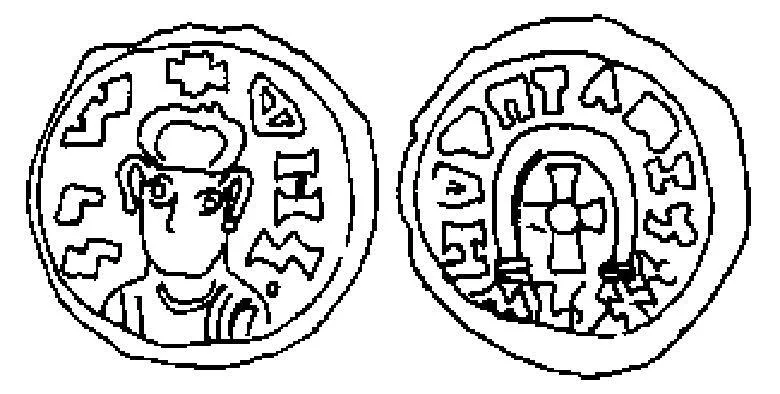
AXUM. Ezanas. Circa 330-360Ancientartifact

AXUM. Ezanas. Circa 330-360

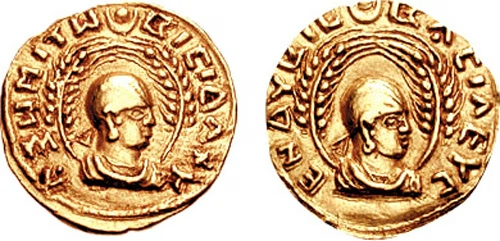
AXUM. Ezanas. Circa 330-360. Catalogued on Wikimedia Commons under Axumite coins. The file description records: AXUM. Ezanas. Circa 330-360 Photograph credited to CNG Coins.

Type
coin
Holding
CNG Coins Coin from CNG coins . Used with permission (CNG coin Coin
King John (1884) - TIMEAModernartifact

King John (1884) - TIMEA

King John (1884) - TIMEA. Catalogued on Wikimedia Commons under Sabres of Ethiopia. The file description records: King John of Abyssinia riding a white horse into battle. He is decked out in full war regalia including a spear, shield and cape. Photograph credited to Unknown author.

Date
1884
Type
sabre
Holding
This image comes from the Travelers in the Middle East Archive (TIMEA) where it is available at the following Uniform Re
Aphilas tiaraAncientartifact

Aphilas tiara

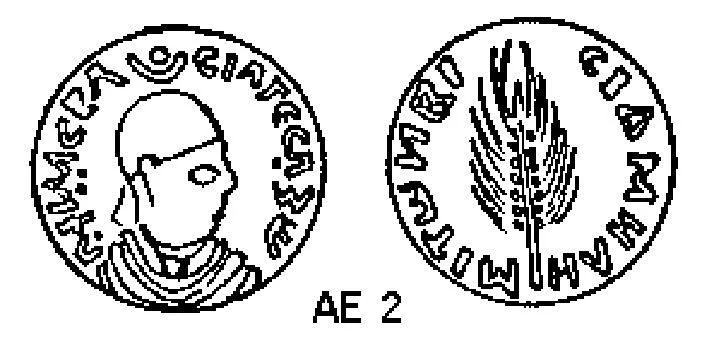
Aphilas tiara. Catalogued on Wikimedia Commons under Axumite coins. The file description records: Negus Aphilas of Aksum gold issue coin from the 4th century. Photograph credited to Commissioned by King Aphilas in the 4th century.

Type
coin
Holding
https://www.romanumismatics.com/
Aphilas front gold 02Ancientartifact

Aphilas front gold 02

Aphilas front gold 02. Catalogued on Wikimedia Commons under Axumite coins. The file description records: Aphilas coin Aksum Photograph credited to King/Negus Aphilas commissioned these coins nearly 2000 years ago..

Type
coin
Holding
https://www.romanumismatics.com/
Wazeba 12mmAncientartifact

Wazeba 12mm

Wazeba 12mm. Catalogued on Wikimedia Commons under Axumite coins. The file description records: Wazeba King of Aksum Photograph credited to Wazeba of Aksum.

Type
coin
Holding
https://www.romanumismatics.com/
Ethiopian infantry with BAR automatic rifle (LBS MH02-22-0612)Modernartifact

Ethiopian infantry with BAR automatic rifle (LBS MH02-22-0612)

Ethiopian infantry with BAR automatic rifle (LBS MH02-22-0612). Catalogued on Wikimedia Commons under Weapons of Ethiopia. The file description records: Gefechtsübung der abessinischen Infanterie im Eukalyptuswald Photograph credited to ETH-Bibliothek Zürich, Bildarchiv/Stiftung Luftbild Schweiz / Fotograf: Mittelholzer, Walter / LBS_MH02-22-0612 / Public.

Date
ca. 3/1934
Type
weapon
Holding
http://doi.org/10.3932/ethz-a-000244336
2006.11 - Triptych IconMedievalartifact

2006.11 - Triptych Icon

2006.11 - Triptych Icon. Catalogued on Wikimedia Commons under Icons of Ethiopia. The file description records: Title Triptych Icon Place Ethiopia (Object made in) Date Made 1682–1706 Medium Tempera on linen, mounted on wood and bound with cord Dimensions 67 × 74 cm (26 3/8 × 29 1/8 in.) Credit Line Director's Fund Reference Number 2006.11 IIIF Manifest https://api.artic.edu/api/v1/artworks/185651/manifest.json Mr. Vesecchi, Milan, Italy [this and the following according to A. Mitrano communicated by Sam Fogg Oct. 24, 2005, do Photograph credited to Unknown author Unknown author.

Date
circa 2020
Type
icon painting
Holding
https://www.artic.edu/artworks/185651/triptych-icon
Henry Salt - Inscription found at AxumAncientartifact

Henry Salt - Inscription found at Axum

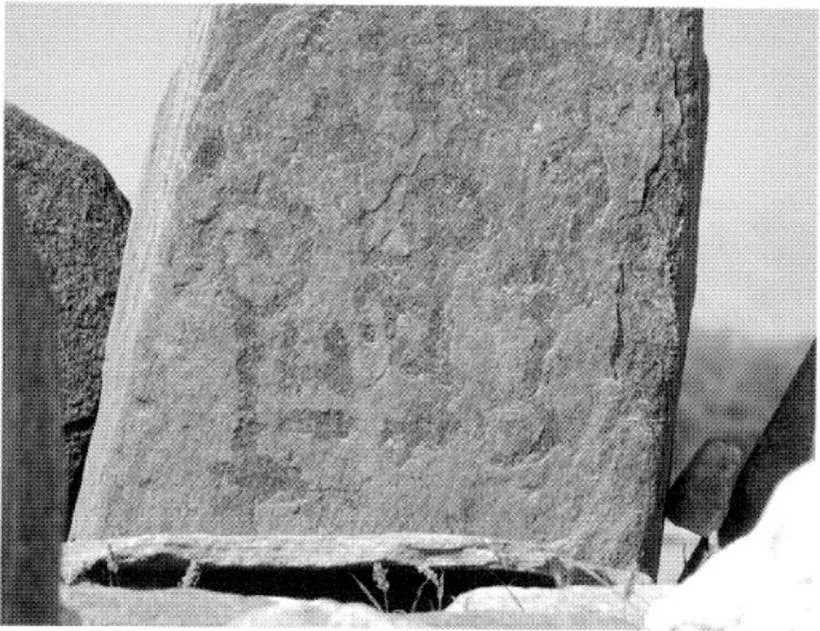
Henry Salt - Inscription found at Axum. Catalogued on Wikimedia Commons under Ethiopic-script inscriptions. The file description records: Plate 16, Inscription found at Axum, (by mistake Acum engraved on the plate). Photograph credited to Henry Salt.

Date
1809-05
Type
inscription
Holding
Voyages and Travels to India, Ceylon, the Red Sea, Abyssinia, and Egypt Vol. 3, page 181
WazebaGe'ezLegendAncientartifact

WazebaGe'ezLegend

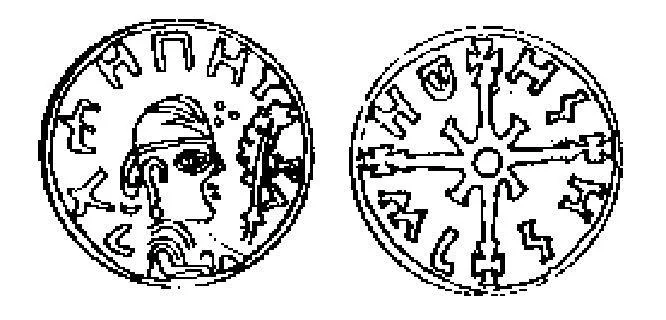
WazebaGe'ezLegend. Catalogued on Wikimedia Commons under Axumite coins. The file description records: Sketch of gold coin of King w:Wazeba of Aksum . First and only ruler to use the w:Ge'ez language and script on Gold coins instead of Greek . Photograph credited to Unknown author Unknown author.

Type
coin
Holding
sconosciuta
EthioKampenMedievalartifact

EthioKampen

EthioKampen. Catalogued on Wikimedia Commons under Icons of Ethiopia. The file description records: Mother and Child. Two angels watching. Icon from Ethiopia, 20th century. Ikonenmuseum, Kampen. Photograph credited to unknown artist; photo by Vysotsky.

Type
icon painting
Photo Processional cross from the treasure of the Church of Yemrehanna Kristos. 1964 - Touring Club Italiano BAP 1163Medievalartifact

Photo Processional cross from the treasure of the Church of Yemrehanna Kristos. 1964 - Touring Club Italiano BAP 1163

Photo Processional cross from the treasure of the Church of Yemrehanna Kristos. 1964 - Touring Club Italiano BAP 1163. Catalogued on Wikimedia Commons under Crosses from Ethiopia. The file description records: Processional cross from the treasure of the Church of Yemrehanna Kristos. Photograph credited to Unknown author Unknown author.

Date
1964
Type
cross
Holding
Touring Club Italiano
Äthiopien Anhängerikone Museum Rietberg EFA 18Medievalartifact

Äthiopien Anhängerikone Museum Rietberg EFA 18

Äthiopien Anhängerikone Museum Rietberg EFA 18. Catalogued on Wikimedia Commons under Icons of Ethiopia. The file description records: Doppelseitige Anhänger-Ikone, Äthiopien, erster Gondarine-Stil, 17. Jh., Tempera und Gesso auf Olienholz Museum Rietberg, Zürich; Dauerleihgabe Barbara und Eberhard Fischer, Inv. Nr. EFA 18 Photograph credited to Anonymous Unknown author.

Date
17 th century
Type
icon painting
Äthiopien Grosses Triptychon Museum Rietberg EFA 15 img01Medievalartifact

Äthiopien Grosses Triptychon Museum Rietberg EFA 15 img01

Äthiopien Grosses Triptychon Museum Rietberg EFA 15 img01. Catalogued on Wikimedia Commons under Icons of Ethiopia. The file description records: Great Triptych, Ethiopia, c. 1700, tempera on fabric on wood; Museum Rietberg, Zurich, Switzerland; permanent loan by Barbara and Eberhard Fischer, inv. No. EFA 15 Photograph credited to attributed to Bartaeloméwas.

Date
circa 1700
Type
icon painting
Äthiopien Grosses Triptychon Museum Rietberg EFA 15 img03Medievalartifact

Äthiopien Grosses Triptychon Museum Rietberg EFA 15 img03

Äthiopien Grosses Triptychon Museum Rietberg EFA 15 img03. Catalogued on Wikimedia Commons under Icons of Ethiopia. The file description records: Detail of: Great Triptych, Ethiopia, c. 1700, tempera on fabric on wood; Museum Rietberg, Zurich, Switzerland; permanent loan by Barbara and Eberhard Fischer, inv. No. EFA 15 Photograph credited to attributed to Bartaeloméwas.

Date
circa 1700
Type
icon painting
Äthiopien Grosses Triptychon Museum Rietberg EFA 15 img04Medievalartifact

Äthiopien Grosses Triptychon Museum Rietberg EFA 15 img04

Äthiopien Grosses Triptychon Museum Rietberg EFA 15 img04. Catalogued on Wikimedia Commons under Icons of Ethiopia. The file description records: Detail of: Great Triptych, Ethiopia, c. 1700, tempera on fabric on wood; Museum Rietberg, Zurich, Switzerland; permanent loan by Barbara and Eberhard Fischer, inv. No. EFA 15 Photograph credited to attributed to Bartaeloméwas.

Date
circa 1700
Type
icon painting
Äthiopien Grosses Triptychon Museum Rietberg EFA 15 img05Medievalartifact

Äthiopien Grosses Triptychon Museum Rietberg EFA 15 img05

Äthiopien Grosses Triptychon Museum Rietberg EFA 15 img05. Catalogued on Wikimedia Commons under Icons of Ethiopia. The file description records: Detail of: Great Triptych, Ethiopia, c. 1700, tempera on fabric on wood; Museum Rietberg, Zurich, Switzerland; permanent loan by Barbara and Eberhard Fischer, inv. No. EFA 15 Photograph credited to attributed to Bartaeloméwas.

Date
circa 1700
Type
icon painting
Äthiopien Grosses Triptychon Museum Rietberg EFA 15 img06Medievalartifact

Äthiopien Grosses Triptychon Museum Rietberg EFA 15 img06

Äthiopien Grosses Triptychon Museum Rietberg EFA 15 img06. Catalogued on Wikimedia Commons under Icons of Ethiopia. The file description records: Detail of: Great Triptych, Ethiopia, c. 1700, tempera on fabric on wood; Museum Rietberg, Zurich, Switzerland; permanent loan by Barbara and Eberhard Fischer, inv. No. EFA 15 Photograph credited to attributed to Bartaeloméwas.

Date
circa 1700
Type
icon painting
Äthiopien Grosses Triptychon Museum Rietberg EFA 15 img07Medievalartifact

Äthiopien Grosses Triptychon Museum Rietberg EFA 15 img07

Äthiopien Grosses Triptychon Museum Rietberg EFA 15 img07. Catalogued on Wikimedia Commons under Icons of Ethiopia. The file description records: Detail of: Great Triptych, Ethiopia, c. 1700, tempera on fabric on wood; Museum Rietberg, Zurich, Switzerland; permanent loan by Barbara and Eberhard Fischer, inv. No. EFA 15 Photograph credited to attributed to Bartaeloméwas.

Date
circa 1700
Type
icon painting
Ethiopian - Processional Cross - Walters 542942 - Side AMedievalartifact

Ethiopian - Processional Cross - Walters 542942 - Side A

Ethiopian - Processional Cross - Walters 542942 - Side A. Catalogued on Wikimedia Commons under Processional crosses of Ethiopia. The file description records: The body of this piece is constructed of a pattern of interlocking circles. The incised lines at the intersection of vertical and horizontal elements create thirteen small crosses out of the interlaced design of the body. Three larger crosses spring forth at the top and terminal ends of the cross, defining the cruciform shape of the entire object. The complicated interlace design is found in Ethiopian manuscript illu Photograph credited to Anonymous ( Ethiopia ) Unknown author.

Date
15 th century
Type
processional cross
Holding
Walters Art Museum : Home page Info about artwork
Ethiopian - Pendant Cross - Walters 57225424Medievalartifact

Ethiopian - Pendant Cross - Walters 57225424

Ethiopian - Pendant Cross - Walters 57225424. Catalogued on Wikimedia Commons under Crosses from Ethiopia. The file description records: Pendant crosses show the inventiveness of Ethiopian metalworkers in embellishing the simple form of the cross with a rich variety of designs. Worn around the neck by the faithful to ward off evil, these small crosses could be made of braided leather, carved wood, or cast metal. Photograph credited to Anonymous ( Ethiopia ) Unknown author.

Date
19 th century
Type
cross
Holding
Walters Art Museum : Home page Info about artwork
Ethiopian - One of Two Coins Depicting Ousanas and an Anonymous King - Walters 59794Ancientartifact

Ethiopian - One of Two Coins Depicting Ousanas and an Anonymous King - Walters 59794

Ethiopian - One of Two Coins Depicting Ousanas and an Anonymous King - Walters 59794. Catalogued on Wikimedia Commons under Axumite coins. The file description records: The Aksumite Kingdom began to issue coins about AD 270. Silver and bronze coins were issued for local, everyday use, and generally followed the design of Roman coins with a bust portrait of the ruler in profile on one side. Aksumite coins were the first in the ancient world to carry the cross as a symbol of the ruler's devotion to the Christian religion. Photograph credited to Anonymous ( Ethiopia ) Unknown author.

Date
4 th century
Type
coin
Holding
Walters Art Museum : Home page Info about artwork
Ethiopian - Processional Cross - Walters 542890Medievalartifact

Ethiopian - Processional Cross - Walters 542890

Ethiopian - Processional Cross - Walters 542890. Catalogued on Wikimedia Commons under Processional crosses of Ethiopia. The file description records: This cross, which survives in nearly pristine condition, was cast in one piece, with the base and body formed of the same material. The high degree of perforation, creating a radiating lattice of crosses, would have been difficult to achieve in any other medium. Because of its inherent strength, bronze was ideally suited to this kind of treatment. The design is rigorously geometric, dominated by the interaction of ci Photograph credited to Anonymous ( Ethiopia ) Unknown author.

Date
14 th century
Type
processional cross
Holding
Walters Art Museum : Home page Info about artwork
Ethiopian - Coin Depicting an Anonymous King - Walters 59793 - ObverseAncientartifact

Ethiopian - Coin Depicting an Anonymous King - Walters 59793 - Obverse

Ethiopian - Coin Depicting an Anonymous King - Walters 59793 - Obverse. Catalogued on Wikimedia Commons under Axumite coins. The file description records: The Aksumite Kingdom began to issue coins about AD 270. Silver and bronze coins were issued for local, everyday use, and generally followed the design of Roman coins with a bust portrait of the ruler in profile on one side. Aksumite coins were the first in the ancient world to carry the cross as a symbol of the ruler's devotion to the Christian religion. Photograph credited to Anonymous ( Ethiopia ) Unknown author.

Date
4 th century
Type
coin
Holding
Walters Art Museum : Home page Info about artwork
Ethiopian - Coin Depicting an Anonymous King - Walters 59793 - ReverseAncientartifact

Ethiopian - Coin Depicting an Anonymous King - Walters 59793 - Reverse

Ethiopian - Coin Depicting an Anonymous King - Walters 59793 - Reverse. Catalogued on Wikimedia Commons under Axumite coins. The file description records: The Aksumite Kingdom began to issue coins about AD 270. Silver and bronze coins were issued for local, everyday use, and generally followed the design of Roman coins with a bust portrait of the ruler in profile on one side. Aksumite coins were the first in the ancient world to carry the cross as a symbol of the ruler's devotion to the Christian religion. Photograph credited to Anonymous ( Ethiopia ) Unknown author.

Date
4 th century
Type
coin
Holding
Walters Art Museum : Home page Info about artwork
Ethiopian - Processional Cross - Walters 542893 - View AMedievalartifact

Ethiopian - Processional Cross - Walters 542893 - View A

Ethiopian - Processional Cross - Walters 542893 - View A. Catalogued on Wikimedia Commons under Processional crosses of Ethiopia. The file description records: Although brass gradually replaced bronze as the primary material for crosses during the 15th century, crosses with incised figural decoration on the arms as well as the central panel did not appear until the Gondarine period. Unlike the earlier crosses, which were cast using the lost-wax technique, the separate components of this cross were cut from a flat sheet and welded together. The cross is, therefore, composed Photograph credited to Anonymous ( Ethiopia ) Unknown author.

Date
late 18 th century
Type
processional cross
Holding
Walters Art Museum : Home page Info about artwork
Menelik II in coronation garb, Emperor of EthiopiaMedievalartifact

Menelik II in coronation garb, Emperor of Ethiopia

Menelik II in coronation garb, Emperor of Ethiopia. Catalogued on Wikimedia Commons under Art of Ethiopia. The file description records: Emperor Menelik II photographed on the throne in coronation garb. Photograph credited to Unknown author Unknown author.

Date
End 19th century, early 20th century; subject died in 1913
Type
artwork
Holding
Pankhurst, Richard . Ethiopia Photographed: Historic Photographs of the Country and its People Taken Between 1867 and 19

Gondar (Begemder)

2 entries

Bound Manuscript: The Miracles of Mary (Te'amire Maryam)Medievalartifact

Bound Manuscript: The Miracles of Mary (Te'amire Maryam)

Created under King Yohannes (1667-1682) or King Iyyasu I (1682-1706), this manuscript in the First Gonderine style-with bold outlines and a rich palette-includes 32 painted scenes narrating the miracles performed by the Virgin Mary, a series intended to guide weekly devotion. These codified ‘Miracles of Mary' became one of the most popular themes for religious books after the intensification of Marian worship in the mid-15th century. Medium: Parchment, ink, tempera, wood, leather, cotton, and string.

Date
Late 17th century
Type
illuminated manuscript
Holding
Art Institute of Chicago
Diptych with Twelve Apostles & St. Paul, c. 1700. The Cleveland Museum of Art, 2023.4.Medievalartifact

Diptych with Twelve Apostles & St. Paul

Two-panel diptych in tempera on wood and textile depicting thirteen holy men — Christ's apostles and St Paul — sized for an Ethiopian Orthodox Christian church or elite home. Painted c. 1700, presumably at Gondär, in the bold, colorful style associated with royal court workshops of the early 1600s to mid-1700s, by the painter Wäldä Maryam or someone he trained. Captions in Geʿez identify each saint by name, and the figures wear fashionable clothing imported from India.

Date
c. 1700
Type
icon painting
Holding
The Cleveland Museum of Art

Highlands region

2 entries

Processional Cross (qäqwami mäsqäl) — view 1Medievalartifact

Processional cross (qäqwami mäsqäl)

The Metropolitan Museum of Art catalogues this object as “Processional Cross (qäqwami mäsqäl)”. The museum dates it to 15th–16th century. Its recorded cultural attribution is Amhara or Tigrinya peoples. The catalogue geography is Ethiopia; Highlands region. The recorded medium is Bronze. The catalogue dimensions are H. 9 1/2 x W. 6 1/2 in. (24.1 x 16.5 cm).
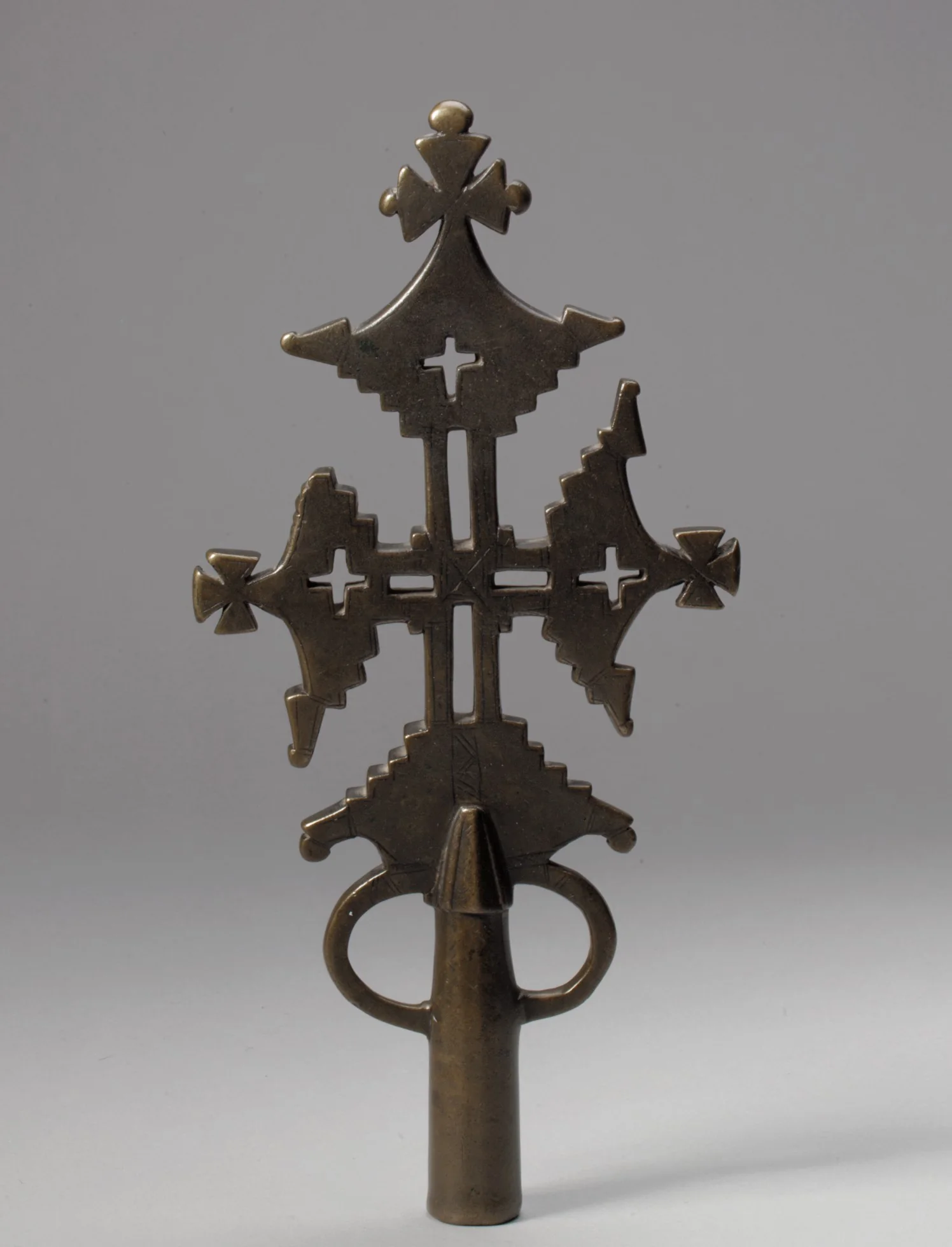
Date
15th–16th century
Type
Religious objects
Holding
The Metropolitan Museum of Art

Lasta

1 entry

Processional Cross — view 1Medievalartifact

Processional Cross

The Metropolitan Museum of Art catalogues this object as “Processional Cross”. The museum dates it to 14th–15th century. Its recorded cultural attribution is Northern Highlands region. The catalogue geography is Ethiopia; Lasta region. The recorded medium is Brass. The catalogue dimensions are H. 10 1/2 × W. 5 × D. 1 in. (26.7 × 12.7 × 2.5 cm).
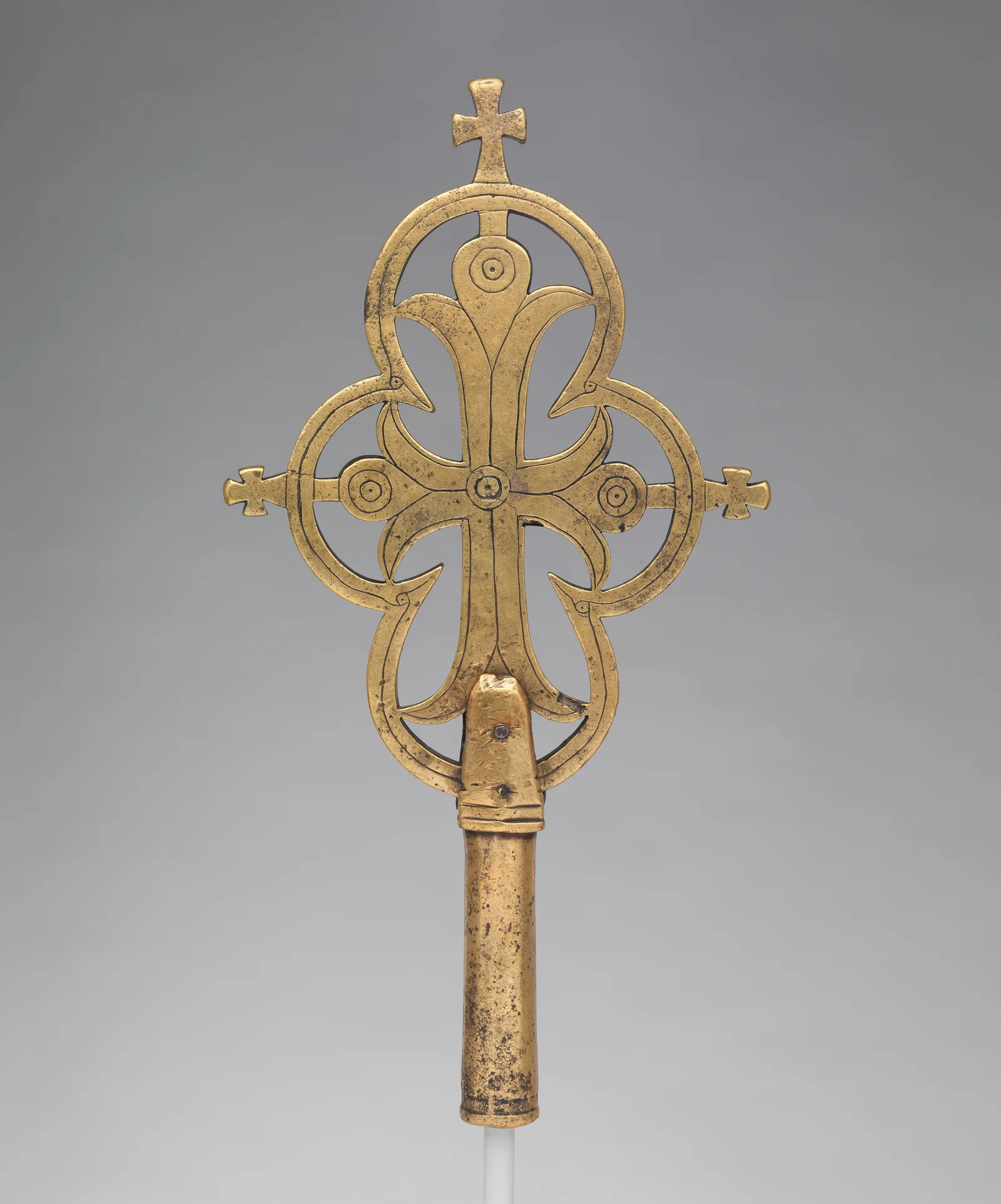
Date
14th–15th century
Type
Religious objects
Holding
The Metropolitan Museum of Art

Lasta region

2 entries

Processional CrossMedievalartifact

Processional Cross

Processional Cross, dated early 15th century. The Met catalogues this object as copper alloy, from Lasta region. Its recorded dimensions are 35.6 × 24.8 × 2.7 cm.

Date
early 15th century
Type
Processional cross
Holding
Metropolitan Museum of Art, New York, NY

Northern Highlands

1 entry

Mäsqälä qǝddase (liturgical cross) — view 1Medievalartifact

Mäsqälä qǝddase liturgical cross

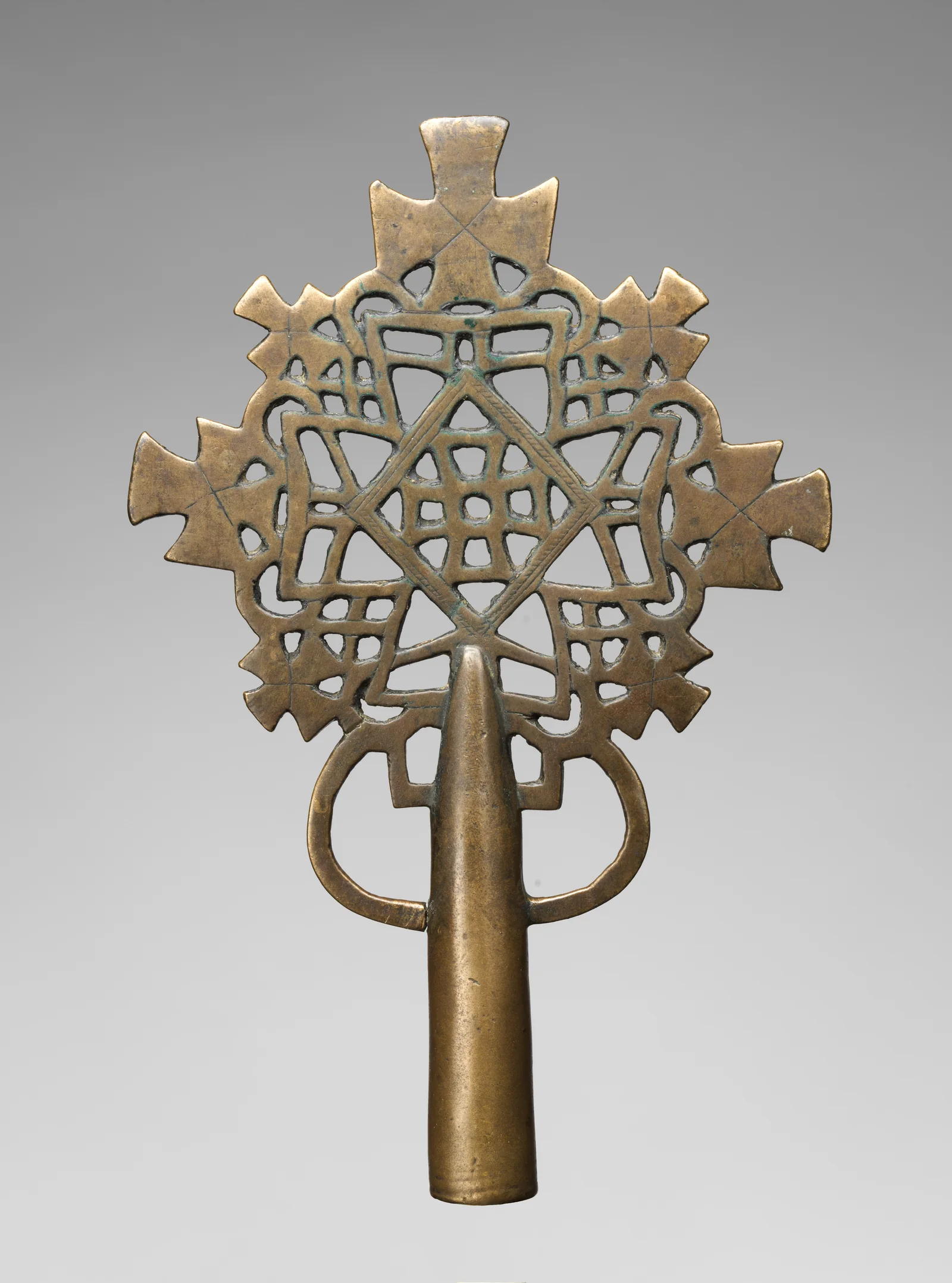
The Metropolitan Museum of Art catalogues this object as “Mäsqälä qǝddase (liturgical cross)”. The museum dates it to 13th–14th century. Its recorded cultural attribution is Northern Highlands region. The catalogue geography is Ethiopia; Northern Highlands. The recorded medium is Bronze. The catalogue dimensions are H. 12 13/16 × W. 6 11/16 × D. 1 in. (32.5 × 17 × 2.5 cm).
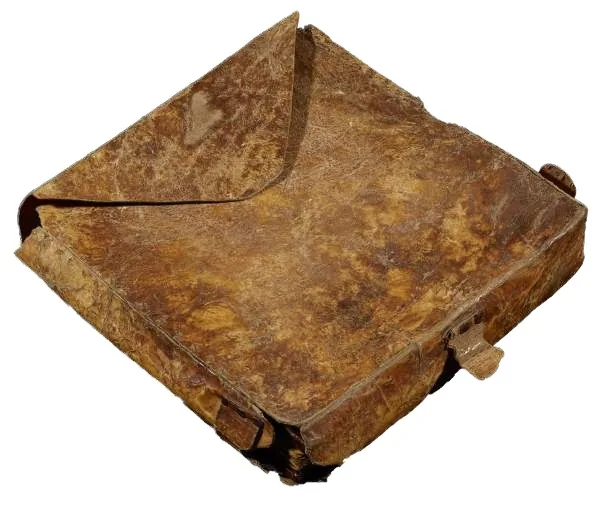
Date
13th–14th century
Type
Religious objects
Holding
The Metropolitan Museum of Art

Northern Highlands region

1 entry

Tigray region

1 entry

Yäʿğğ mäsqäl (hand cross)Medievalartifact

Yäʿğğ mäsqäl (hand cross)

Yäʿğğ mäsqäl (hand cross), made in Tigray region and dated 18th century. The Met catalogues it as wood, metal. Its recorded dimensions are H. 20 7/8 × W. 8 1/16 × D. 1/2 in. (53 × 20.5 × 1.3 cm)

Date
18th century
Type
Cross
Holding
Metropolitan Museum of Art, New York, NY

Showing 48 of 134

Join on Substack

New articles on Aksum, Adulis and the wider Horn, sent to your inbox the day they are published.

Join on Substack