
 Medievalarchitecture
Loading
Browse artifacts, historic architecture and Ethiopian manuscript painting, with each record linked to its printed or institutional source.
On view3550viewable works
Amhara
54 records
Amhara · Ethiopia
10 plates
Medievalarchitecture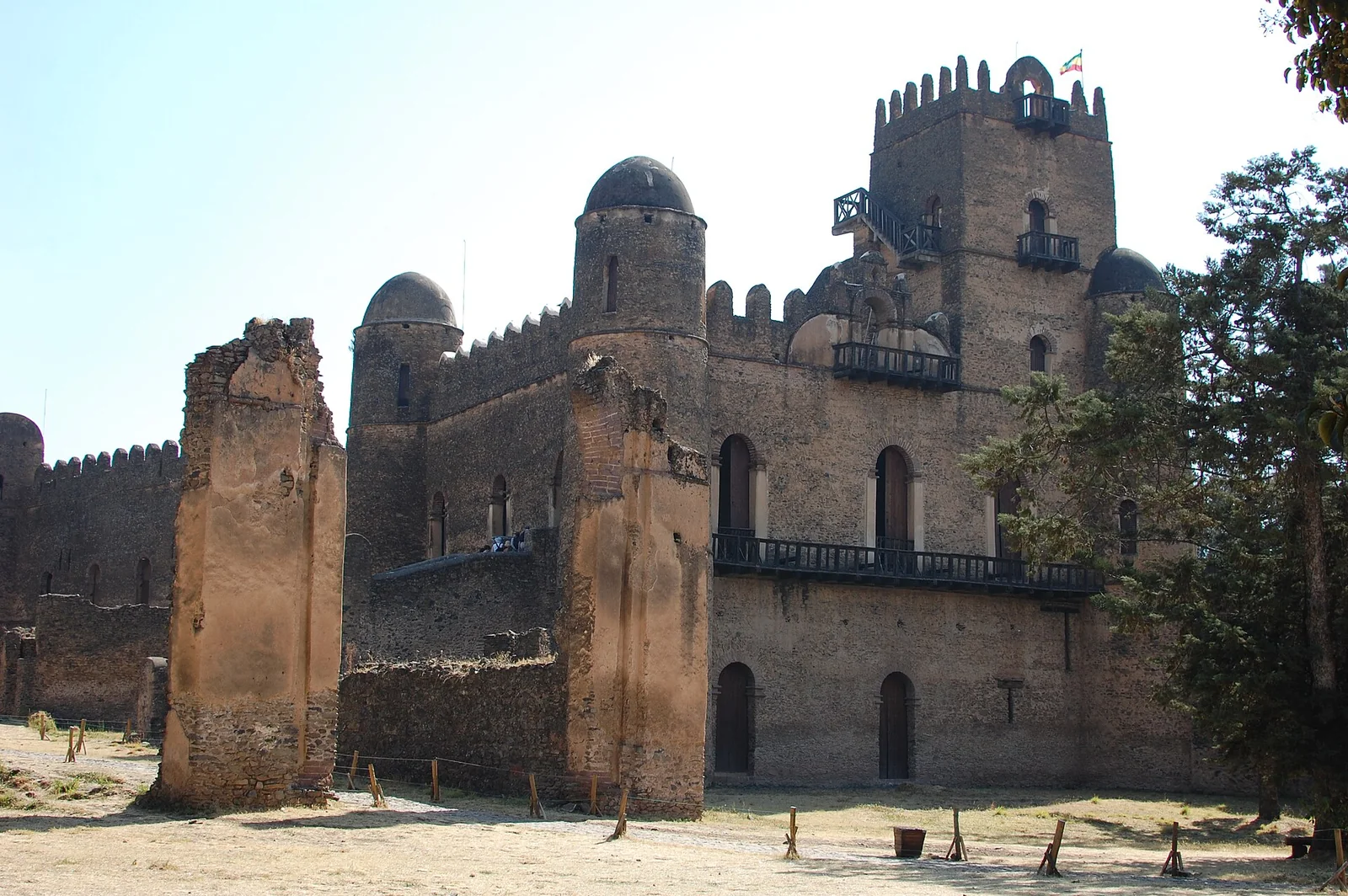 Medievalarchitecture
The castle of Emperor Fasilides at the heart of the Fasil Ghebbi in Gondar, a two-storey basalt keep with domed corner towers and battlemented parapets.
 Medievalarchitecture
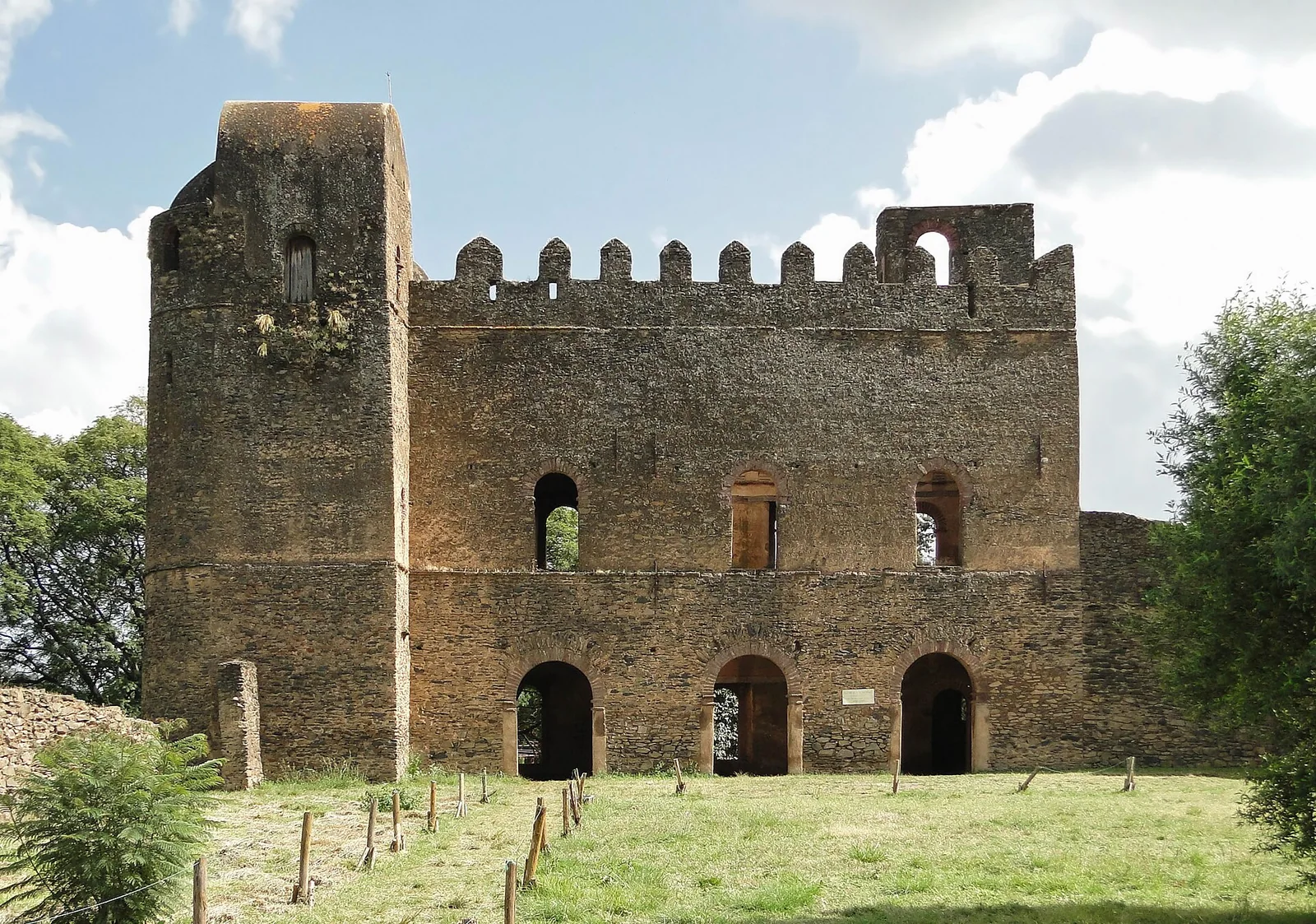
The palace of Iyasu I the Great in the Fasil Ghebbi, a long saddle-roofed hall on vaults, ruined by earthquake and bombardment but still rising beside his grandfather's keep.
 Medievalarchitecture
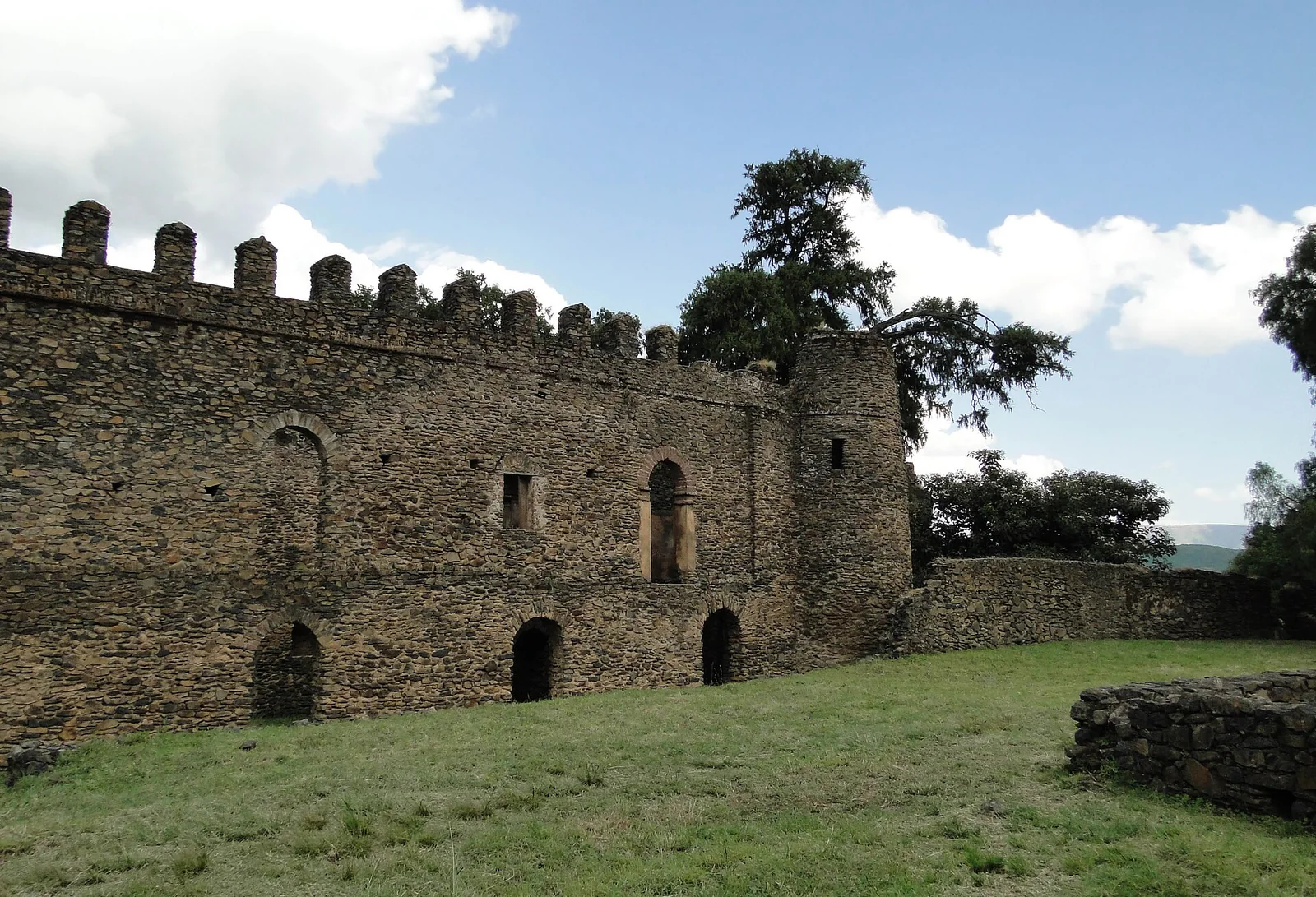
The palace and banqueting hall of Emperor Bakaffa in the northern Fasil Ghebbi, a long buttressed hall beside the stables, with the adjoining House of Song (Dawit III's Hall) that Commons files the same way.
 Medievalarchitecture
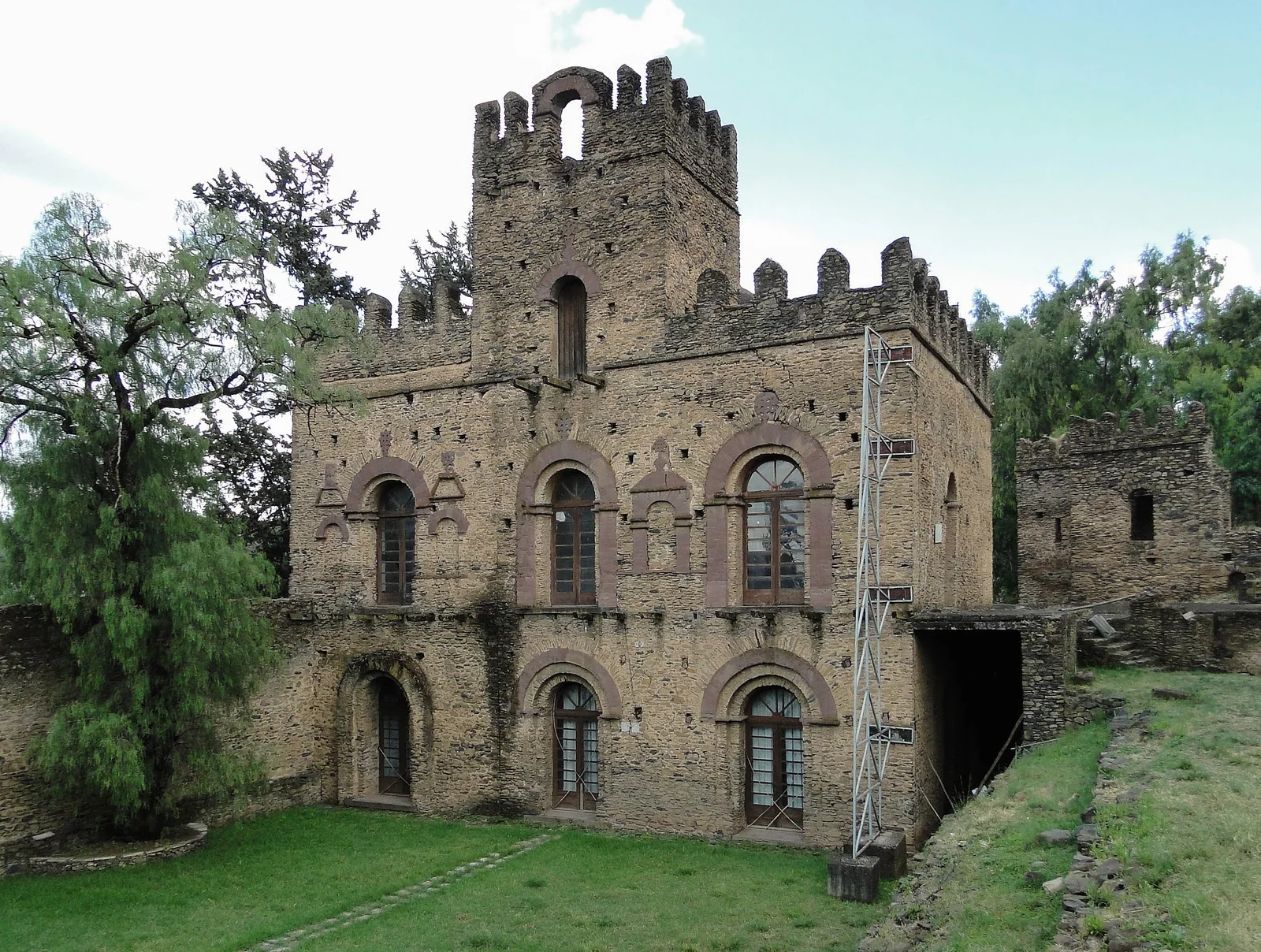
The castle of Empress Mentewab in the Fasil Ghebbi, a compact two-storey block whose doorways carry carved Gondarine crosses.
 Medievalarchitecture
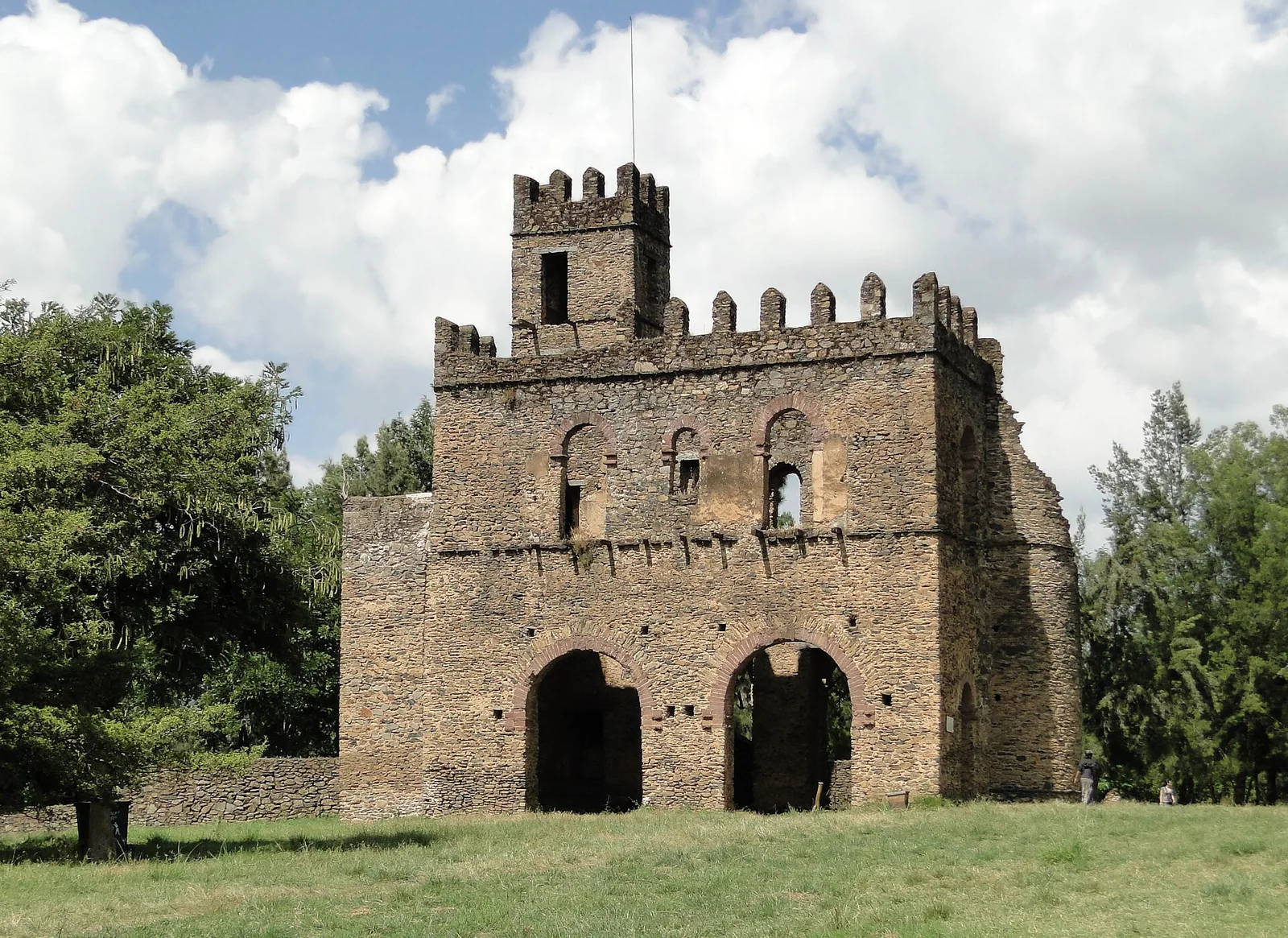
The chancellery and library of Emperor Yohannes I in the Fasil Ghebbi, paired lime-washed pavilions attributed to his reign.
 Medievalarchitecture
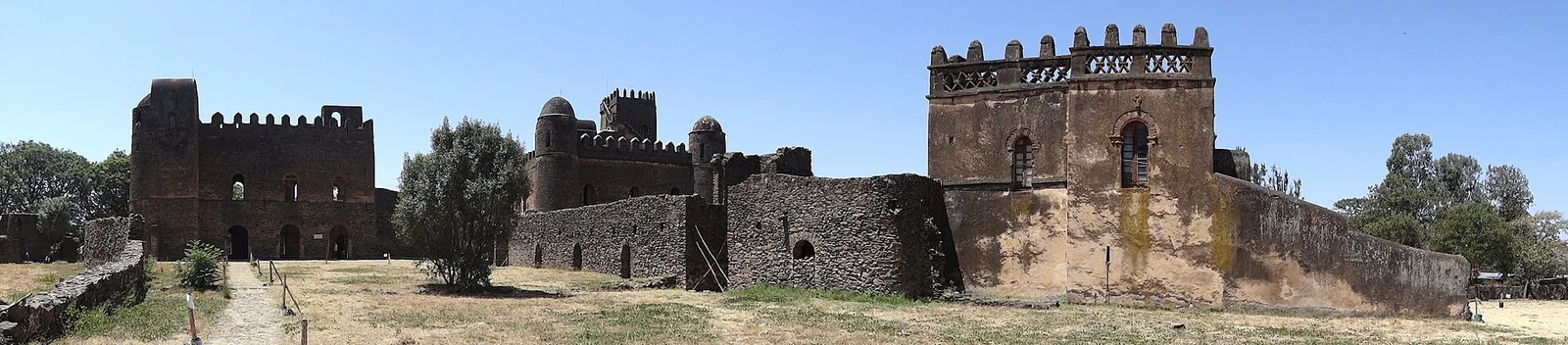
The high curtain wall of the Fasil Ghebbi with its twelve gates, enclosing the royal compound of the Gondarine emperors.
 Medievalarchitecture
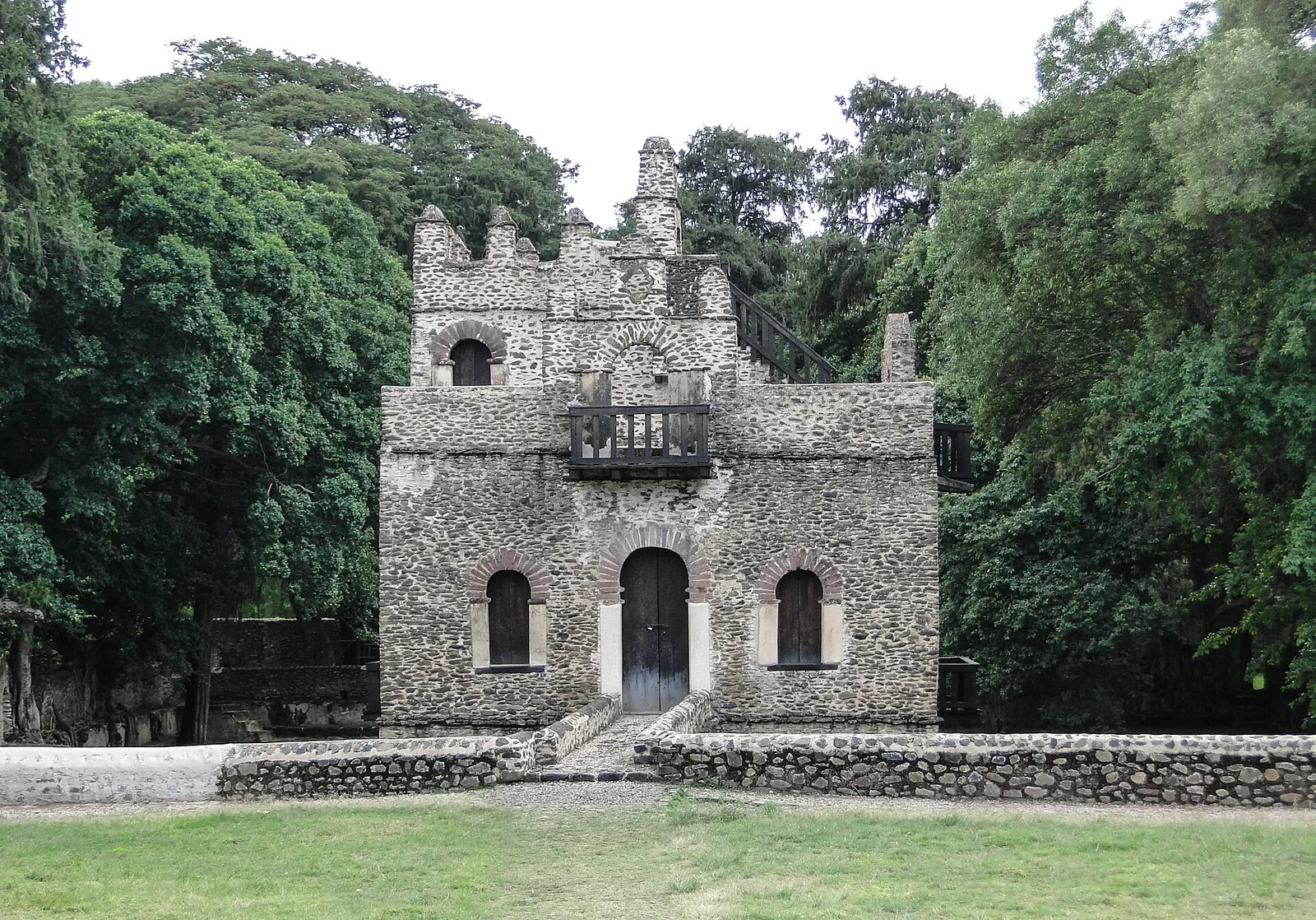
The bath of Fasilides outside Gondar, a battlemented pavilion standing in a great sunken basin that is flooded each year for the Timkat rites.
 Medievalarchitecture
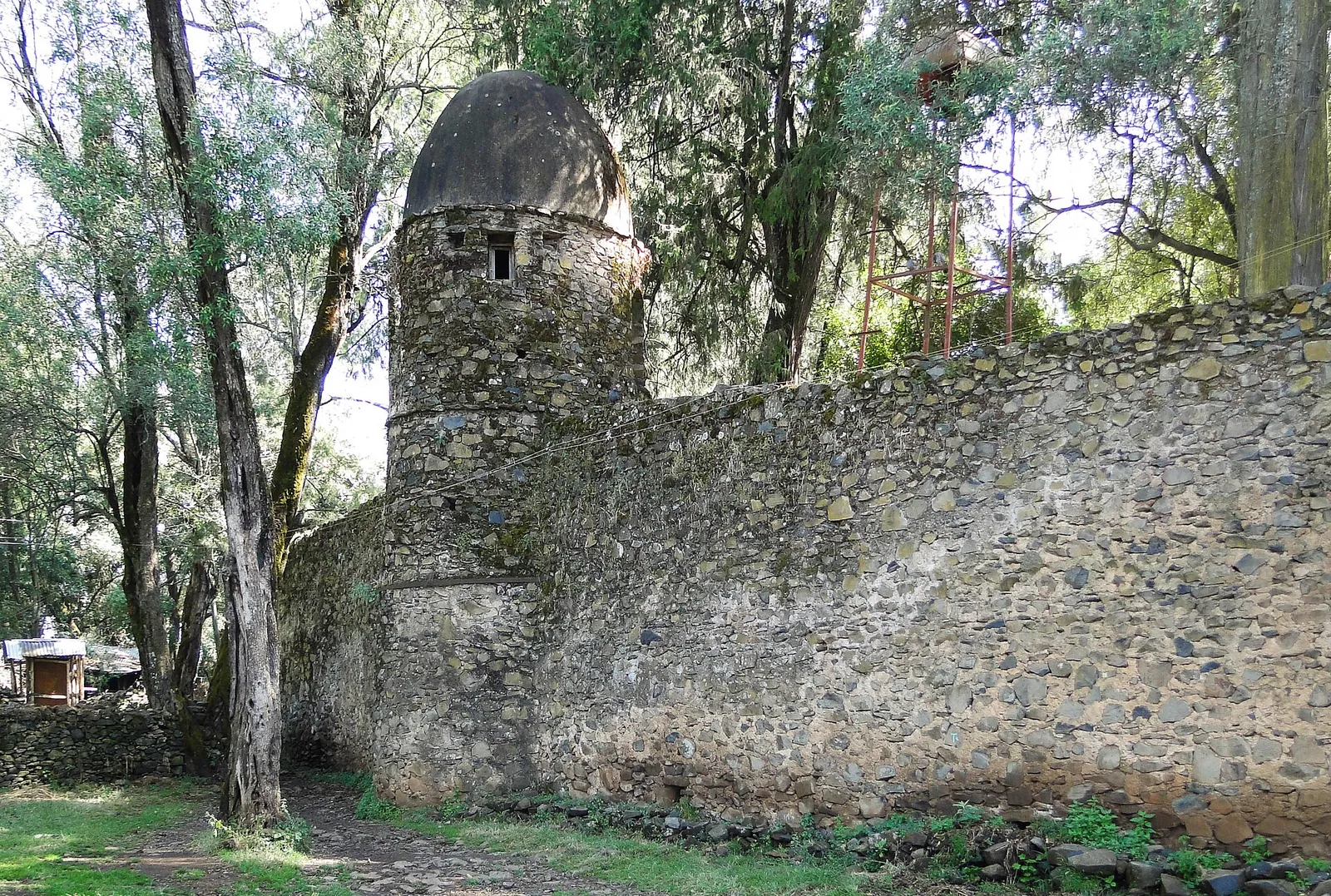
The church of Debre Berhan Selassie at Gondar within its towered precinct wall; founded under Iyasu I, it is the best-preserved of the Gondarine churches.
 Medievalarchitecture
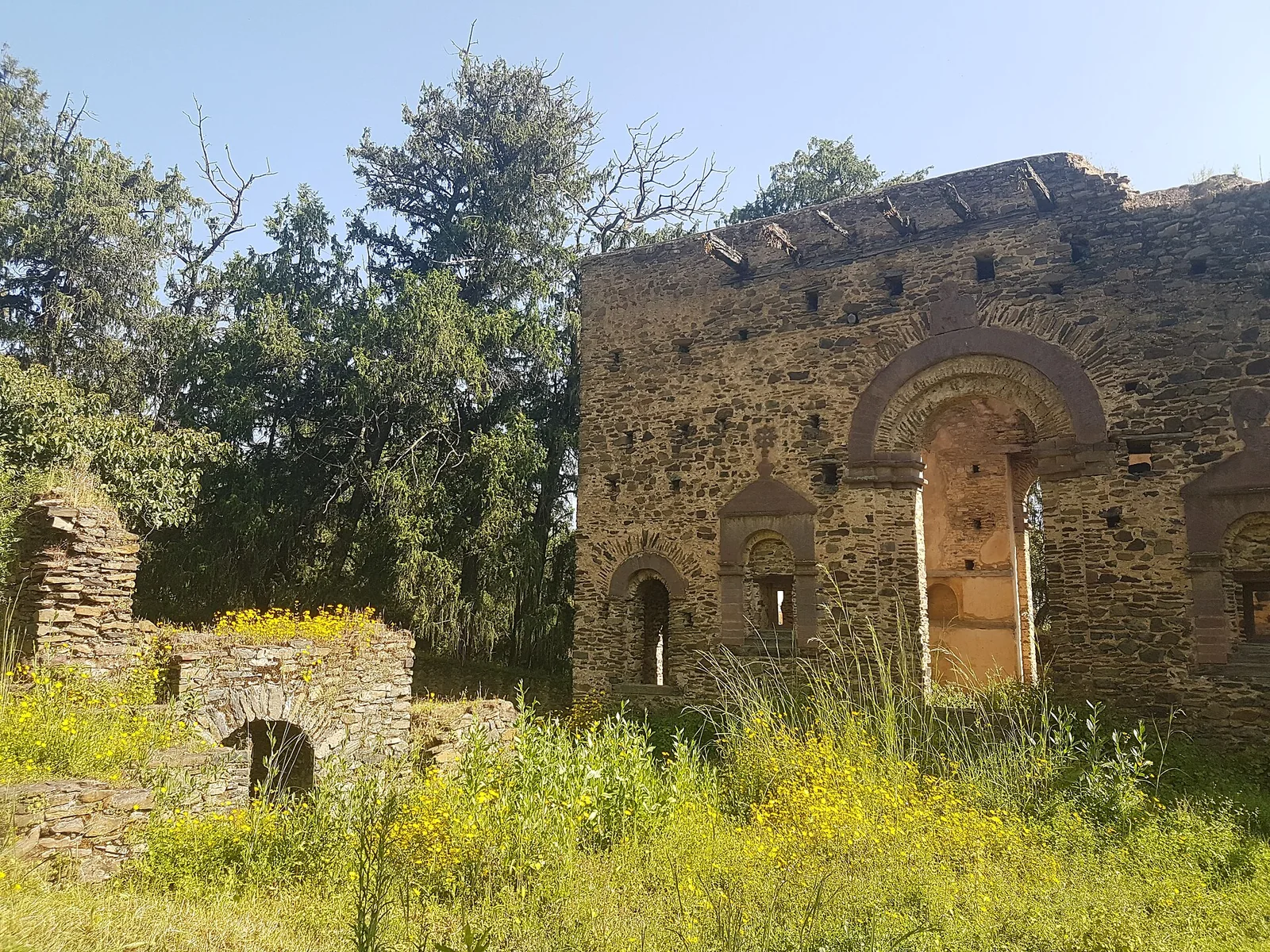
The Kuskwam complex on Debre Tsehay hill west of Gondar, the palace and church built for Empress Mentewab's retirement, now a walled ruin field.
Amhara · Ethiopia
19 plates
 Medievalarchitecture
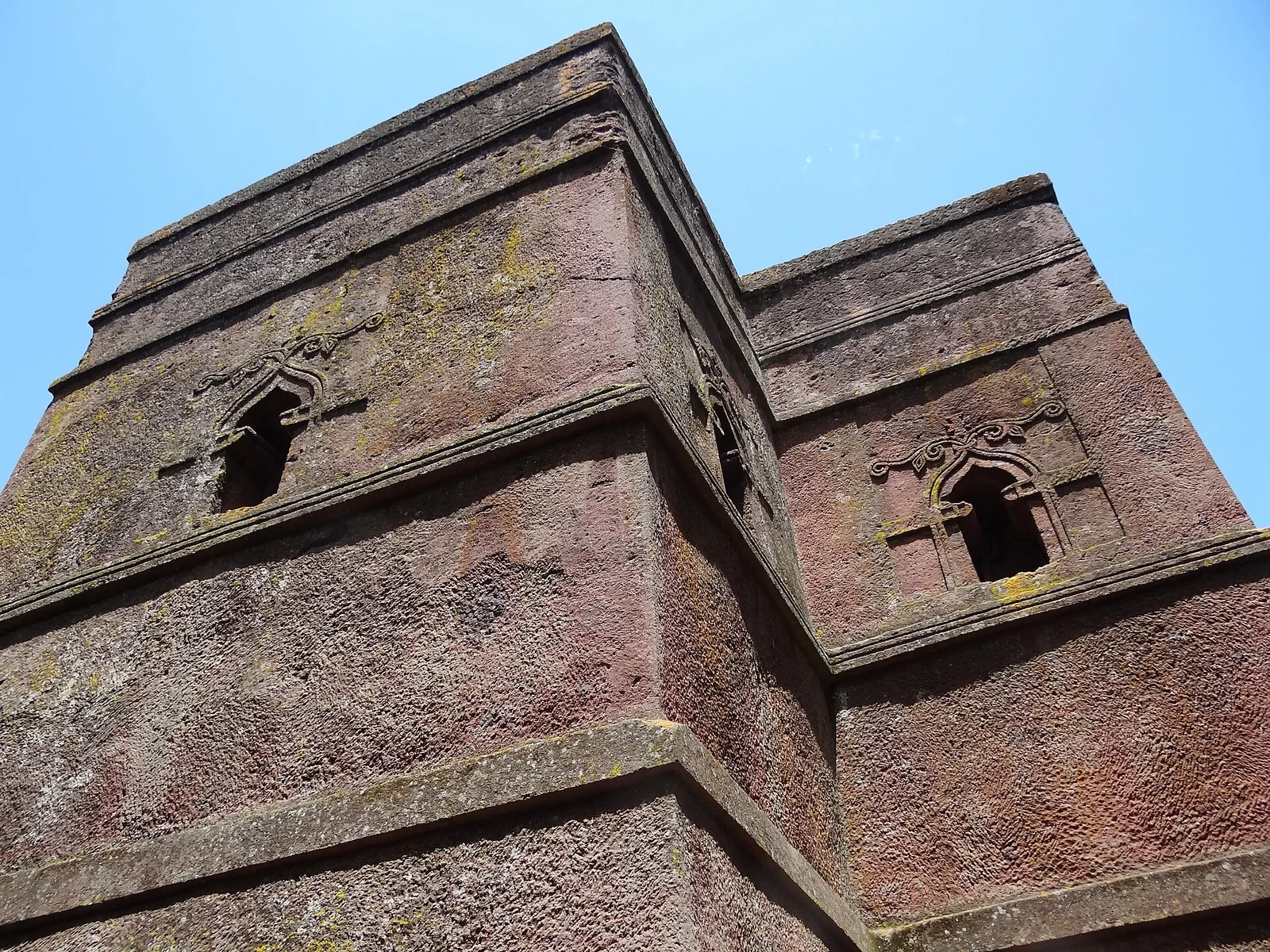
The cross-shaped monolithic church of Saint George, hewn downward into the volcanic scoria at Lalibela; the last and most refined of the town's eleven rock-hewn churches.
 Medievalarchitecture
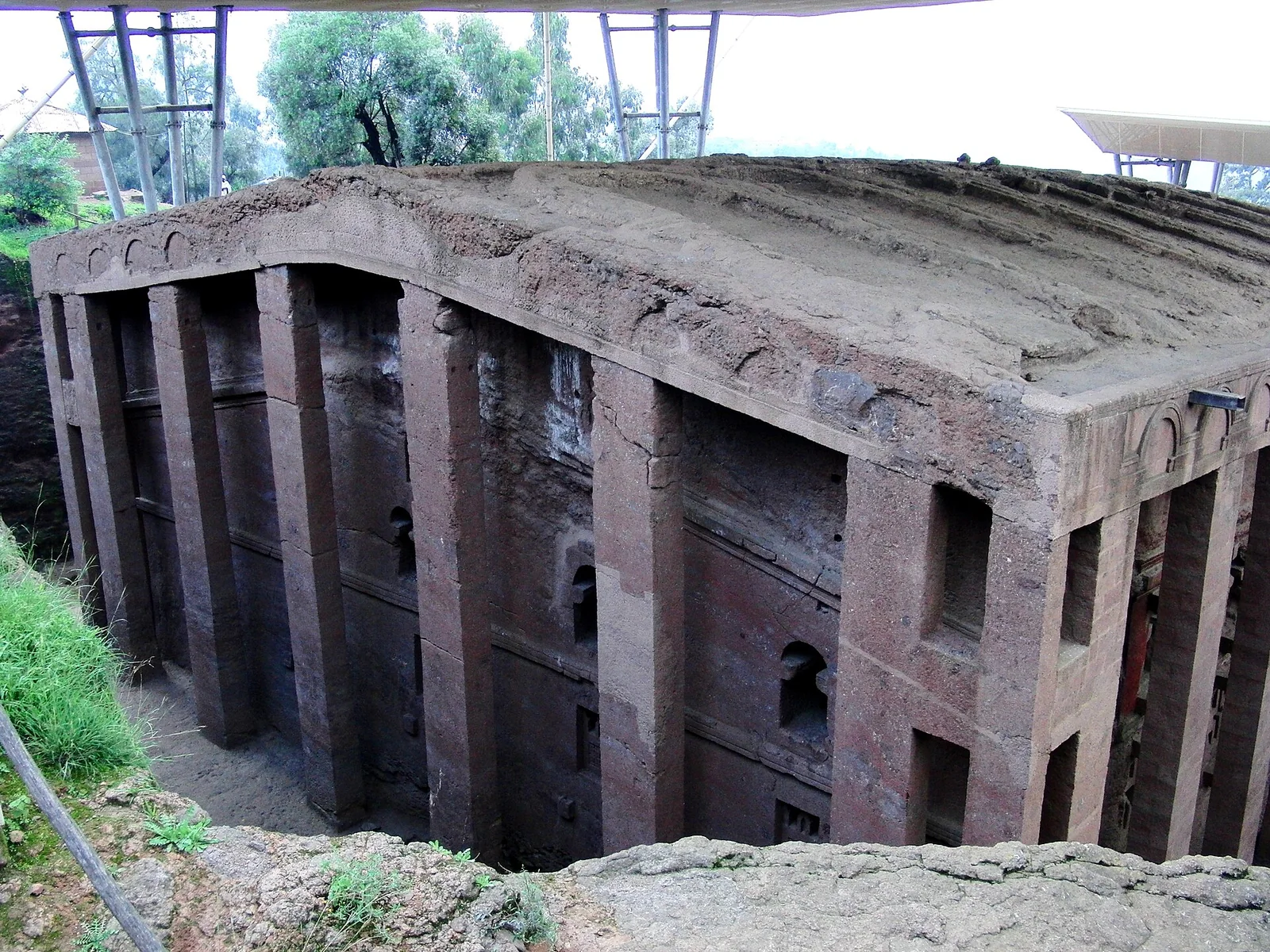
Biete Medhani Alem (House of the Saviour of the World), the largest monolithic rock-hewn church in the world, its exterior ringed by a colonnade of square-cut piers.
 Medievalarchitecture
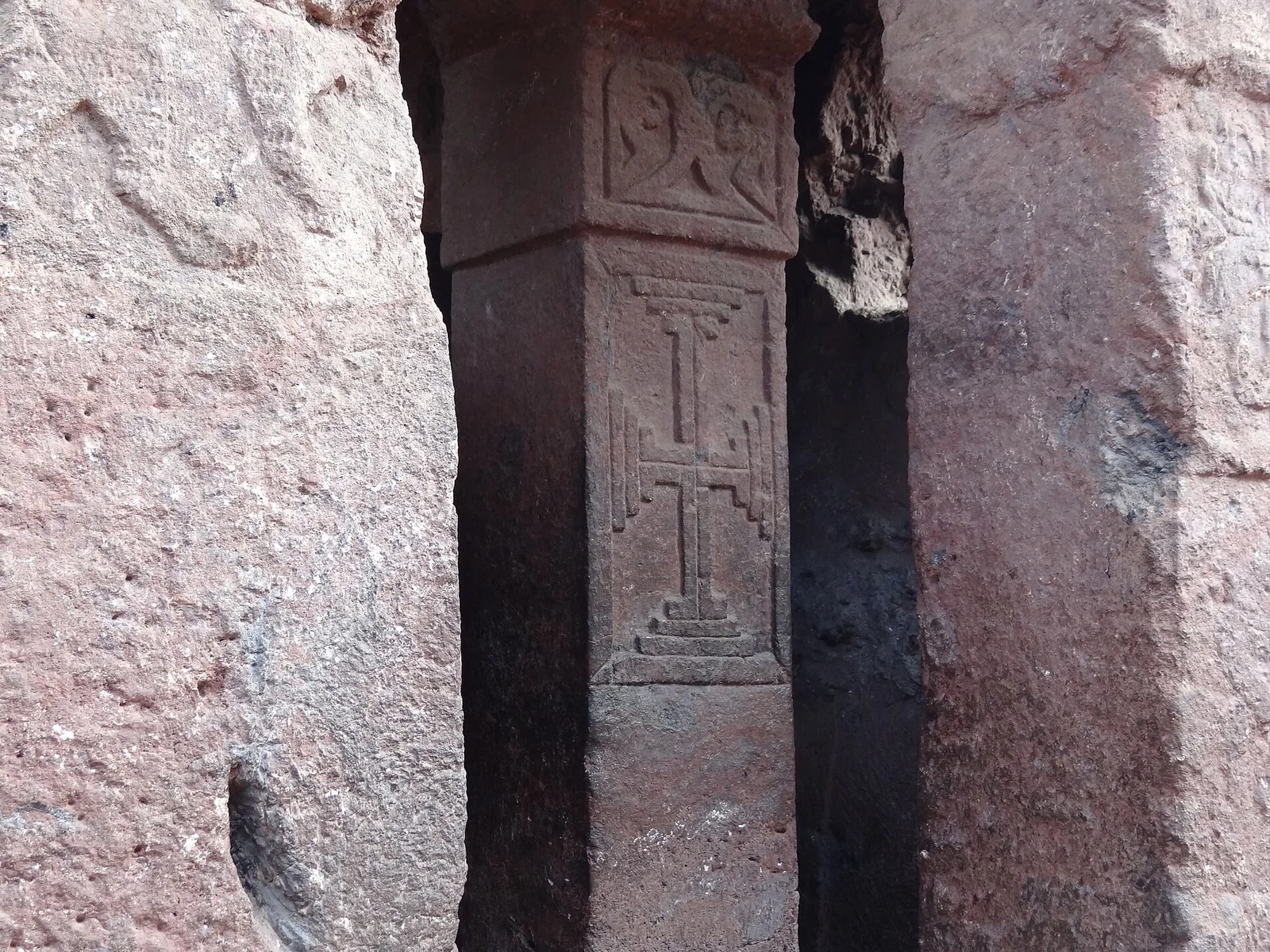
Biete Mariam (House of Mary), among the earliest of the Lalibela churches, standing in a deep rock-cut courtyard of the northern group.
 Medievalarchitecture
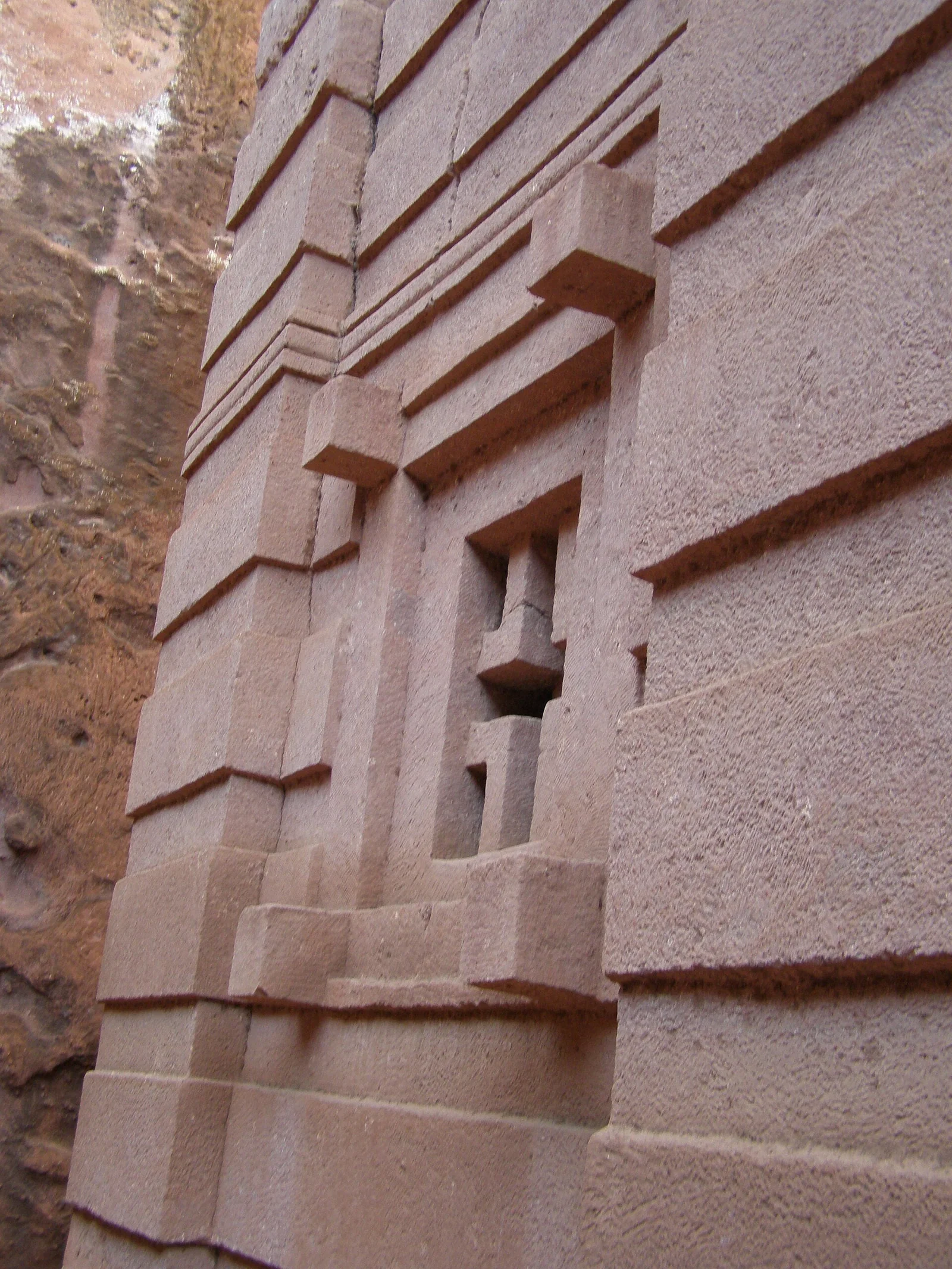
Biete Amanuel, a monolithic church of the eastern group whose carved facade imitates Aksumite layered wood-and-stone masonry.
 Medievalarchitecture
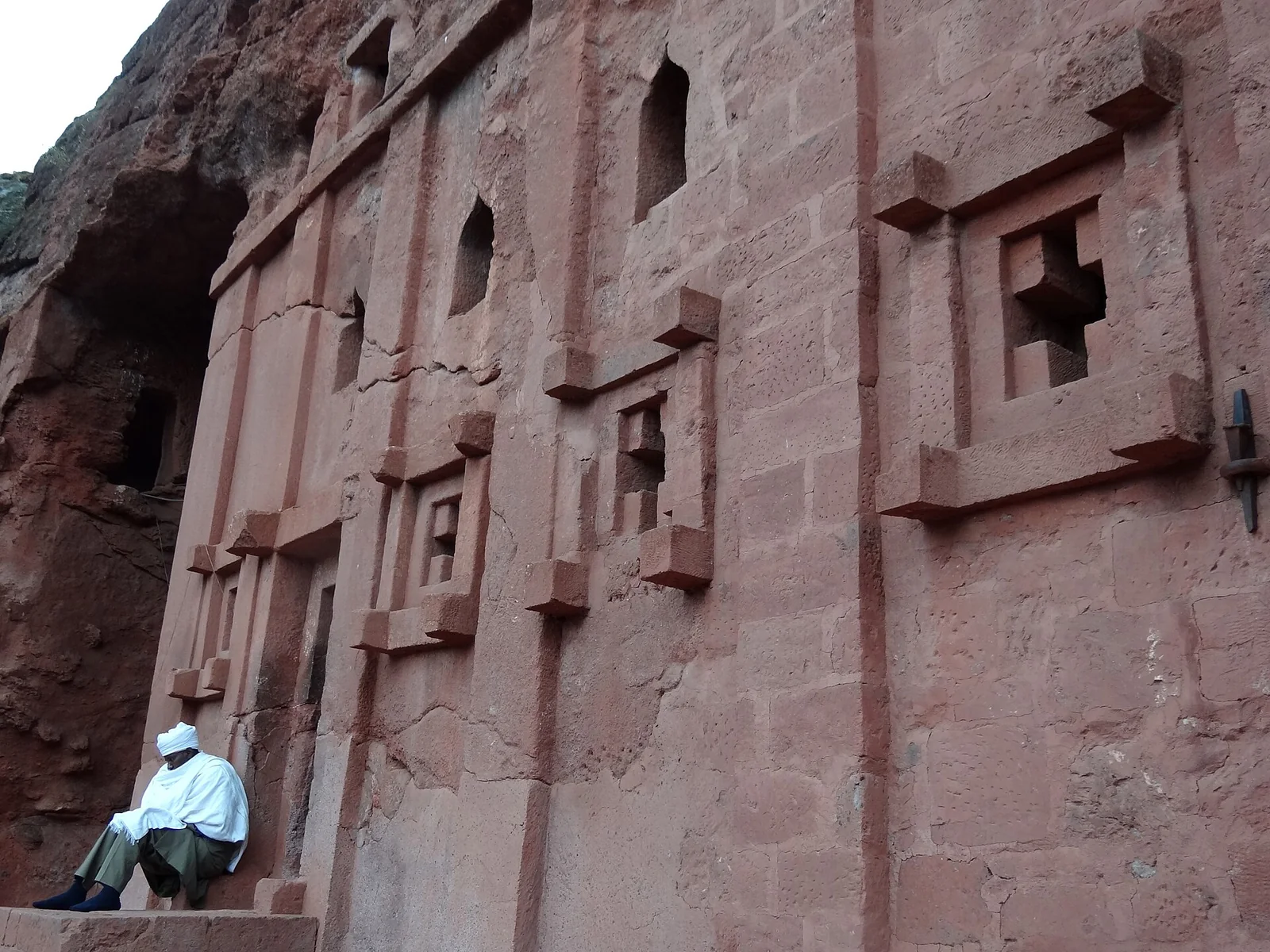
Biete Abba Libanos, a hypogeous church of the eastern group, cut free on four sides but left joined to the mother rock at its roof.
 Medievalarchitecture
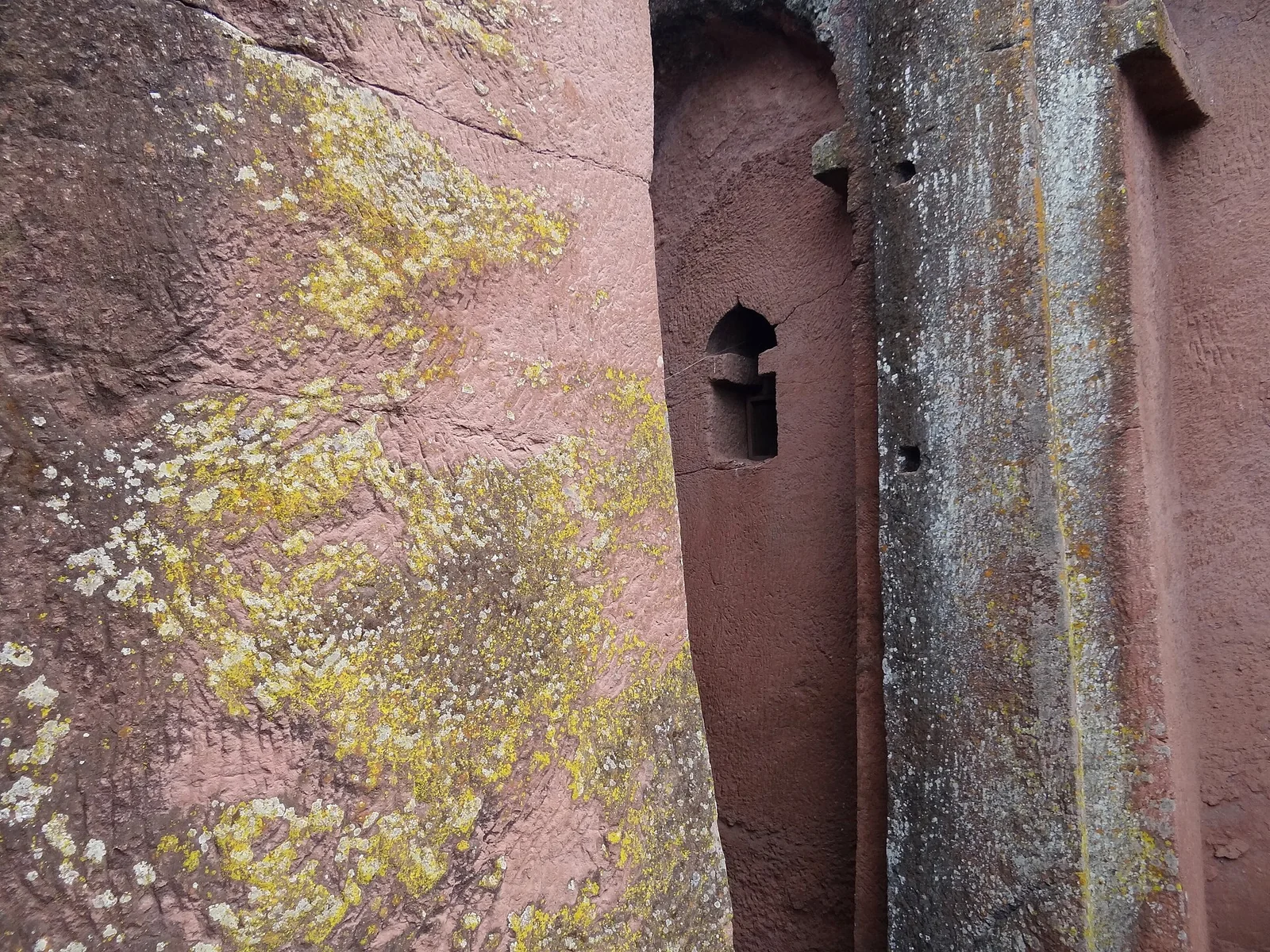
Biete Gabriel-Rufael, entered across a bridged trench; its monumental slanting facade is thought to preserve a fortified or palatial building older than the churches around it.
 Medievalarchitecture
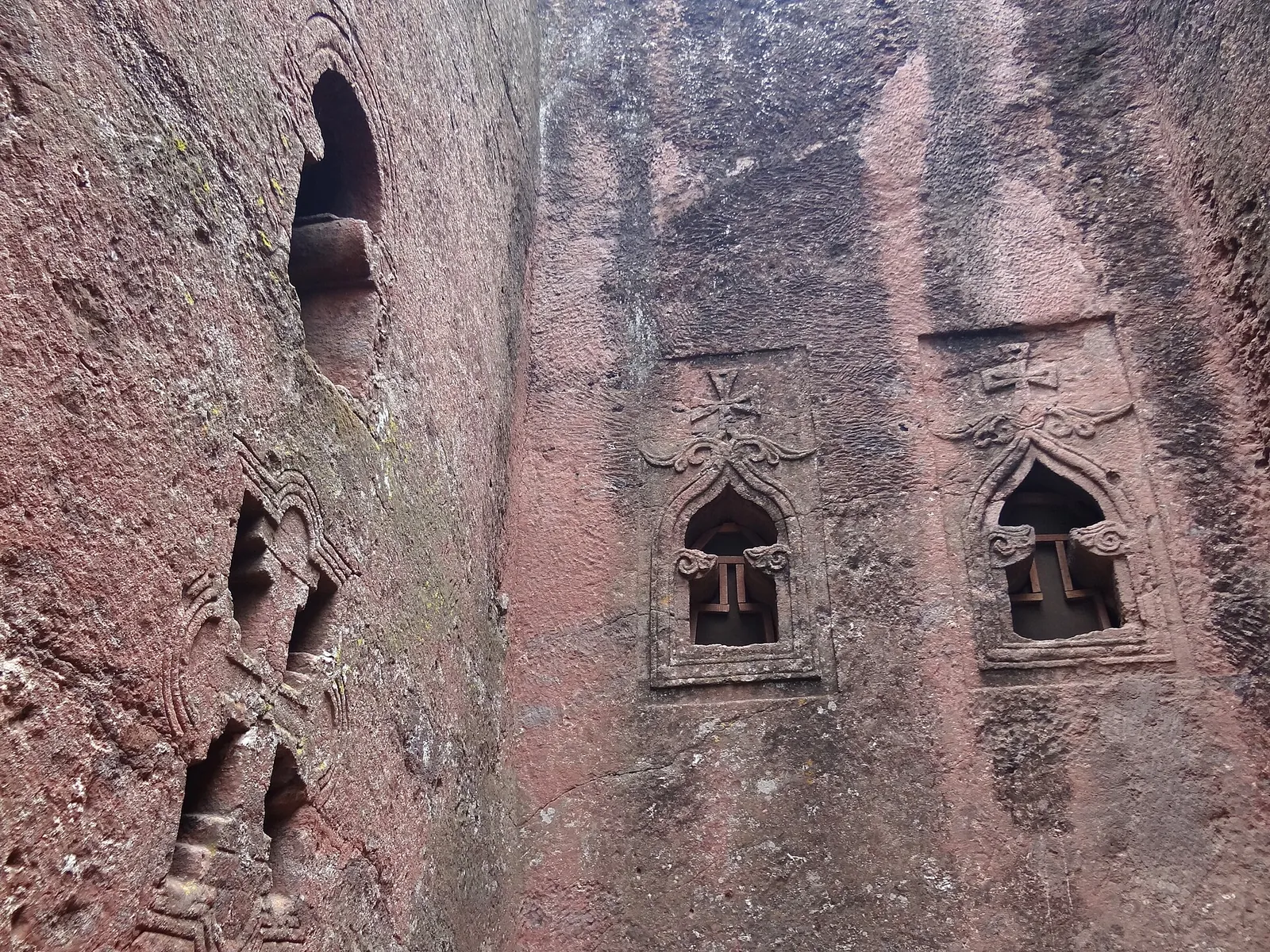
The twin churches of Biete Golgotha and Biete Mikael (Debre Sina), joined northern-group sanctuaries; Golgotha shelters the reliefs of saints and the tomb traditionally held to be King Lalibela's.
 Medievalarchitecture
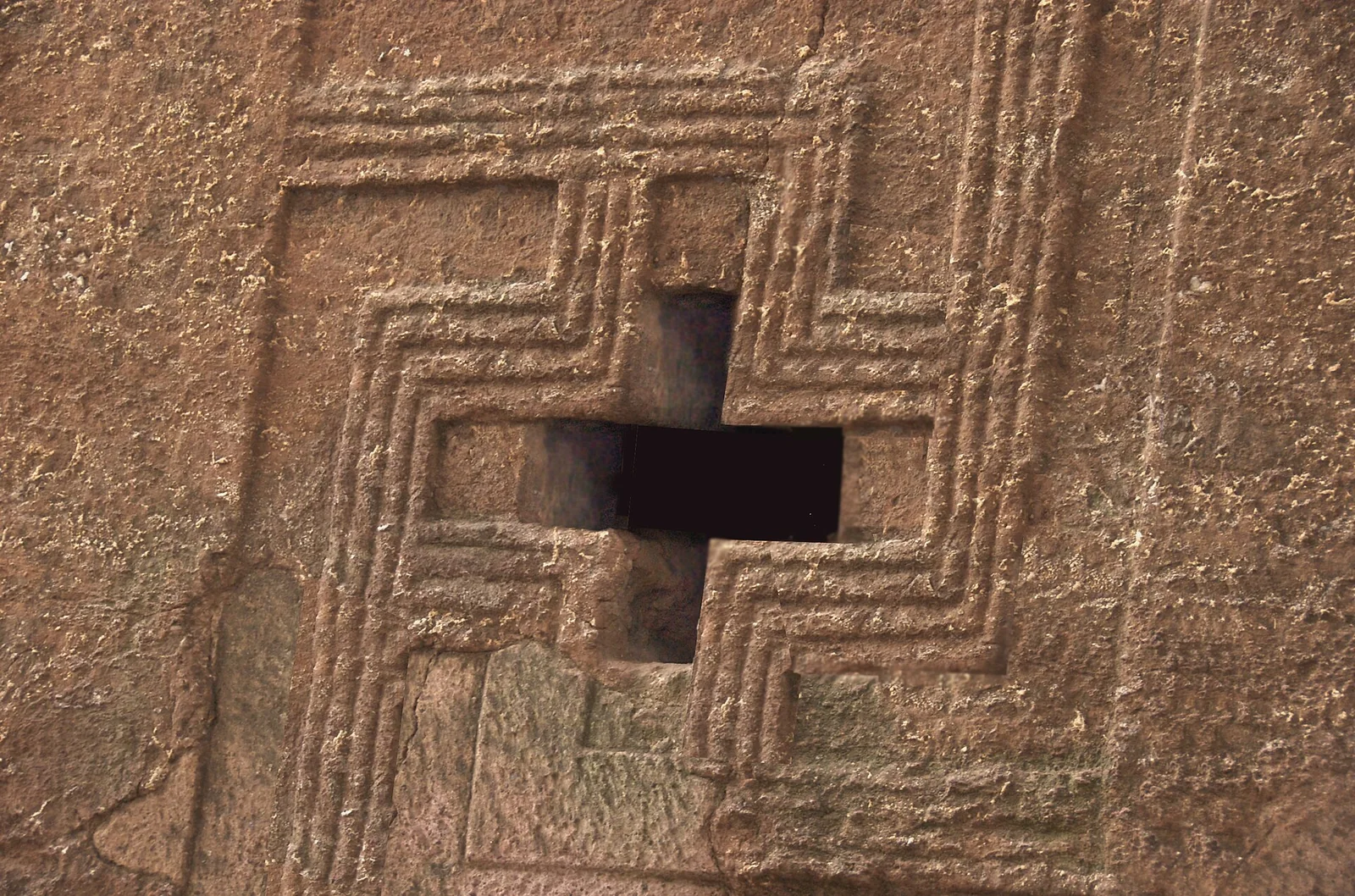
Biete Maskal (House of the Cross), a broad low chapel carved into the northern wall of Biete Mariam's courtyard.
 Medievalarchitecture
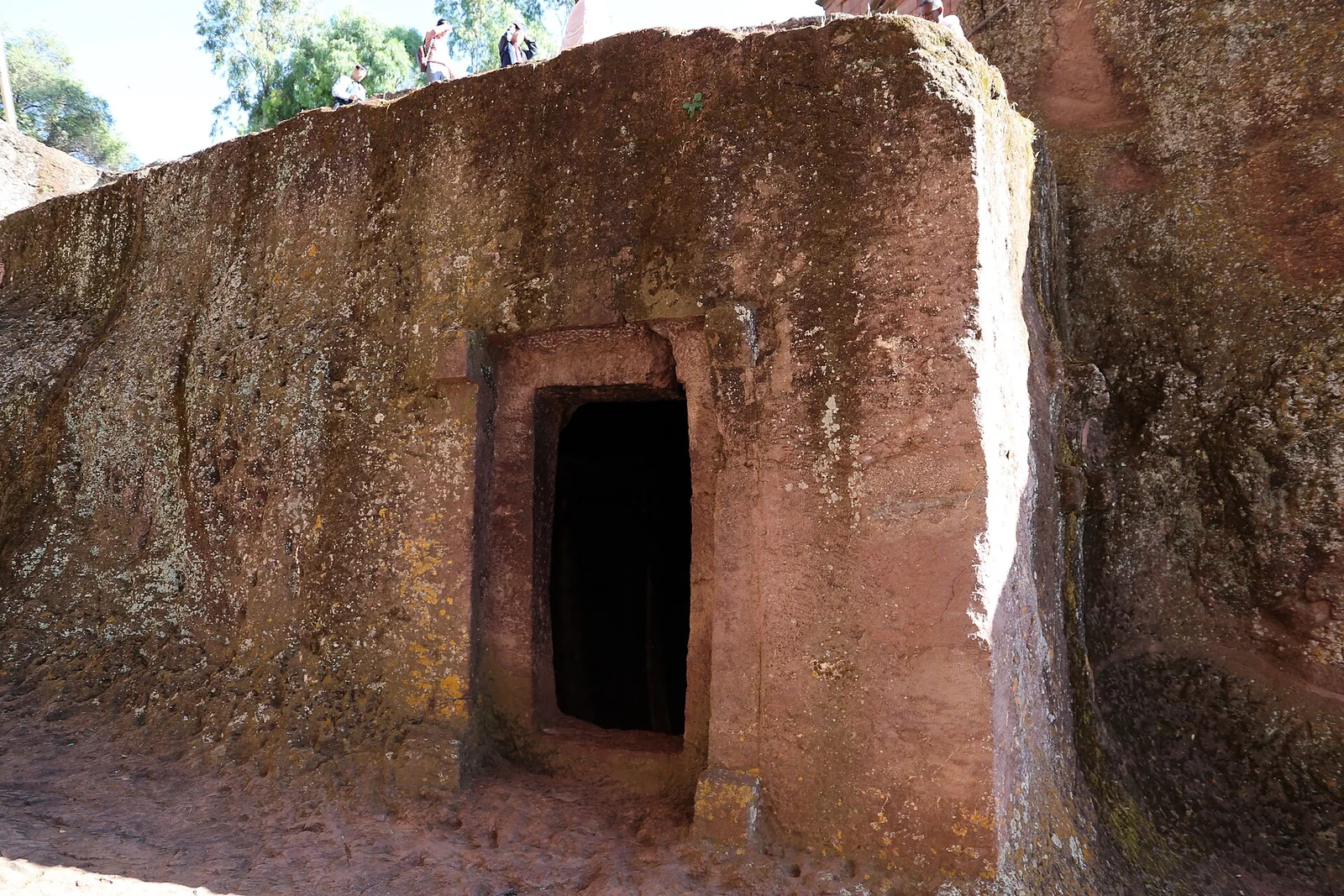
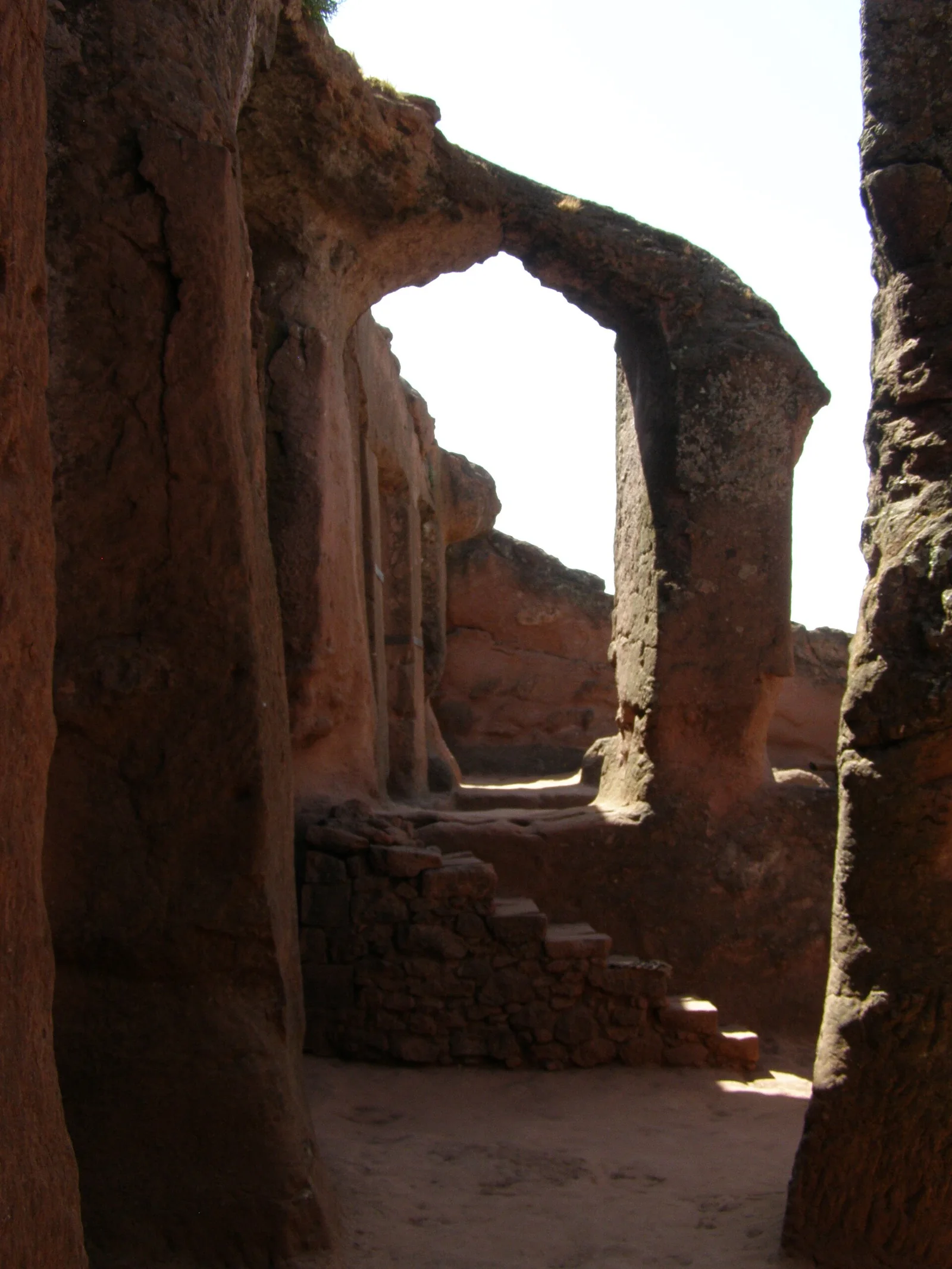
Biete Denagel (House of the Virgins), a small chapel of the northern group commemorating the virgin martyrs of Edessa.
 Medievalarchitecture
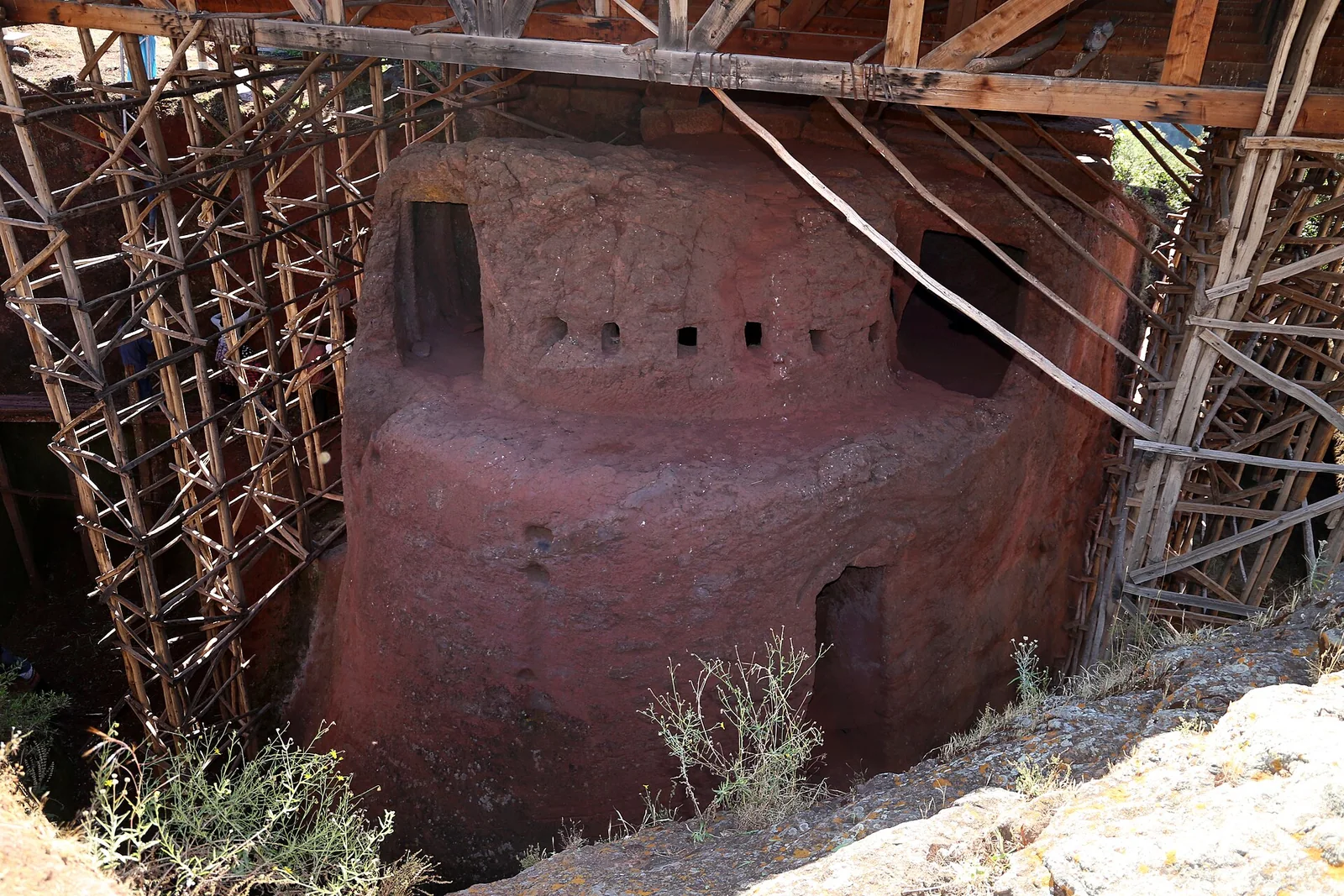
Biete Qeddus Mercoreus (House of Saint Mercurius) of the eastern group, reached through tunnels; its irregular halls are thought to have first served a civil, possibly judicial, use.
 Medievalarchitecture
Biete Lehem (Bethlehem), the small rock-cut chamber linked to Biete Mercoreus, traditionally the bakery where the eucharistic bread was prepared.
 Medievalarchitecture
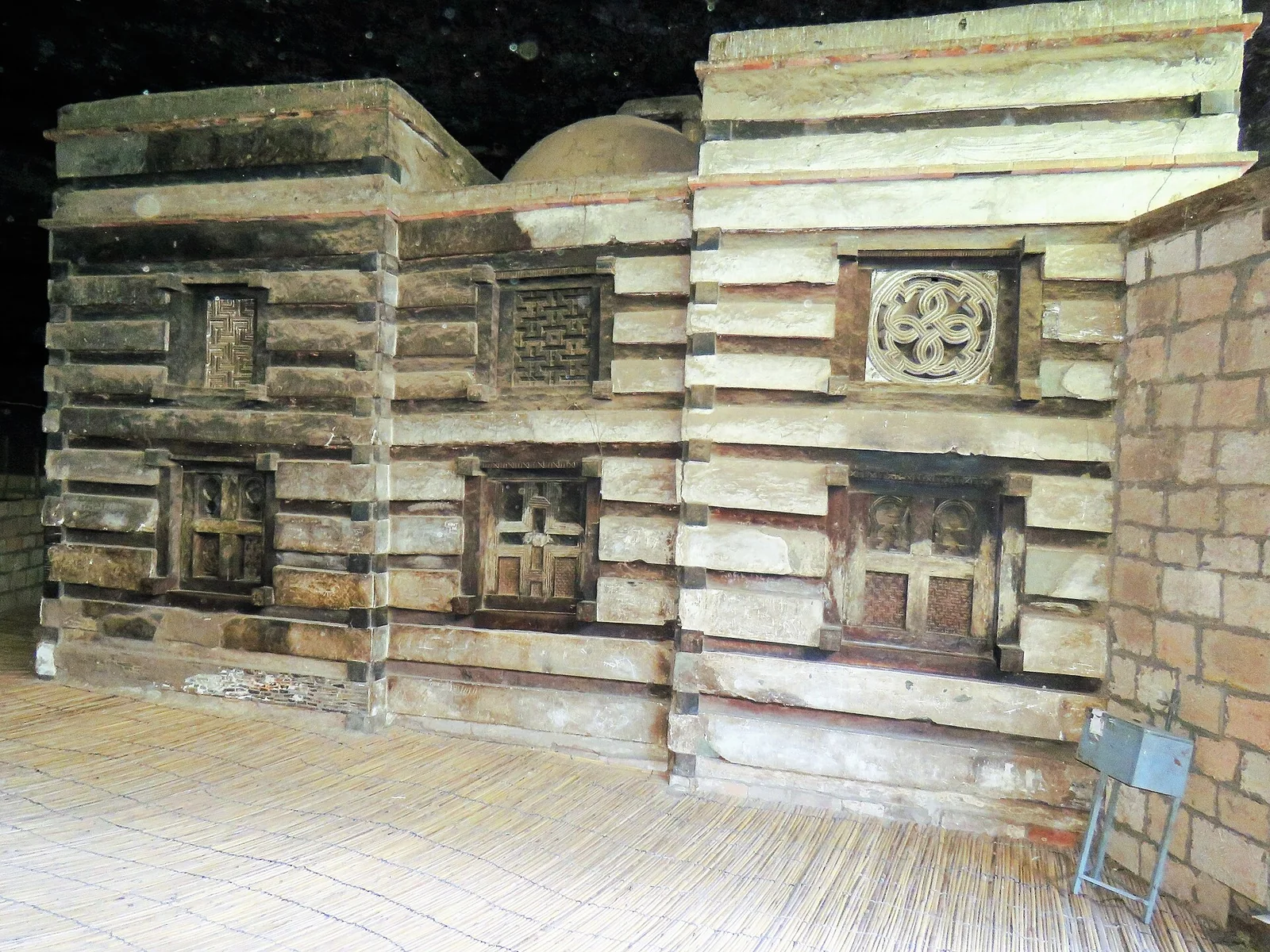
The built (not hewn) church of Yemrehana Krestos, raised in alternating courses of wood and plastered stone in the Aksumite manner inside a cave north-east of Lalibela.
 Medievalarchitecture
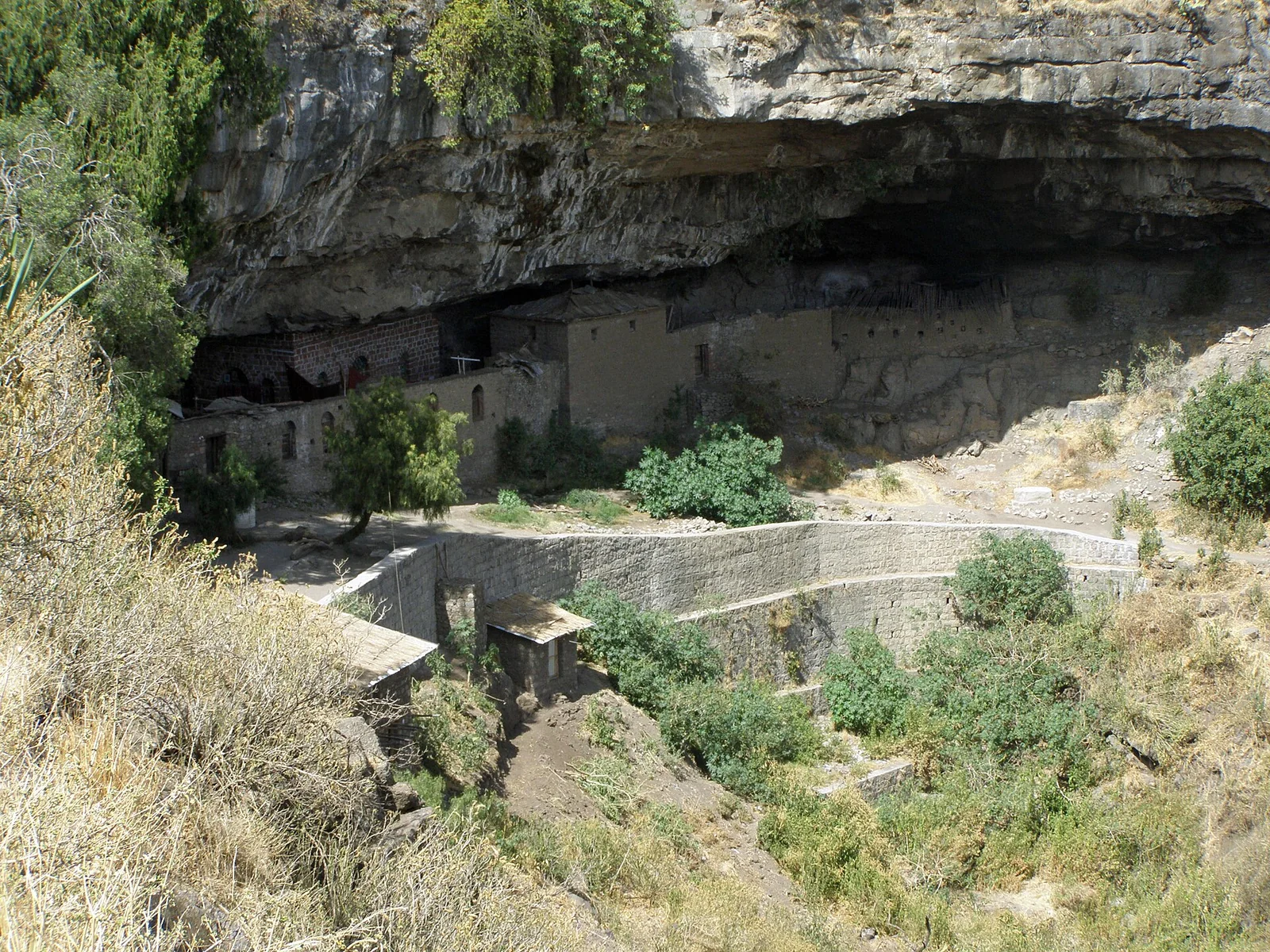
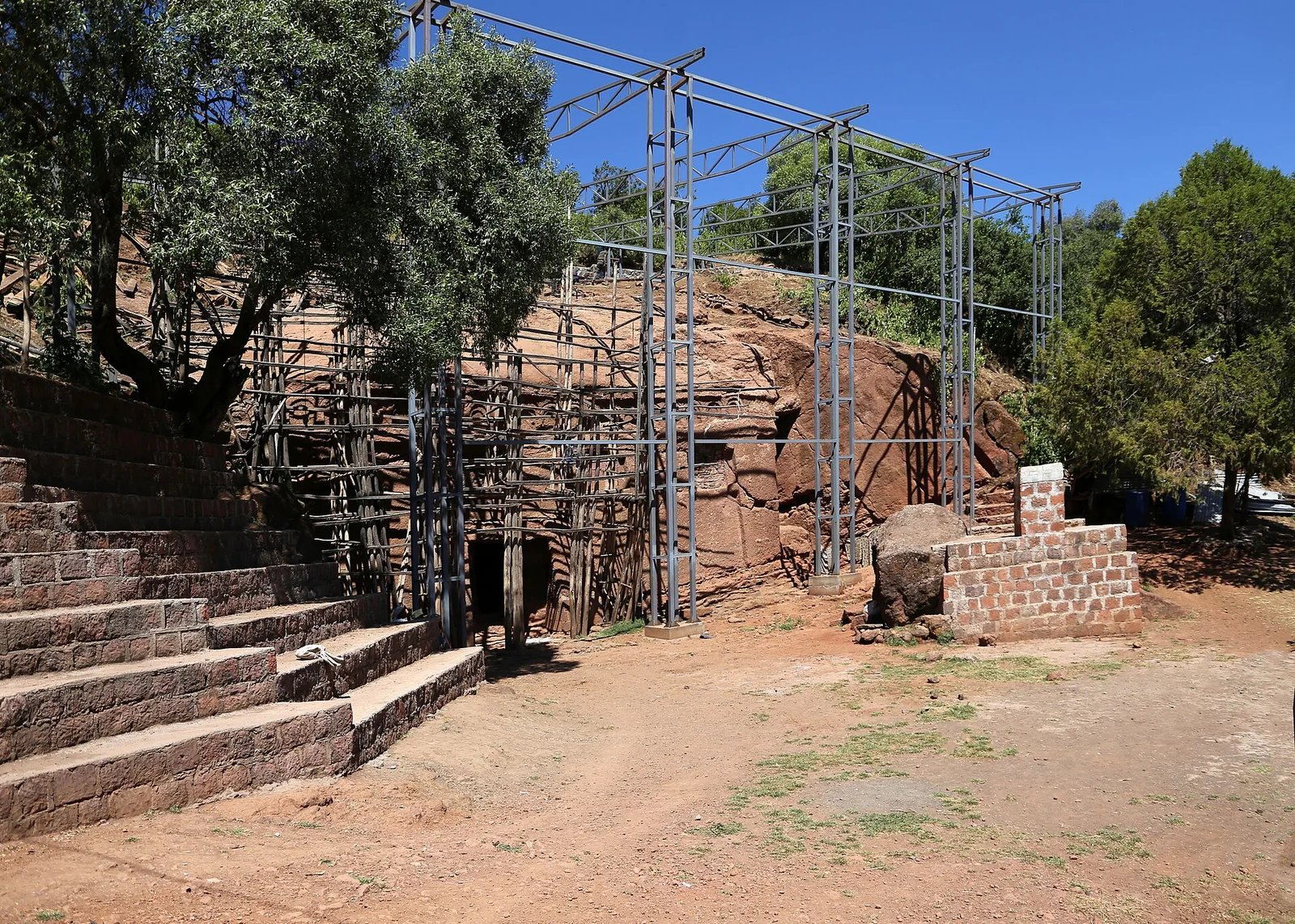
The church of Na'akuto La'ab, built beneath a great overhanging cave south of Lalibela; its sanctuary stands under the dripping rock, the water caught in stone basins, and tradition credits it to King Lalibela's nephew and successor.
 Medievalarchitecture
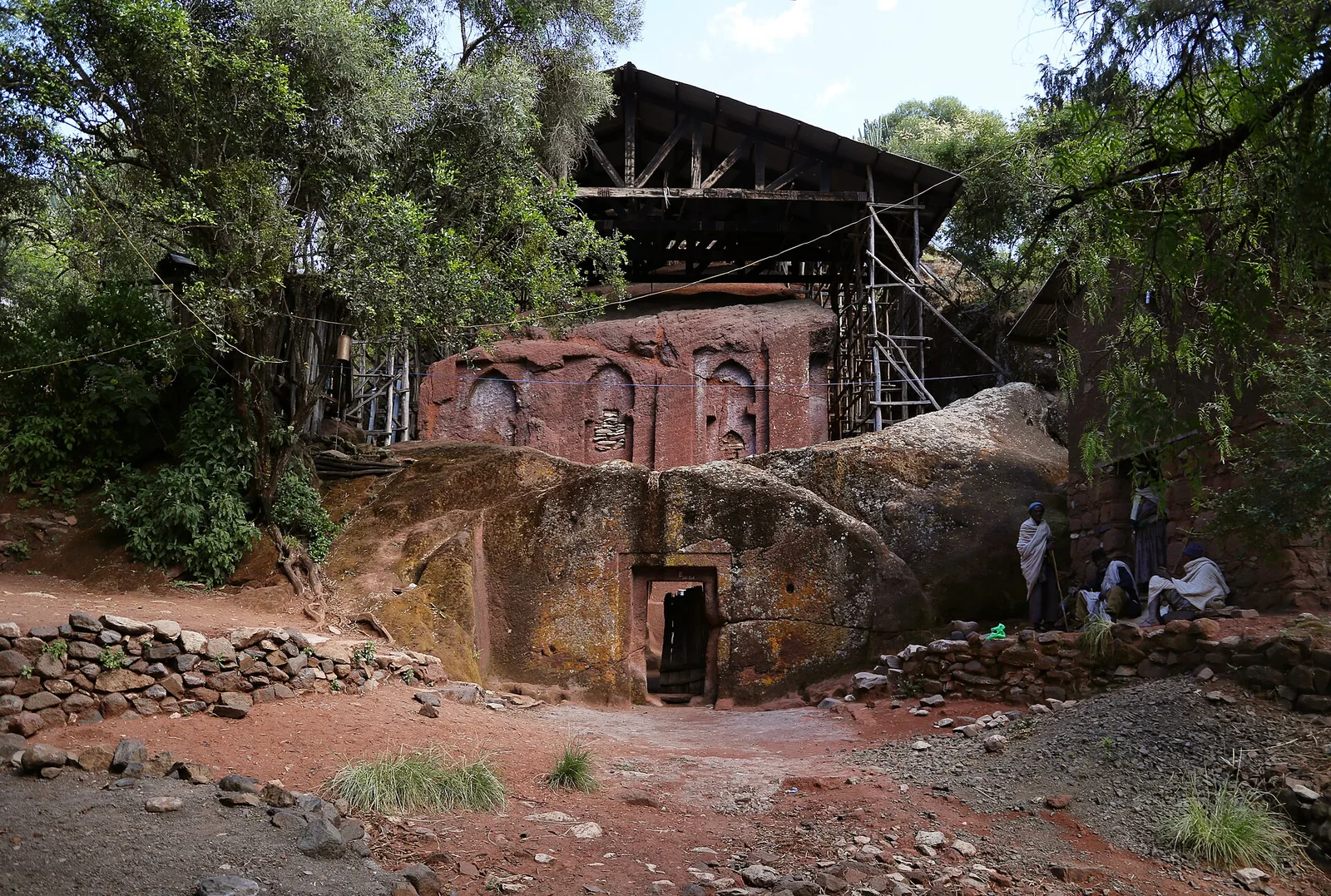
The rock-hewn church of Bilbila Giyorgis north-west of Lalibela, cut into a hillside with a broad pillared facade; tradition places it among the oldest churches of the Lasta group.
 Medievalarchitecture
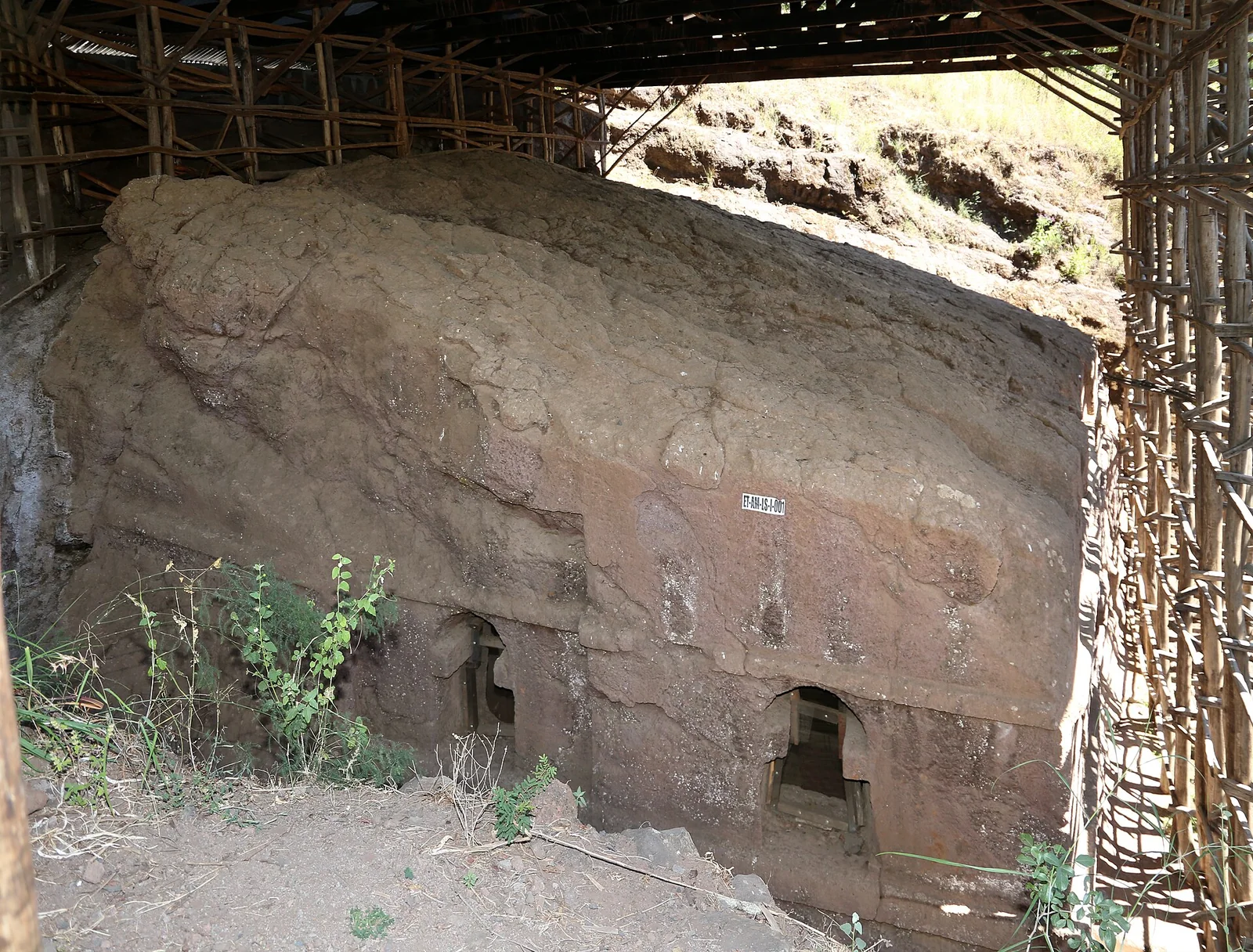
Bilbila Chirkos, a rock-hewn church of the Lasta hills north-west of Lalibela, entered through a cut courtyard and famed for the bees kept within its walls.
 Medievalarchitecture
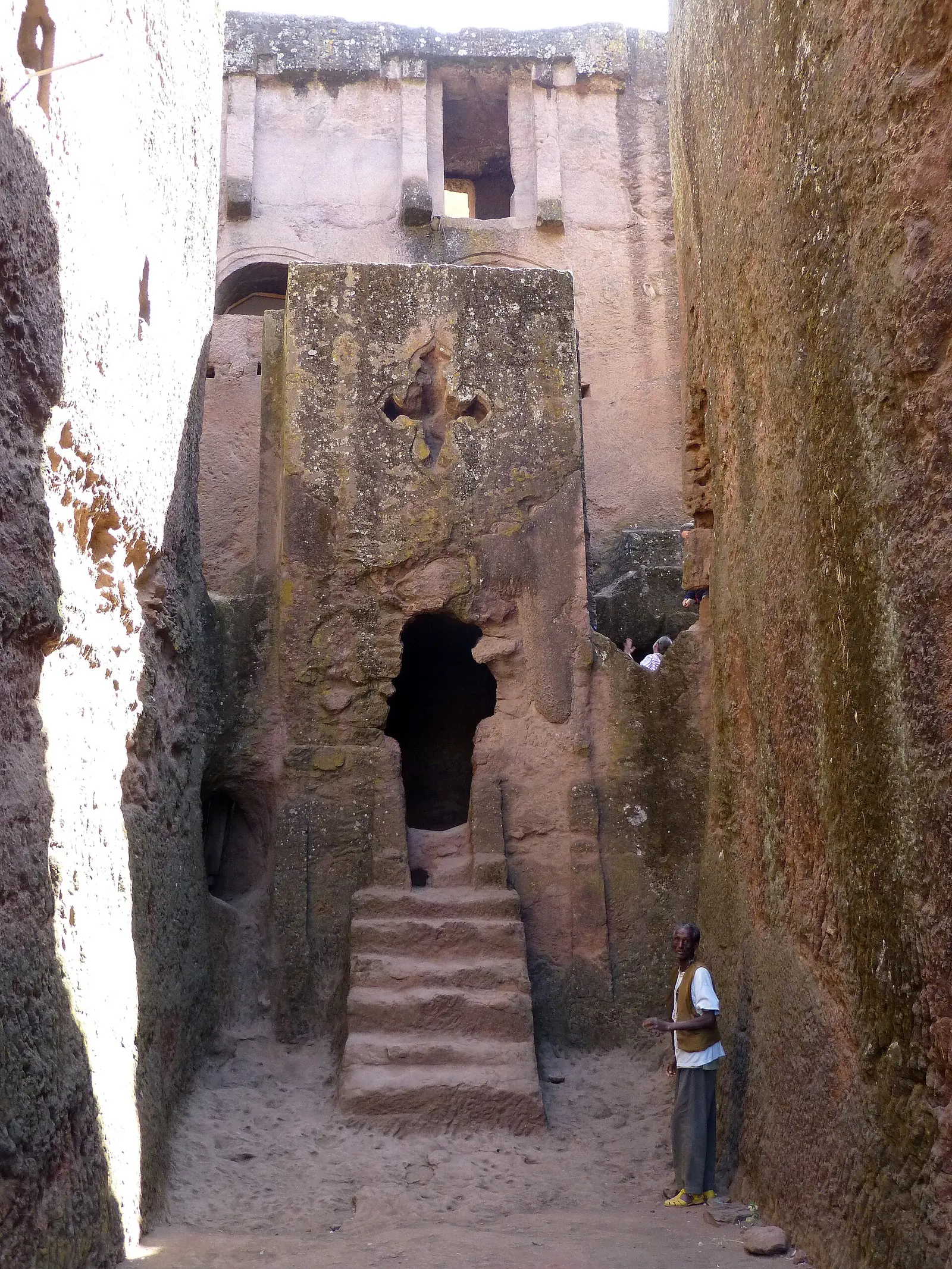
Arbaitu Ensessa (the Four Beasts), a rock-hewn church in Lalibela town outside the two main groups, built into the hillside above the market.
 Medievalarchitecture
The Tomb of Adam, a massive free-standing block of rock pierced by a passage at the western entry to Lalibela's northern group; a hermit's cell is cut in its upper storey.
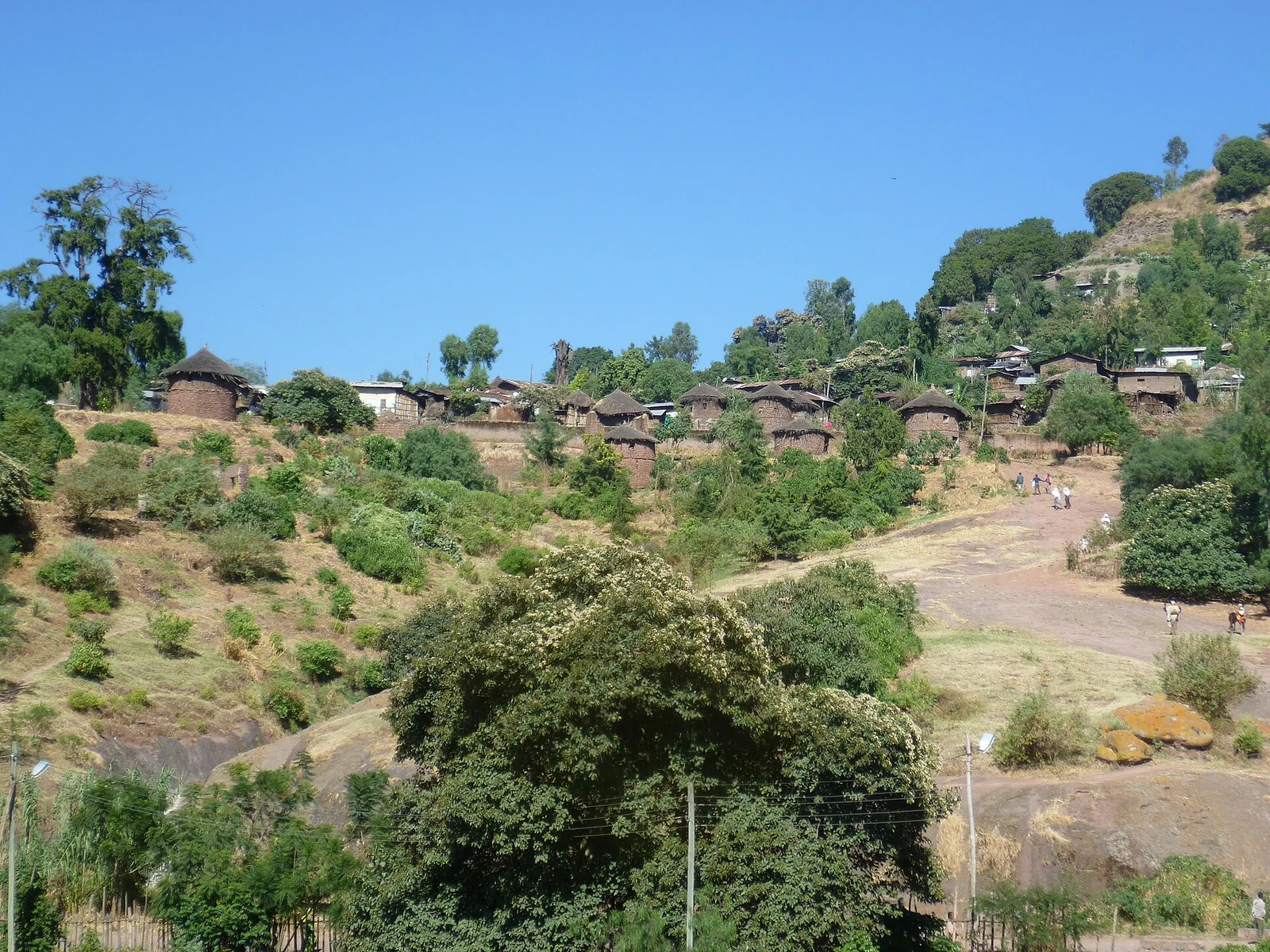 architecture
The two-storey round stone houses (tukuls) of Lalibela town, a domestic building tradition of the Lasta highlands, with thatched conical roofs over drystone walls.
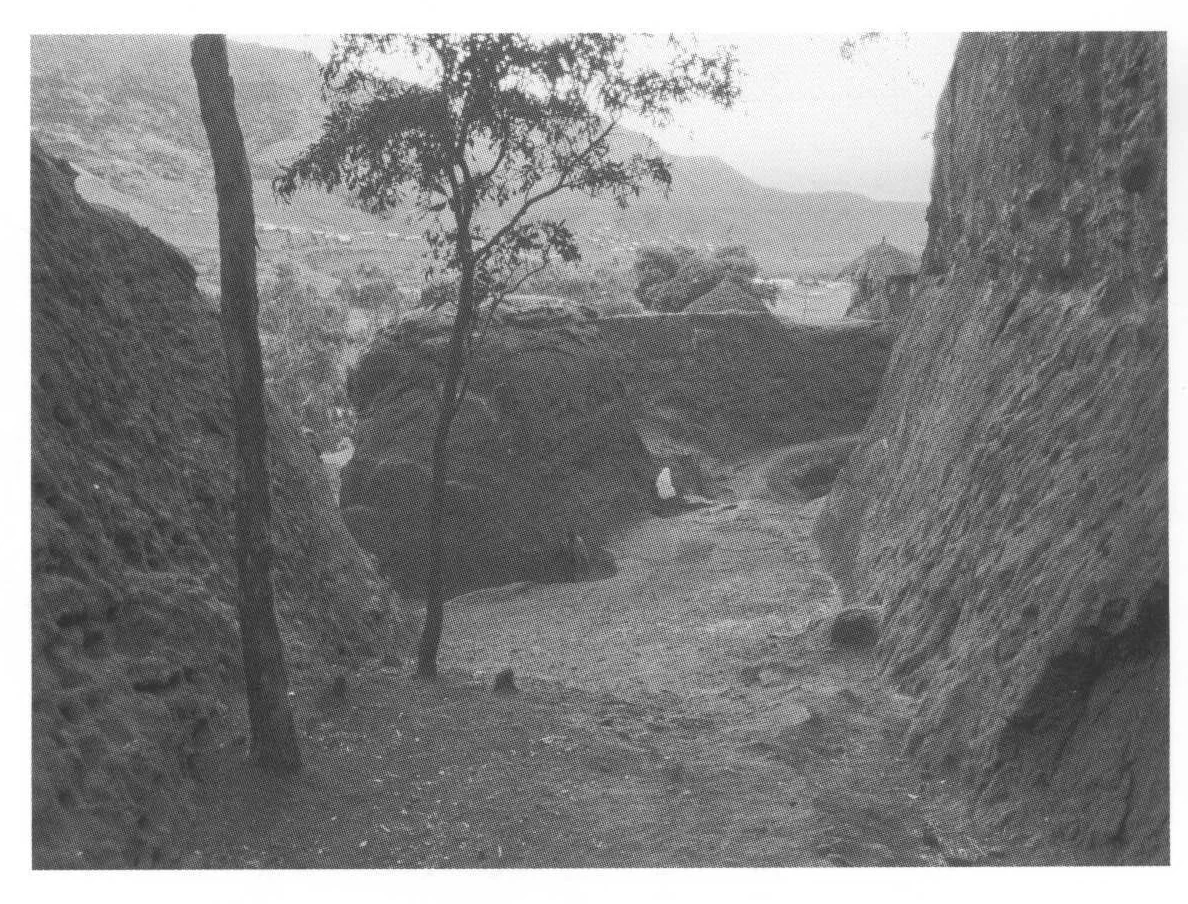 architecture
Lalibela, part of the peripheral trench northeast of Beta Emmanuel, looking south, 2006.
19 plates
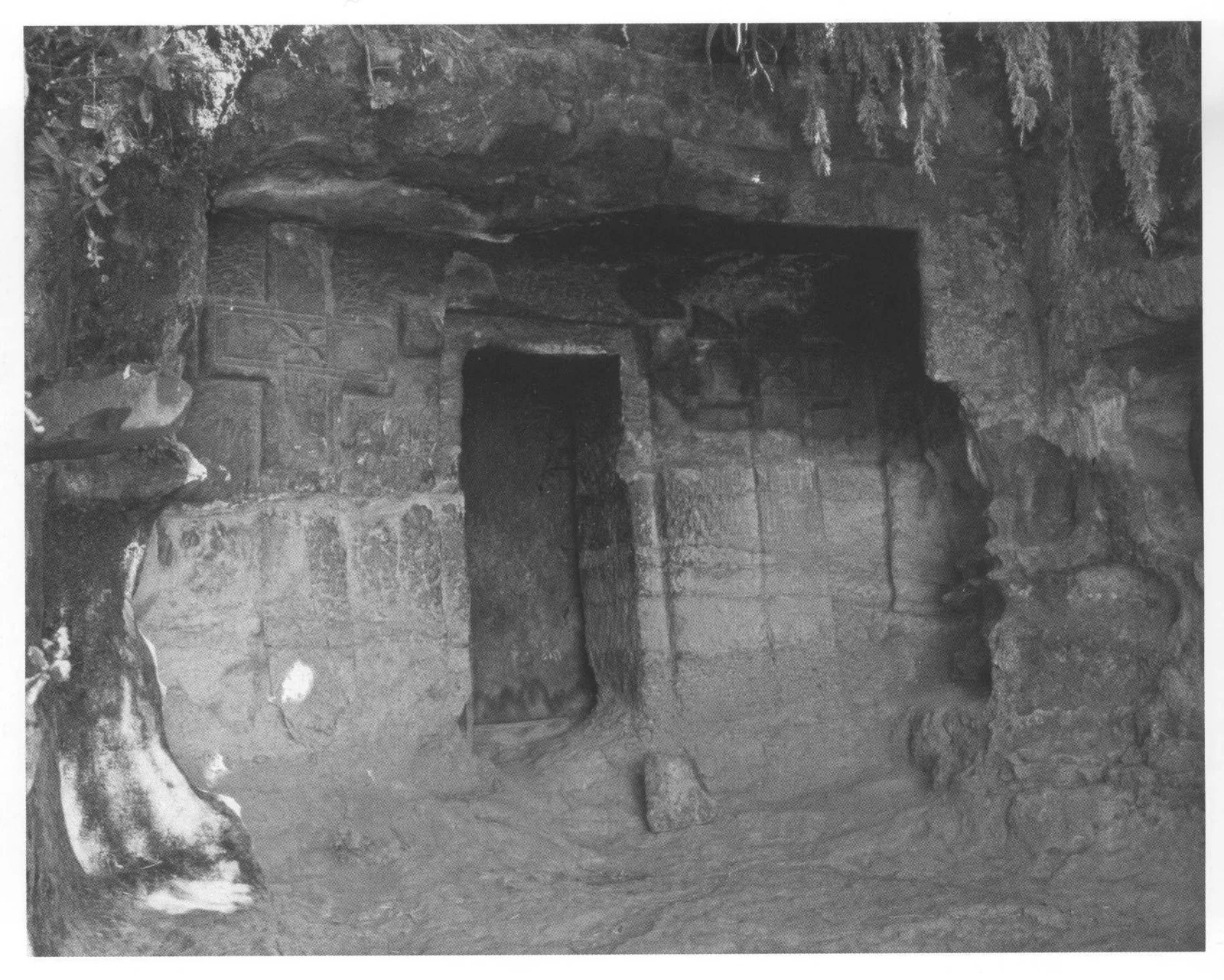 architecture
Kankanet Mika’el, the outer entrance, flanked by large carved Latin crosses, 2006.
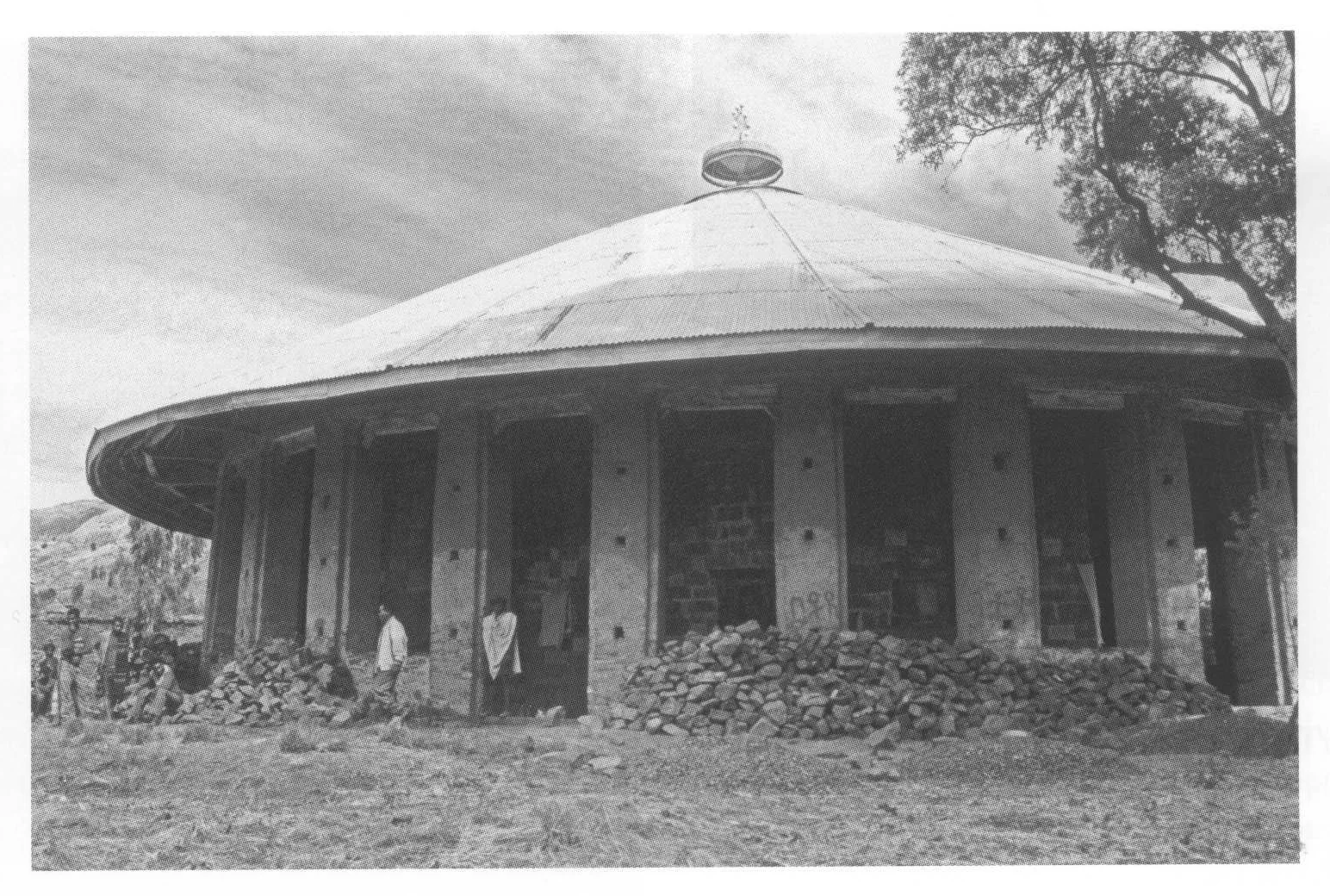 architecture
Debra Tekla Haimonot Bethlehem, general exterior view, 2006.
 Medievalarchitecture
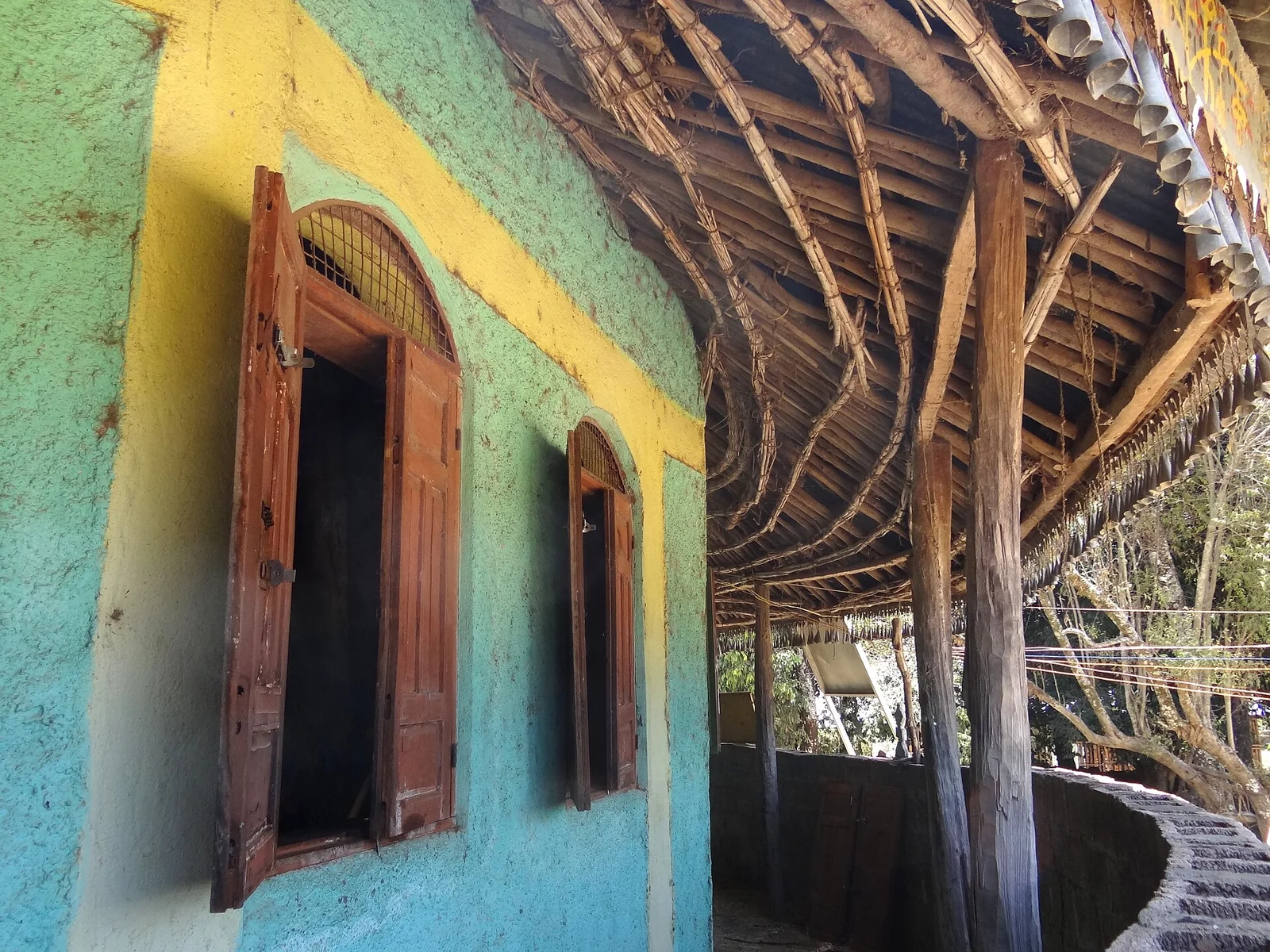
The monastery of Debre Maryam at the Blue Nile's outflow from Lake Tana, founded in the reign of Amda Seyon; the present church is a later round tabot church.
 Medievalarchitecture
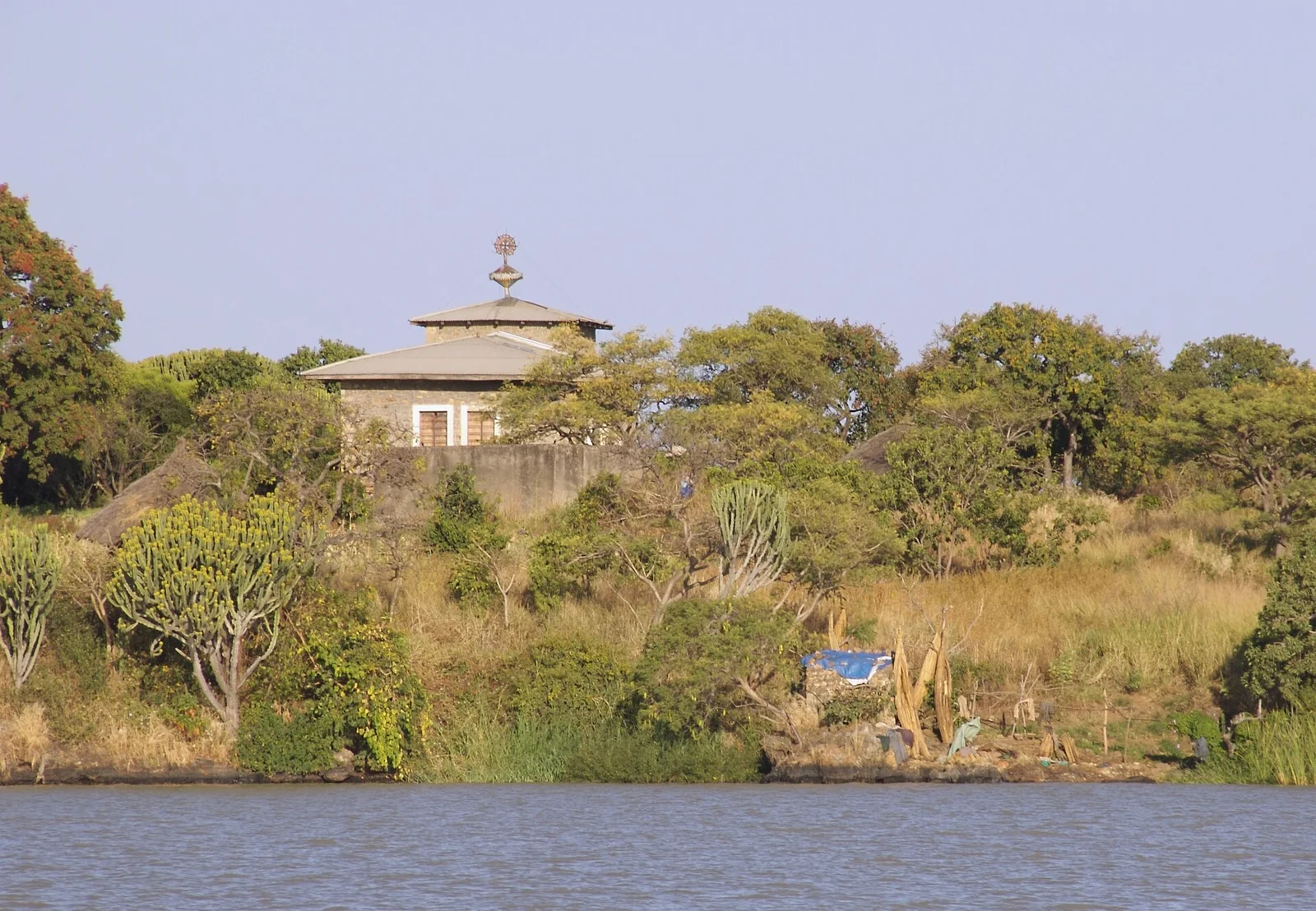
The monastery church of Brigida Mariam on its island in Lake Tana, a round church of the island group.
 Medievalarchitecture
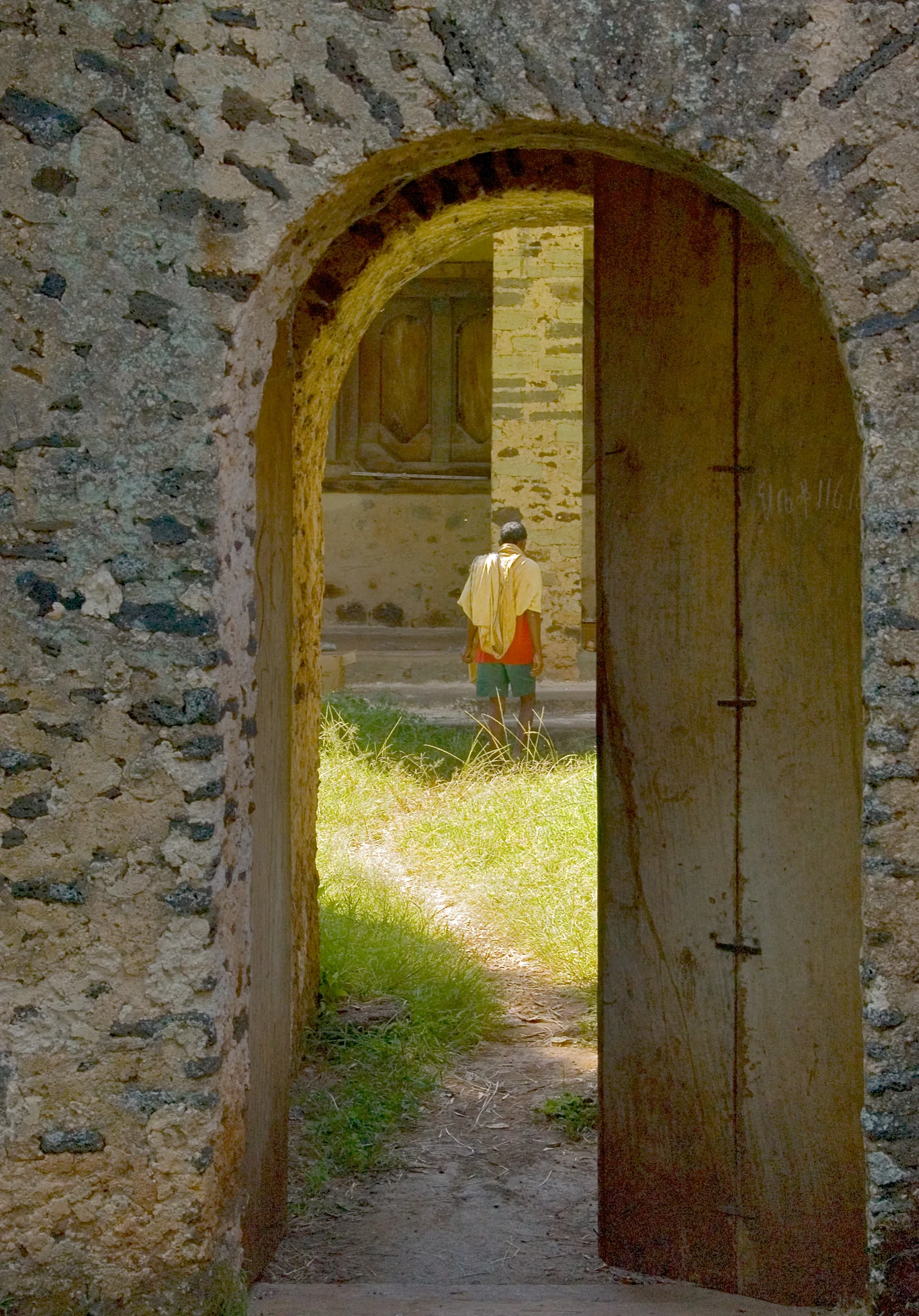
The church of Narga Selassie on Dek Island in Lake Tana, built for Empress Mentewab in Gondarine style, its round church standing within a stone enclosure with towered gates.
 Medievalarchitecture
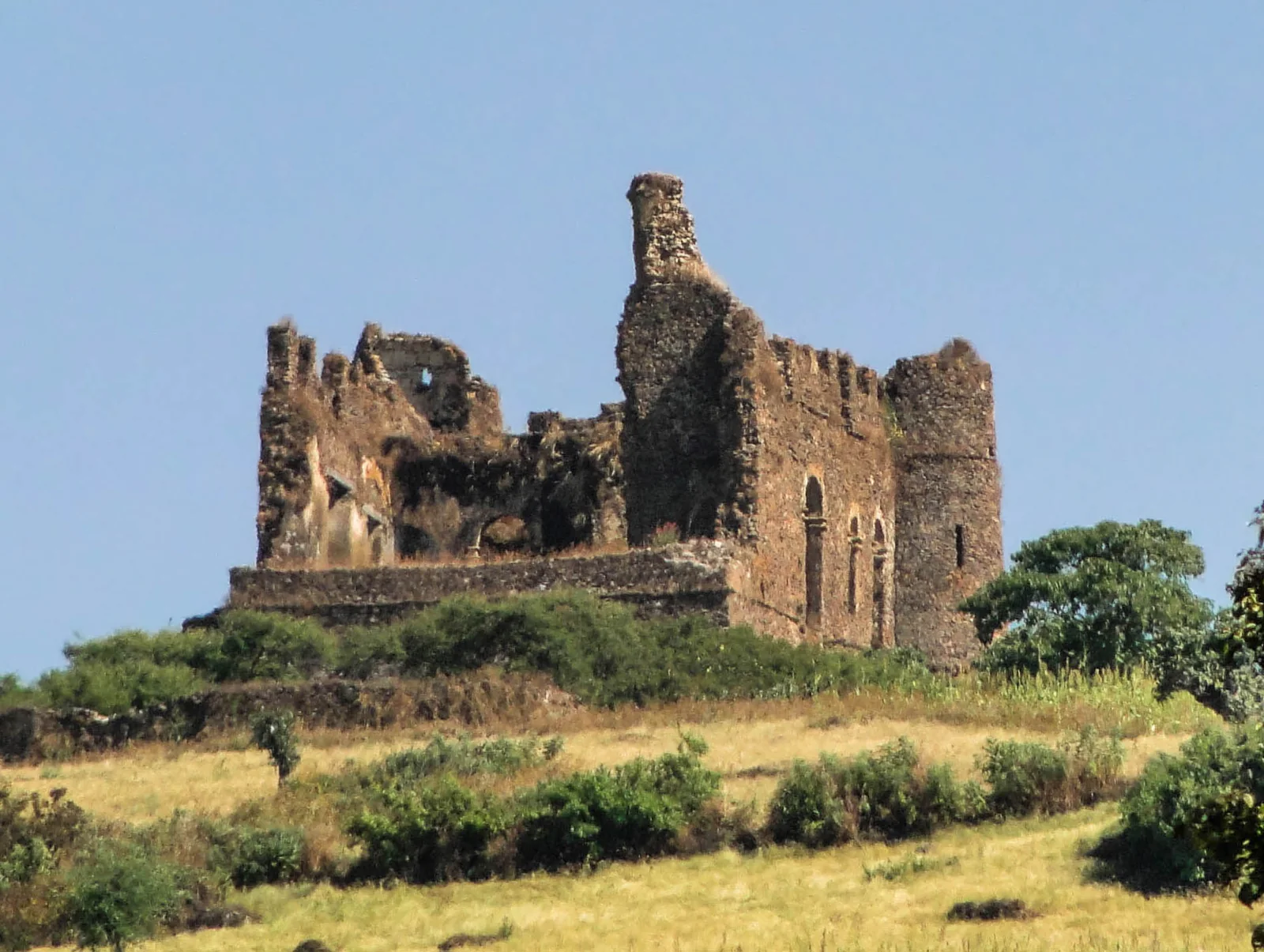
The castle of Guzara on a hill above Lake Tana near Emfraz, built for Emperor Sarsa Dengel and the prototype of the Gondarine castle form.
 Medievalarchitecture
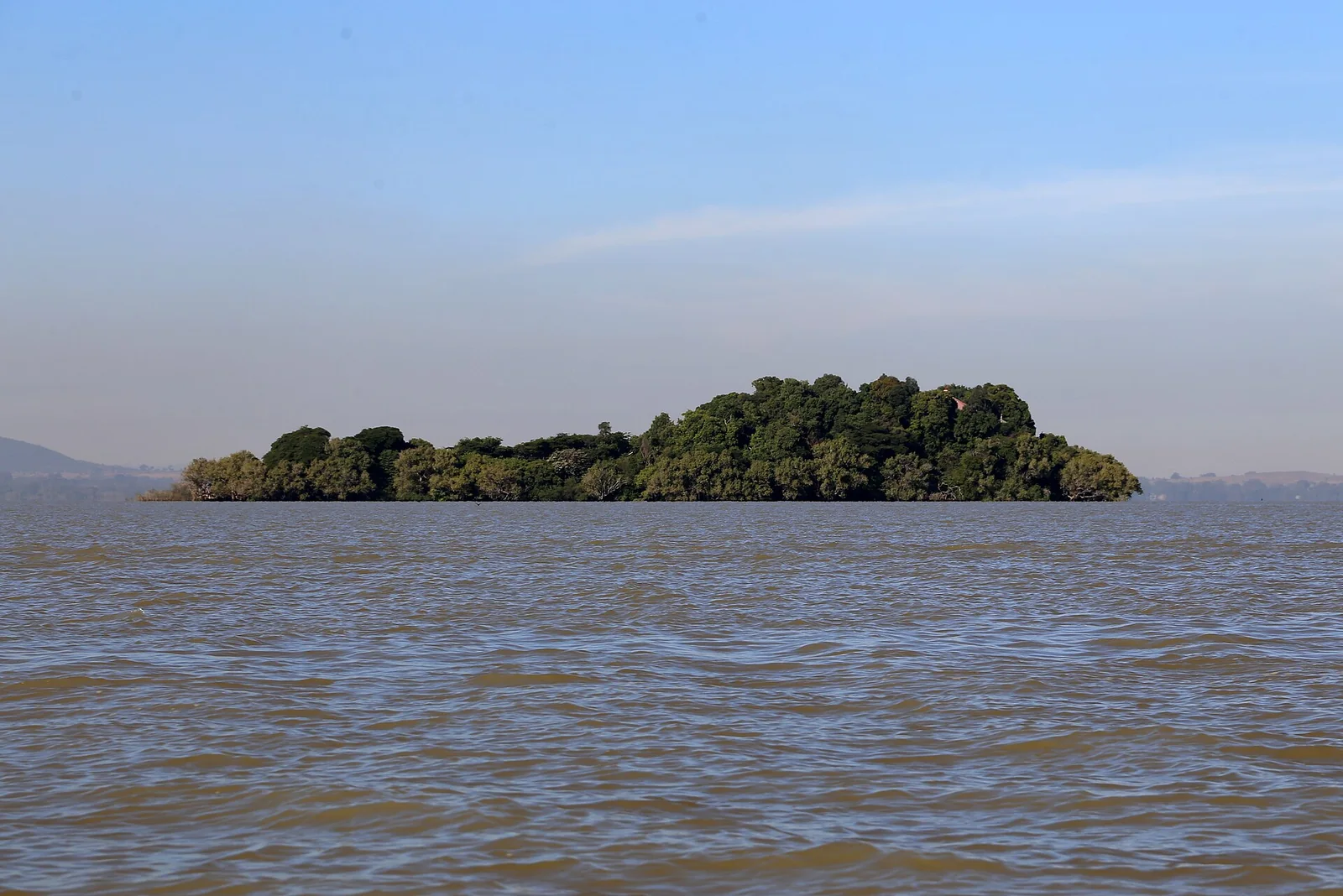
The island monastery of Entos Eyesu near Bahir Dar, a small round church on a wooded islet of Lake Tana.
 Medievalarchitecture
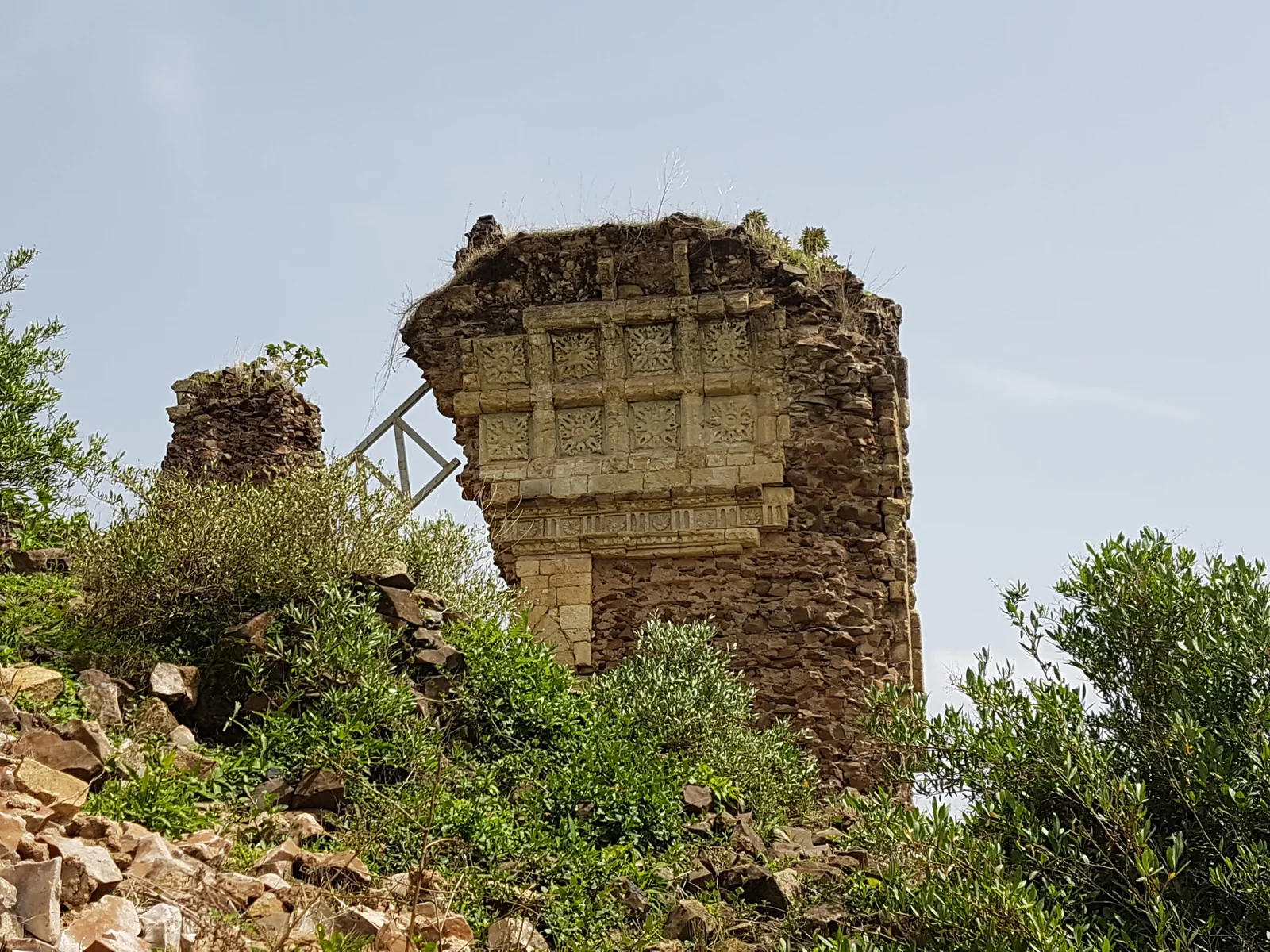
Figure 5. Church roof vault at Gorgora Nova, since collapsed (photograph by A. González-Ruibal)
 Medievalarchitecture
The island monastery of Kebran Gabriel near Bahir Dar, its church rebuilt under Iyasu I; the community and its manuscript library remain closed to women.
 Medievalarchitecture
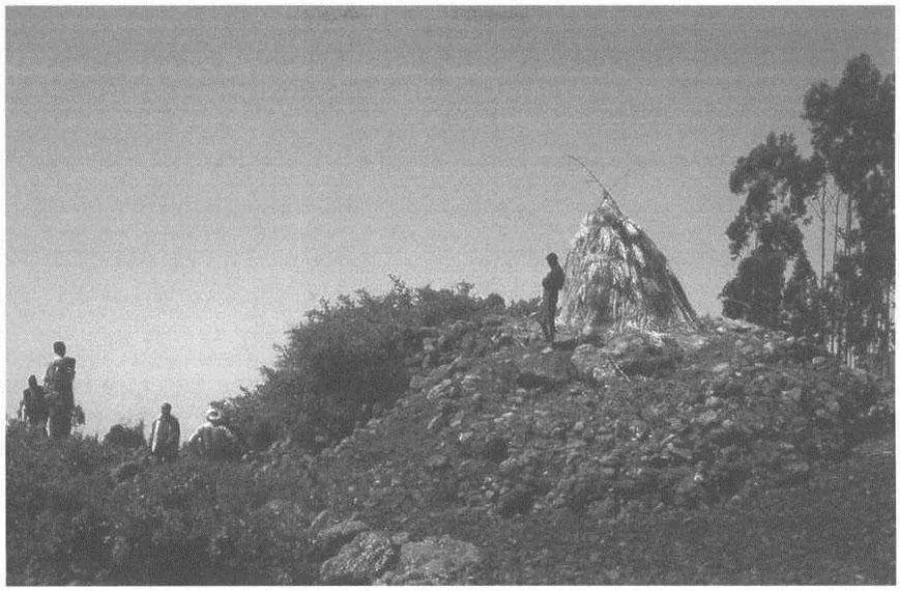
Fig. 5.2 - Mähal Wänz: possible couloir couvert de grosses pierres du tumulus
 Medievalarchitecture
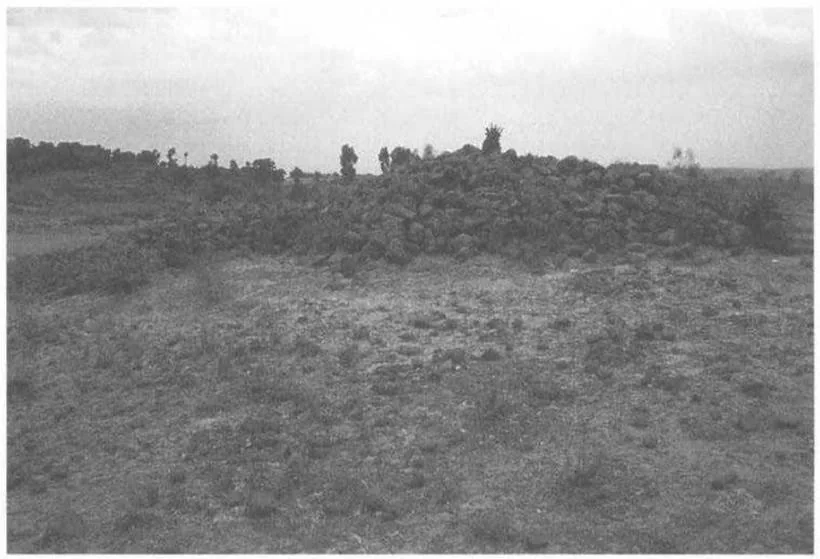
Fig. 3.1 - Tumulus 2 de Meshalä Maryam. Vue du tumulus immédiatement avant la fouille, en direction du SO. L'église de Meshalä Maryam se situe en arrière-plan, à gauche, dans son bois de genévriers géants. La vallée de la Šay est en contrebas du cliché, du côté droit
 architecture
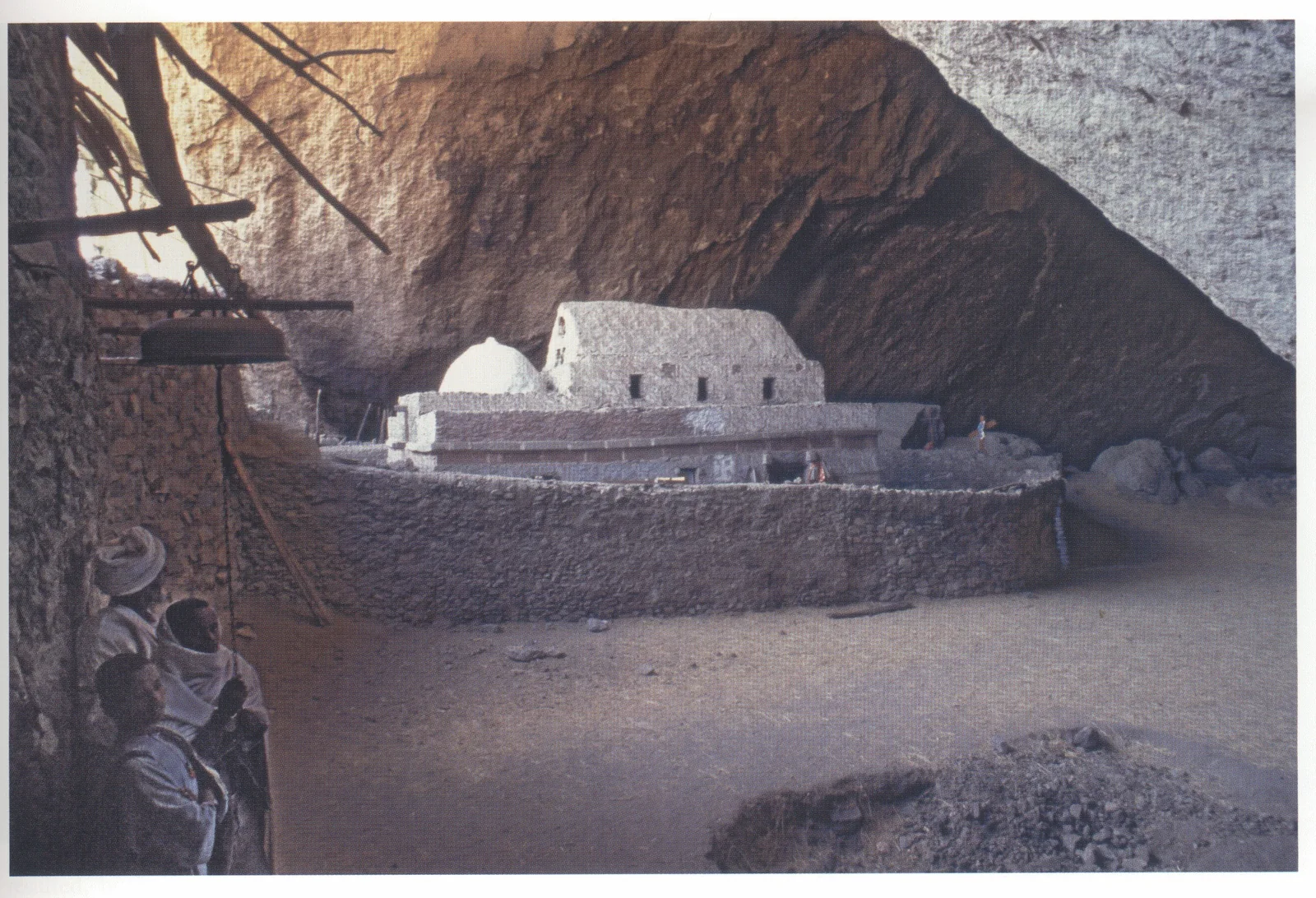
Makina Madhane Alem, general view of the church within the cave, from the north-northeast, 2006.
 architecture
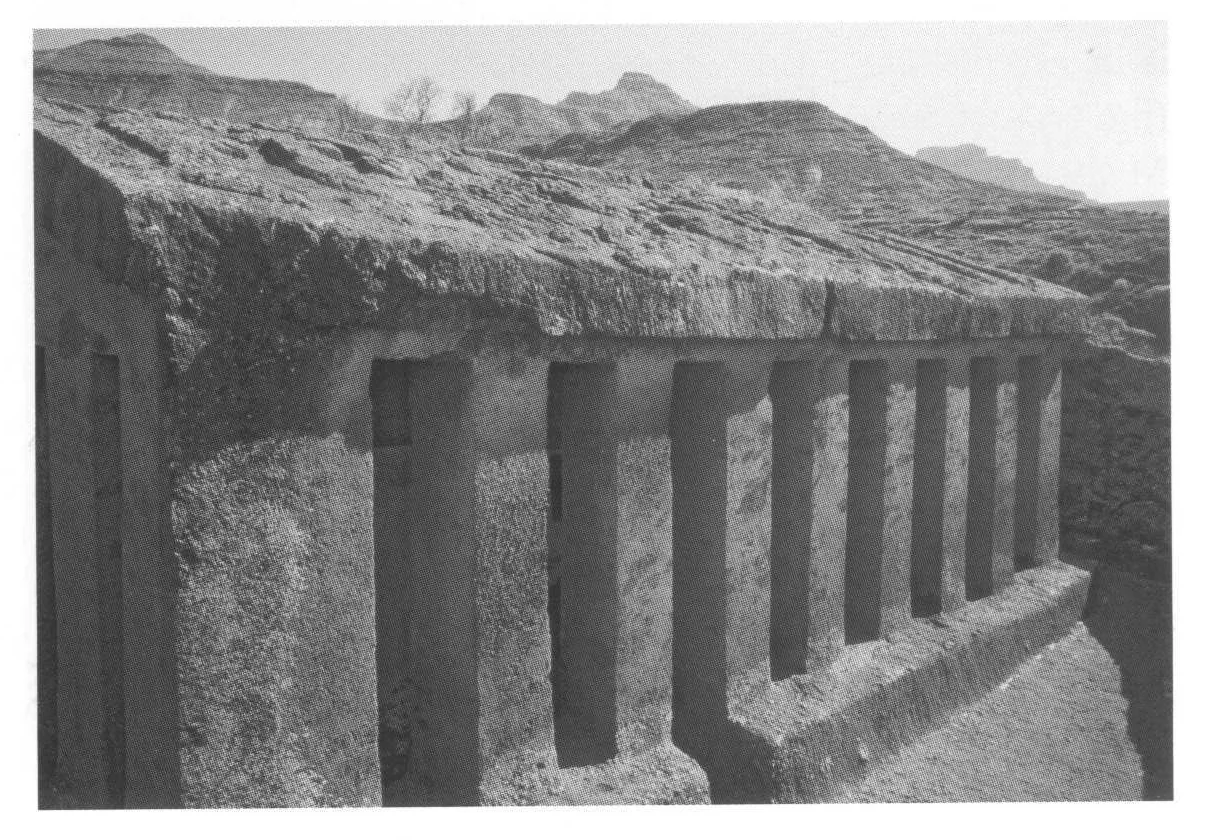
Ganata Maryam from the southwest, showing the external colonnade, 1998.
 Medievalarchitecture
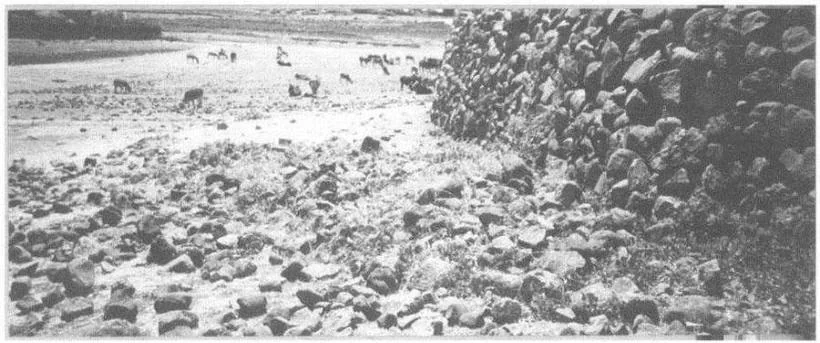
Fig. 2.5 - Qopros. Vestiges arasés d'un tumulus ancien, dépassant au sud du mur d'enceinte récent
 architecture
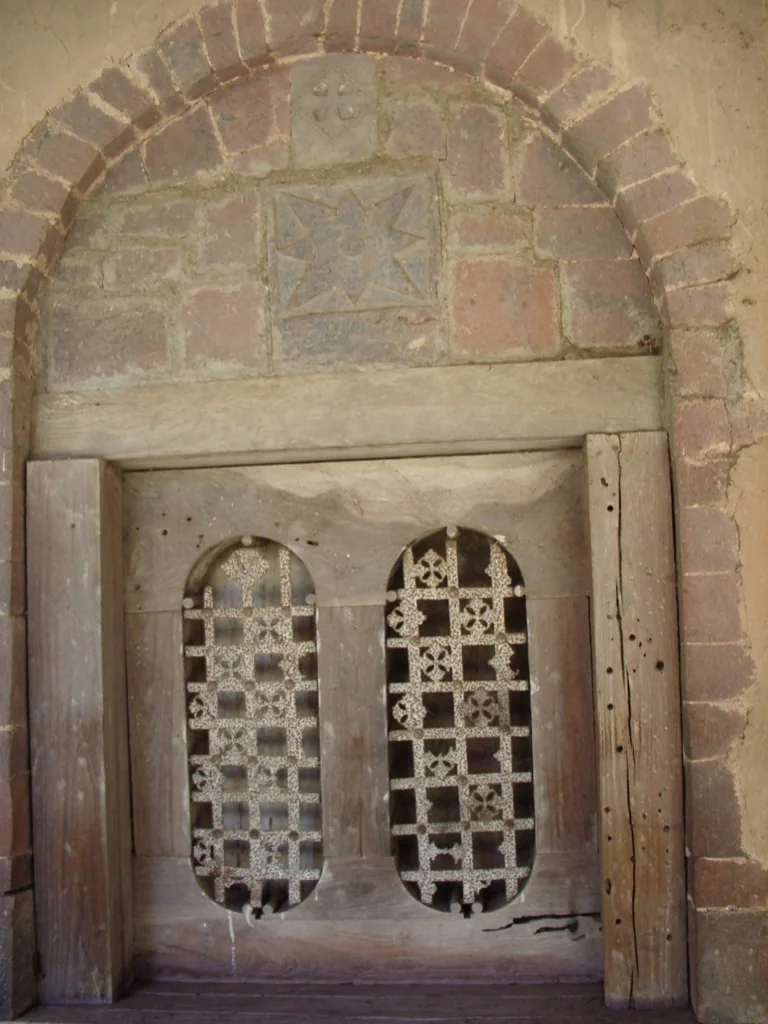
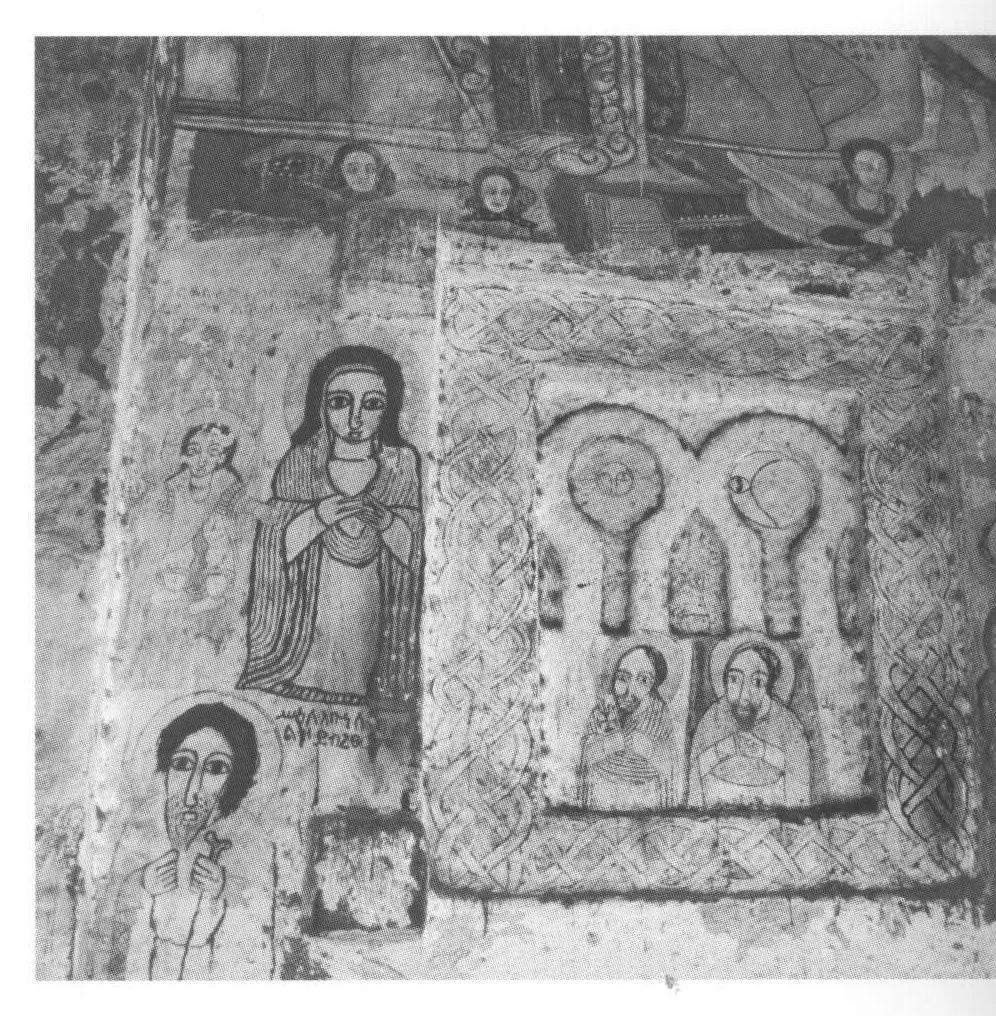
Sokota Masqal Kristos, blind low-level window at the north end of the exterior west wall, with modern paintings, 2006.
 Medievalarchitecture
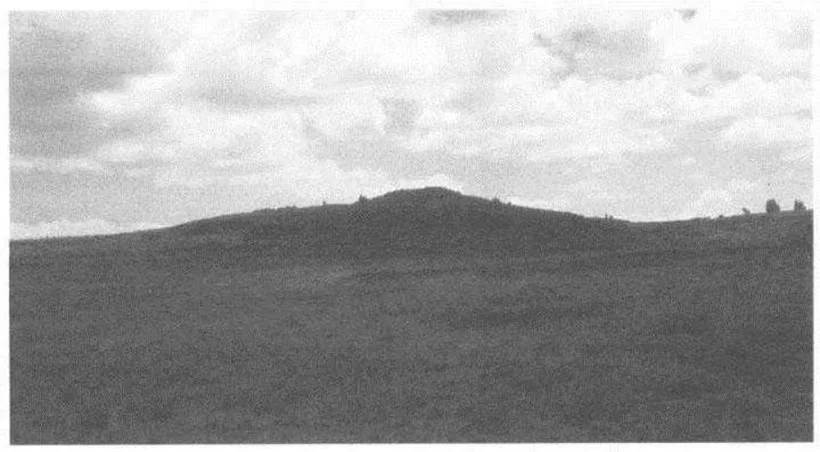
Fig. 4.3 - Vue du tumulus de Tätär Gur depuis la vallée de la Šay
 Medievalarchitecture
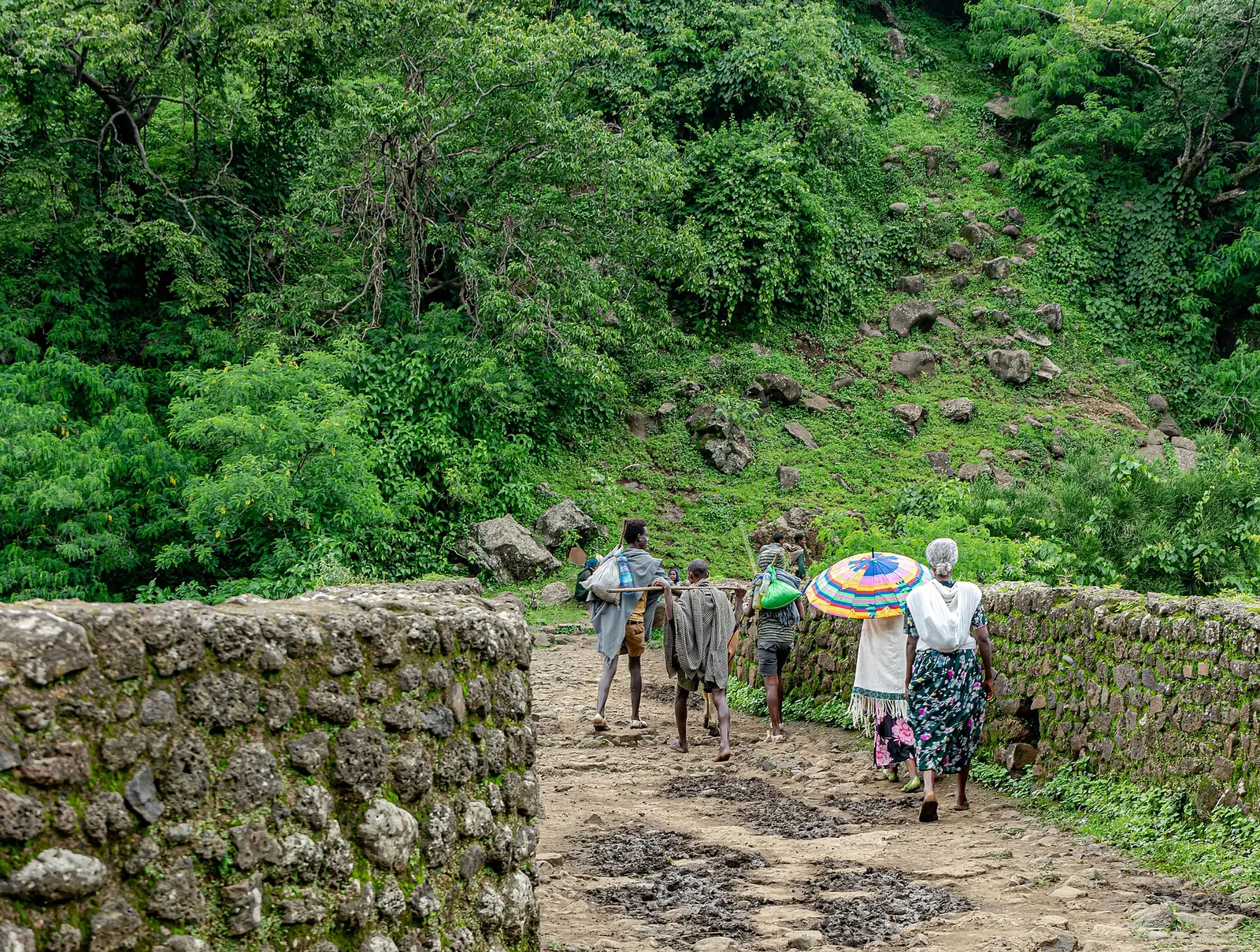
The stone bridge over the Blue Nile below the Tis Issat falls, the first bridge on the Nile, built in the reign of Emperor Susenyos with Portuguese-trained masons.
 Medievalarchitecture
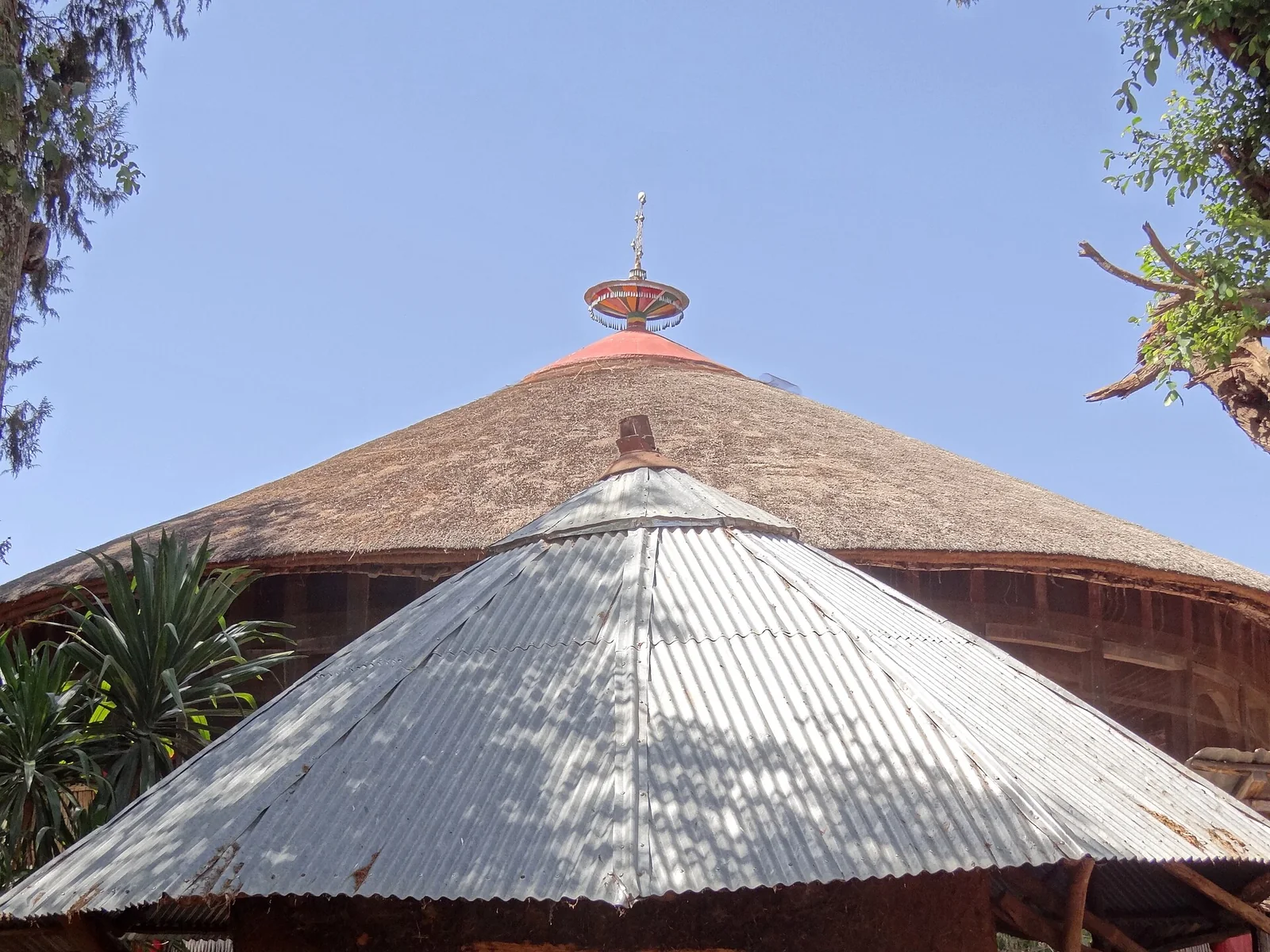
The round maqdas-centred church of Ura Kidane Mehret on the Zege peninsula of Lake Tana, the most celebrated of the lake's monastery churches.
 Medievalarchitecture
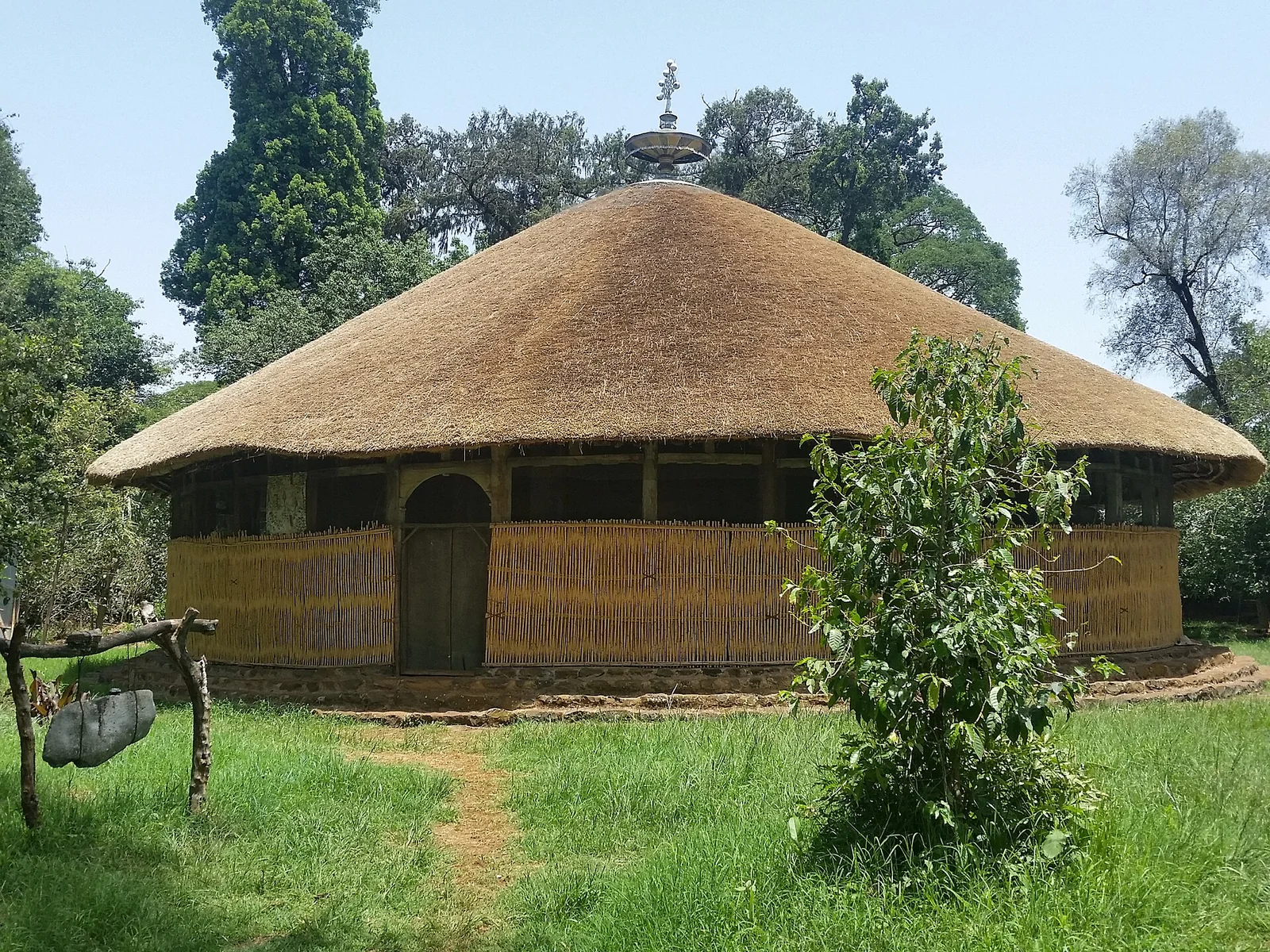
The thatched round church of Azwa Maryam on the Zege peninsula of Lake Tana, one of the peninsula's group of painted monastery churches.
Showing 48 of 54
New articles on Aksum, Adulis and the wider Horn, sent to your inbox the day they are published.
Subscribe