Entry 1 of 11 · 11 with reviewed images. This is a catalogue sequence, not a complete digitization.
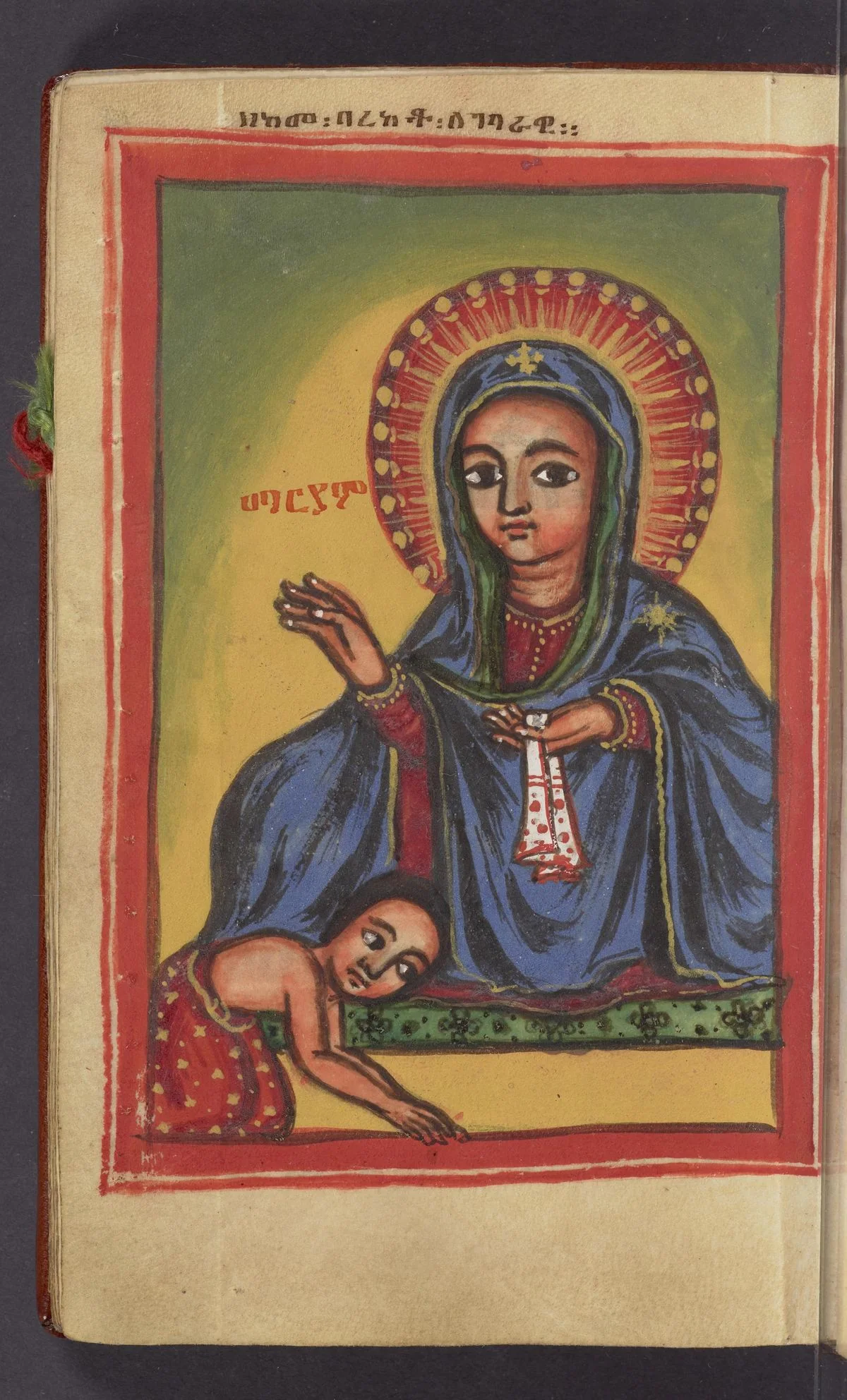
fol. 18v1. The worker standing next to St Mary, who performs a blessing gesture, while sitting on a throne and holding her son. Princeton University Library, PEM (Princeton) 57, fol. 18v.Reviewed first-party image
Use plus and minus to zoom, arrow keys to move the detail focus, R to rotate, zero to reset, and Page Up or Page Down to change catalogue entries.
Record & image ledger
The peasant who complained to Saint Mary because she did not reply to his Hail Mary. — PEM (Princeton) 57, fol. 18v
Princeton Ethiopian, Eritrean, and Egyptian Miracles of Mary (PEMM) project
Source record
PEM (Princeton) 57
Image evidence
Caption
1. The worker standing next to St Mary, who performs a blessing gesture, while sitting on a throne and holding her son. Princeton University Library, PEM (Princeton) 57, fol. 18v.
Credit
Princeton University Library, Ethiopic Manuscripts collection
Rights
No Known Copyright (rightsstatements.org/vocab/NKC/1.0/); Princeton University Library charges no permission fee and asks only for citation and image credit.
British Library Archives and Manuscripts Catalogue
Source record
British Library, Or 721, f. 5r
Image evidence
Caption
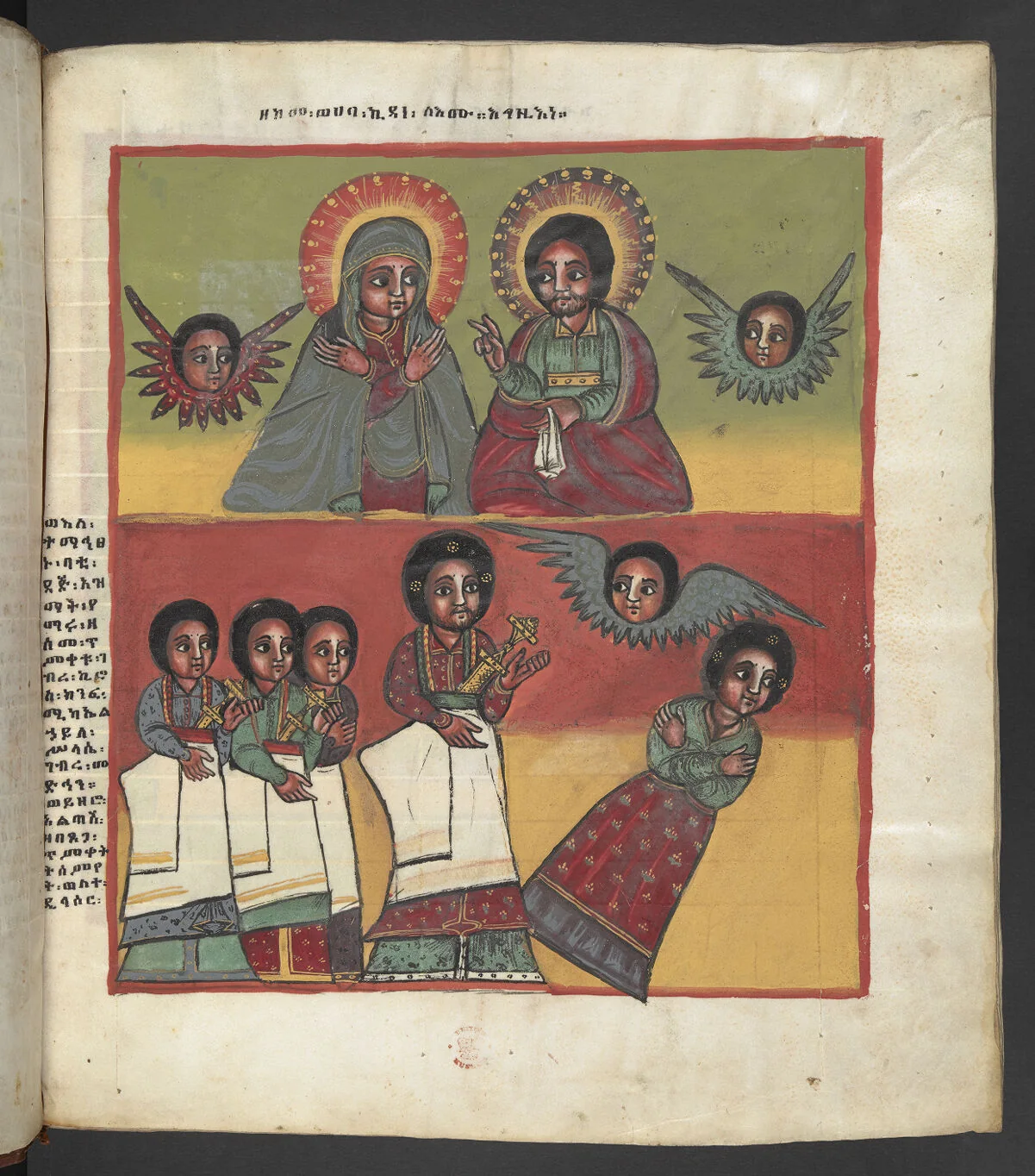
Or 721, f. 5r: a folio of ገድለ ተክለ ሃይማኖት Act of St. Takla Haymanot the British Library catalogue records as decorated.
Credit
British Library, Or 721, f. 5r. Digitised by The British Library.
Rights
The Ethiopian manuscripts published in digitised format by the British Library are to the best of our knowledge not in copyright under Ethiopian law. However the British Library recognises broader interests in the cultural heritage which the Ethiopian manuscripts represent. The manuscripts included are often of a religious nature, and the Library has taken considerable care not to distort or alter the underlying material. We ask users also to show appropriate respect in reusing the digital images of the Ethiopian manuscripts, which should not be altered or reused in ways that might be derogatory or offensive to the Ethiopian communities for whom they are of special cultural importance.