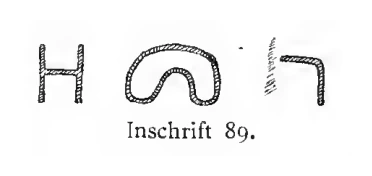
 RIÉ 258 · DAE 89 · Facsimile
RIÉ 258Aksumite corpus; date uncertainʿAddi Alawti
RIÉ 258 unspecified
This unspecified from ʿAddi Alawti preserves uncertain abbreviated name. The reading or interpretation remains uncertain.
z-m-k-
418 inscriptions
DʿMT and Aksumite texts in their attested scripts, with published translations and exact sources.
418 inscriptions in chronological order
RIÉ 258 · DAE 89 · FacsimileRIÉ 258Aksumite corpus; date uncertainʿAddi Alawti
This unspecified from ʿAddi Alawti preserves uncertain abbreviated name. The reading or interpretation remains uncertain.
z-m-k-
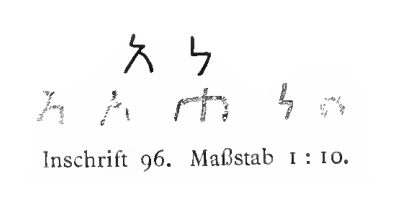 RIÉ 259 · DAE 96 · Facsimile
RIÉ 259Aksumite corpus; date uncertainʿAddi Alawti
This unspecified from ʿAddi Alawti preserves published translation with restorations.
Native-script transcription is not available here.
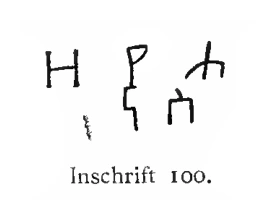 RIÉ 260 · DAE 100 · Facsimile
RIÉ 260Aksumite corpus; date uncertainʿAddi Alawti
This unspecified from ʿAddi Alawti preserves recognizable name.
Za-Yoḥannəs
No verified photograph or facsimile is available here. The cited edition identifies the object.
RIÉ 262Aksumite corpus; date uncertainCullite
This pierre from Cullite preserves published translation of the surviving beginning.
Native-script transcription is not available here.
No verified photograph or facsimile is available here. The cited edition identifies the object.
RIÉ 265sixth-century Aksumite presence in South ArabiaAcquired in Aden by D.H. Müller and sent to Wien, provenance unknown.
This une lampe fait d'un fragment de plaque inscrite from Acquired in Aden by D.H. Müller and sent to Wien, provenance unknown. preserves surviving fragment, line by line. The reading or interpretation remains uncertain.
Native-script transcription is not available here.
No verified photograph or facsimile is available here. The cited edition identifies the object.
RIÉ 266sixth-century Aksumite presence in South ArabiaProvenance unknown.
This dalle from Provenance unknown. preserves recognizable words only.
Native-script transcription is not available here.
No verified photograph or facsimile is available here. The cited edition identifies the object.
RIÉ 267Aksumite corpus; date uncertainMeroë
This dalles contiguës from Meroë preserves recognizable phrase only.
Native-script transcription is not available here.
No verified photograph or facsimile is available here. The cited edition identifies the object.
RIÉ 288Aksumite corpus; date uncertainAksum
This seal from Aksum preserves surviving short text or mark.
ḤFDM / WQHʾL
No verified photograph or facsimile is available here. The cited edition identifies the object.
RIÉ 291Aksumite corpus; date uncertainAdulis
This seal from Adulis preserves surviving short text or mark.
Ratnadāma / Ratradūmi (?)
No verified photograph or facsimile is available here. The cited edition identifies the object.
RIÉ 293Aksumite corpus; date uncertainHawelti
This small bronze object from Hawelti preserves surviving short text or mark.
hyw / hywt (four times)
No verified photograph or facsimile is available here. The cited edition identifies the object.
RIÉ 294Aksumite corpus; date uncertainHawelti
This small bronze object from Hawelti preserves surviving short text or mark.
qm (twice)
No verified photograph or facsimile is available here. The cited edition identifies the object.
RIÉ 296Aksumite corpus; date uncertainYeha
This small bronze object from Yeha preserves surviving short text or mark.
srʿ / ʿrs / ʿsr / ʿsm (?)
No verified photograph or facsimile is available here. The cited edition identifies the object.
RIÉ 297Aksumite corpus; date uncertainYeha
This small bronze object from Yeha preserves surviving short text or mark.
hyw / hywt (twice)
No verified photograph or facsimile is available here. The cited edition identifies the object.
RIÉ 298Aksumite corpus; date uncertainYeha
This small bronze object from Yeha preserves surviving short text or mark.
r(b)n (?)
No verified photograph or facsimile is available here. The cited edition identifies the object.
RIÉ 299Aksumite corpus; date uncertainYeha
This small bronze object from Yeha preserves surviving short text or mark.
ʿdd (understood as ʿzz)
No verified photograph or facsimile is available here. The cited edition identifies the object.
RIÉ 300Aksumite corpus; date uncertainYeha
This small bronze object from Yeha preserves surviving short text or mark.
mts
No verified photograph or facsimile is available here. The cited edition identifies the object.
RIÉ 301Aksumite corpus; date uncertainYeha
This small bronze object from Yeha preserves surviving short text or mark.
hyw (twice)
No verified photograph or facsimile is available here. The cited edition identifies the object.
RIÉ 302Aksumite corpus; date uncertainYeha
This small bronze object from Yeha preserves surviving short text or mark.
ḥnʾt (alternative tʾnh)
No verified photograph or facsimile is available here. The cited edition identifies the object.
RIÉ 303Aksumite corpus; date uncertainYeha
This small bronze object from Yeha preserves surviving short text or mark.
WʿRN HYWT
No verified photograph or facsimile is available here. The cited edition identifies the object.
RIÉ 304Aksumite corpus; date uncertainYeha
This small bronze object from Yeha preserves surviving short text or mark.
hr (twice?) / srfh (?)
No verified photograph or facsimile is available here. The cited edition identifies the object.
RIÉ 305Aksumite corpus; date uncertainYeha
This small bronze object from Yeha preserves surviving short text or mark.
hyw / hywt
No verified photograph or facsimile is available here. The cited edition identifies the object.
RIÉ 306Aksumite corpus; date uncertainYeha
This small bronze object from Yeha preserves surviving short text or mark.
nr (twice)
No verified photograph or facsimile is available here. The cited edition identifies the object.
RIÉ 307Aksumite corpus; date uncertainYeha
This small bronze object from Yeha preserves surviving short text or mark.
n(b)n (?)
No verified photograph or facsimile is available here. The cited edition identifies the object.
RIÉ 308Aksumite corpus; date uncertainMatara
This small bronze object from Matara preserves surviving short text or mark.
qm
Source register
RIÉ 1–443, with separately numbered text versions, supplements, and Arabian witnesses from the checked corpus and DASI. Dates and uncertain identifications follow the cited editions; missing texts, translations, and images are recorded below.
61–120 of 512 entries. Copies and language versions retain their own references.
Early 1st millennium–5th/4th c. BCE (DASI Period A) · Matara, Senafe, Eritrea · Early Sabaic (Ethiopia/Eritrea)
Early highland dedication, private inscription, or fragment.
Pre-Aksumite period; precise date uncertain · Matara during the excavation of the mound B · Early highland inscription; Old South Arabian alphabet
Surviving dedicatory fragment. The beginning, ending, and part of the divine name are lost; brackets retain the edition’s restoration.
Pre-Aksumite period; precise date uncertain · Matara during the excavation of the mound B · Early highland inscription; Old South Arabian alphabet
Uninterpreted inscription. The edition offers no interpretation.
Pre-Aksumite period; precise date uncertain · Matara during the excavation of the mound B · Early highland inscription; Old South Arabian alphabet
Uninterpreted inscription. The edition offers no interpretation.
Early 1st millennium–5th/4th c. BCE (DASI Period A) · Matara, Senafe area, Eritrea; excavated in Mound B room 33, not in situ · Early Sabaic (Ethiopia/Eritrea)
Cultic or royal names; DʿMT is not named in the surviving text.
Early 1st millennium–5th/4th c. BCE (DASI Period A) · Matara, Senafe, Eritrea · Early Sabaic (Ethiopia/Eritrea)
Early highland dedication, private inscription, or fragment.
Early 1st millennium–5th/4th c. BCE (DASI Period A) · Matara, Senafe, Eritrea · Early Sabaic (Ethiopia/Eritrea)
Early highland dedication, private inscription, or fragment.
Early 1st millennium–5th/4th c. BCE (DASI Period A) · Matara, Senafe, Eritrea · Early Sabaic (Ethiopia/Eritrea)
Early highland dedication, private inscription, or fragment.
Pre-Aksumite period; precise date uncertain · Matara during the excavation of the mound E2 · Early highland inscription; Old South Arabian alphabet
Probable personal name. The same letter sequence names the tribe Bakīl elsewhere, but the edition considers a personal name more likely here.
Pre-Aksumite period; precise date uncertain · Matara during the excavation of the mound E 1, locus 43 · Early highland inscription; Old South Arabian alphabet
Uninterpreted inscription. The edition offers no interpretation.
Pre-Aksumite period; precise date uncertain · Matara during the excavation of the monument C · Early highland inscription; Old South Arabian alphabet
Probable mason’s mark. No linguistic translation is given.
Pre-Aksumite period; precise date uncertain · Matara during the excavation of the mound F · Early highland inscription; Old South Arabian alphabet
Possible mason’s mark. No linguistic translation is given.
Pre-Aksumite period; precise date uncertain · Matara · Early highland inscription; Old South Arabian alphabet
Name; other marks uninterpreted. Two m signs on the right-hand stone remain uninterpreted.
Pre-Aksumite period; precise date uncertain · Dibdib · Early highland inscription; Old South Arabian alphabet
Published translation of the three-line dedication. DWL may designate a locality, region, people, or tribe; the edition does not resolve which.
Early 1st millennium–5th/4th c. BCE (DASI Period A) · Dibdib, Senafe, Eritrea · Early Sabaic (Ethiopia/Eritrea)
Early highland dedication, private inscription, or fragment.
Early 1st millennium–5th/4th c. BCE (DASI Period A) · Feqya, Senafe, Eritrea · Early Sabaic (Ethiopia/Eritrea)
Early highland dedication, private inscription, or fragment.
Early 1st millennium–5th/4th c. BCE (DASI Period A) · Feqya, Senafe, Eritrea · Early Sabaic (Ethiopia/Eritrea)
Early highland dedication, private inscription, or fragment.
Early 1st millennium–5th/4th c. BCE (DASI Period A) · Feqya, Senafe, Eritrea · Early Sabaic (Ethiopia/Eritrea)
Early highland dedication, private inscription, or fragment.
Early 1st millennium–5th/4th c. BCE (DASI Period A) · Feqya, Senafe, Eritrea · Early Sabaic (Ethiopia/Eritrea)
Early highland dedication, private inscription, or fragment.
Pre-Aksumite period; precise date uncertain · Feqya, engraved on a stone · Early highland inscription; Old South Arabian alphabet
Surviving dedication with editorial restoration. The lost verb could have been singular or plural. <This stone> is supplied from the object, not a surviving word.
Pre-Aksumite period; precise date uncertain · Feqya, engraved on a stone · Early highland inscription; Old South Arabian alphabet
Published translation of the surviving three-line dedication. <This stone> is supplied from the object. HYW is probably a co-dedicant.
Early 1st millennium–5th/4th c. BCE (DASI Period A) · Feqya, Senafe, Eritrea · Early Sabaic (Ethiopia/Eritrea)
Early highland dedication, private inscription, or fragment.
Early 1st millennium–5th/4th c. BCE (DASI Period A) · Feqya, Senafe, Eritrea · Early Sabaic (Ethiopia/Eritrea)
Early highland dedication, private inscription, or fragment.
Early 1st millennium–5th/4th c. BCE (DASI Period A) · Feqya, Senafe, Eritrea · Early Sabaic (Ethiopia/Eritrea)
Early highland dedication, private inscription, or fragment.
Early 1st millennium–5th/4th c. BCE (DASI Period A) · Feqya, Senafe, Eritrea · Early Sabaic (Ethiopia/Eritrea)
Early highland dedication, private inscription, or fragment.
Pre-Aksumite period; precise date uncertain · Feqya, engraved on a stone · Early highland inscription; Old South Arabian alphabet
Uncertain personal-name fragment. A damaged word may be a personal name; the letters in the second line remain uninterpreted.
Early 1st millennium–5th/4th c. BCE (DASI Period A) · Feqya, Senafe, Eritrea · Early Sabaic (Ethiopia/Eritrea)
Early highland dedication, private inscription, or fragment.
Early 1st millennium–5th/4th c. BCE (DASI Period A) · Feqya, Senafe, Eritrea · Early Sabaic (Ethiopia/Eritrea)
Early highland dedication, private inscription, or fragment.
Early 1st millennium–5th/4th c. BCE (DASI Period A) · Barachit, Debub, Eritrea · Early Sabaic (Ethiopia/Eritrea)
Early highland dedication, private inscription, or fragment.
Early 1st millennium–5th/4th c. BCE (DASI Period A) · Dera, Eritrea · Early Sabaic (Ethiopia/Eritrea)
Early highland dedication, private inscription, or fragment.
Pre-Aksumite period; precise date uncertain · Tokhonda, engraved on a stone · Early highland inscription; Old South Arabian alphabet
Published translation of two short texts. The divine names in Text II are probable readings; the etymology of YGDY is uncertain.
Pre-Aksumite period; precise date uncertain · Tokhonda, engraved on a stone · Early highland inscription; Old South Arabian alphabet
Probable personal name. The name is otherwise unknown; its proposed compound structure has no convincing etymology.
Pre-Aksumite period; precise date uncertain · Tokhonda, engraved on a stone · Early highland inscription; Old South Arabian alphabet
Preferred identification within an uncertain text. Drewes prefers a personal-name interpretation of ḤYWT over Littmann’s tentative ‘for the life of ʾAgʷabat’; the exact form and etymology of the other names remain doubtful.
Pre-Aksumite period; precise date uncertain · Tokhonda, engraved on a stone · Early highland inscription; Old South Arabian alphabet
Alternative readings of a personal name. Both readings are offered; the root is secure but the final consonant is not.
Pre-Aksumite period; precise date uncertain · Kelette Afa, engraved on a stone · Early highland inscription; Old South Arabian alphabet
Published translation. GʿSY may be a local name; its etymology is uncertain.
Pre-Aksumite period; precise date uncertain · Laʿlay ʿAddi, engraved on a stone · Early highland inscription; Old South Arabian alphabet
Preserved personal name. The same name occurs in RIÉ 91 and 124–126.
Pre-Aksumite period; precise date uncertain · Laʿlay ʿAddi, engraved on a stone · Early highland inscription; Old South Arabian alphabet
Two preserved personal names. The etymology of ḤDBR remains uncertain.
Pre-Aksumite period; precise date uncertain · Laʿlay ʿAddi · Early highland inscription; Old South Arabian alphabet
Two partly legible names from four texts. Only the names in Texts II and III are more or less legible; the reading and derivation of both remain doubtful.
Pre-Aksumite period; precise date uncertain · Laʿlay ʿAddi · Early highland inscription; Old South Arabian alphabet
Two surviving words. Only the kinship phrase and name remain legible.
Pre-Aksumite period; precise date uncertain · Laʿlay ʿAddi · Early highland inscription; Old South Arabian alphabet
Preserved personal name. The same name occurs in RIÉ 97 and has South Arabian parallels.
Pre-Aksumite period; precise date uncertain · Laʿlay ʿAddi · Early highland inscription; Old South Arabian alphabet
Published translation. WDGLY is considered a local name of uncertain etymology; MʿDʾL is well attested in South Arabia.
Pre-Aksumite period; precise date uncertain · Laʿlay ʿAddi · Early highland inscription; Old South Arabian alphabet
Alternative readings of a personal name. Both readings are possible; the inscription does not decide between them.
Pre-Aksumite period; precise date uncertain · Laʿlay ʿAddi · Early highland inscription; Old South Arabian alphabet
Preserved personal name. The same name occurs in RIÉ 94.
Pre-Aksumite period; precise date uncertain · Laʿlay ʿAddi · Early highland inscription; Old South Arabian alphabet
Preserved personal name. Its grammatical form and interpretation remain uncertain.
Pre-Aksumite period; precise date uncertain · Laʿlay ʿAddi · Early highland inscription; Old South Arabian alphabet
Surviving first line and proposed name gloss. The patronymic is lost after the kinship term.
Pre-Aksumite period; precise date uncertain · Laʿlay ʿAddi · Early highland inscription; Old South Arabian alphabet
Alternative readings of a personal name. Neither reading is otherwise attested as a South Arabian personal name.
Pre-Aksumite period; precise date uncertain · Laʿlay ʿAddi · Early highland inscription; Old South Arabian alphabet
Preserved personal name. The edition compares related names in RIÉ 9, 12, and 79.
Pre-Aksumite period; precise date uncertain · Laʿlay ʿAddi · Early highland inscription; Old South Arabian alphabet
Probable local personal name. Drewes rejects Jamme’s reading and the translation ‘ʾAbih has slept [here].’
Pre-Aksumite period; precise date uncertain · Laʿlay ʿAddi · Early highland inscription; Old South Arabian alphabet
Uninterpreted fragment. The fragmentary text does not permit an interpretation.
Pre-Aksumite period; precise date uncertain · Laʿlay ʿAddi · Early highland inscription; Old South Arabian alphabet
Partly legible personal name. A personal name is probable, but it is only partly readable and is not transcribed securely.
Pre-Aksumite period; precise date uncertain · Laʿlay ʿAddi · Early highland inscription; Old South Arabian alphabet
Uninterpreted text. The edition offers no interpretation.
Pre-Aksumite period; precise date uncertain · Laʿlay ʿAddi · Early highland inscription; Old South Arabian alphabet
Published translation. The verb is interpreted from the root wdd, ‘love’; the linguistic classification remains discussed in the commentary.
Pre-Aksumite period; precise date uncertain · Laʿlay ʿAddi · Early highland inscription; Old South Arabian alphabet
Two probable personal names. Both etymologies remain uncertain.
Pre-Aksumite period; precise date uncertain · Ruba Kodo · Early highland inscription; Old South Arabian alphabet
Published formula with abbreviated divine name. The preserved letters DḤ are understood as an abbreviation of the goddess DṮ ḤMN.
Pre-Aksumite period; precise date uncertain · Ruba Kodo · Early highland inscription; Old South Arabian alphabet
Possible remains of a known formula. The graffito is incomplete and difficult to read; the formula depends on the tentative reading of its first two letters.
Pre-Aksumite period; precise date uncertain · Ruba Kodo · Early highland inscription; Old South Arabian alphabet
Probable personal name and lexical gloss. The related Arabic root can also mean ‘be indulgent.’
Pre-Aksumite period; precise date uncertain · Ruba Kodo · Early highland inscription; Old South Arabian alphabet
Alternative readings of a personal name. Neither reading is otherwise attested in South Arabia; QṢRY has a different possible derivation.
Pre-Aksumite period; precise date uncertain · Ruba Kodo · Early highland inscription; Old South Arabian alphabet
Uncertain possible personal name. If the word is read ḥwʾr, it may share a root with WʿRN, but the reading itself is uncertain.
Pre-Aksumite period; precise date uncertain · Ruba Kodo · Early highland inscription; Old South Arabian alphabet
Probable personal name and preferred gloss. The edition prefers derivation from the Ethiopian root ʾkl, ‘suffice,’ over a root meaning ‘eat’; a pronominal suffix would yield ‘it will suffice for him.’
Pre-Aksumite period; precise date uncertain · Ruba Kodo · Early highland inscription; Old South Arabian alphabet
Probable personal name. The final r is not certain and the exact meaning of the underlying verb remains unresolved.