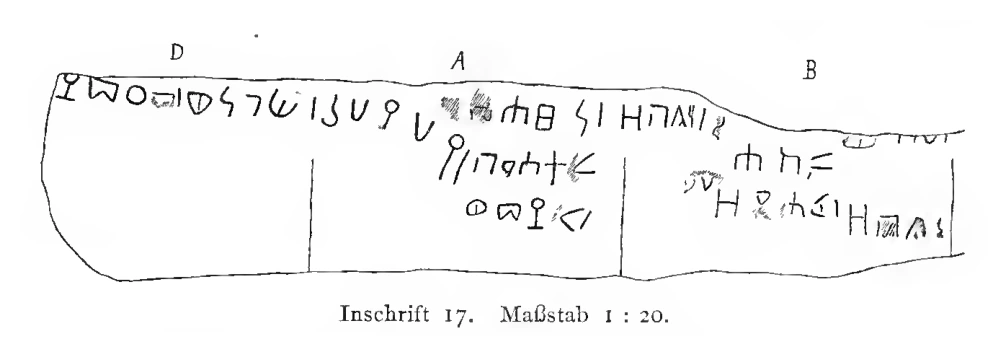
 RIÉ 198 · DAE 17 · Facsimile
RIÉ 198Aksumite corpus; date uncertainʾAksum
RIÉ 198 bassin
This bassin from ʾAksum preserves complete published translation of three inscription units.
Native-script transcription is not available here.
418 inscriptions
DʿMT and Aksumite texts in their attested scripts, with published translations and exact sources.
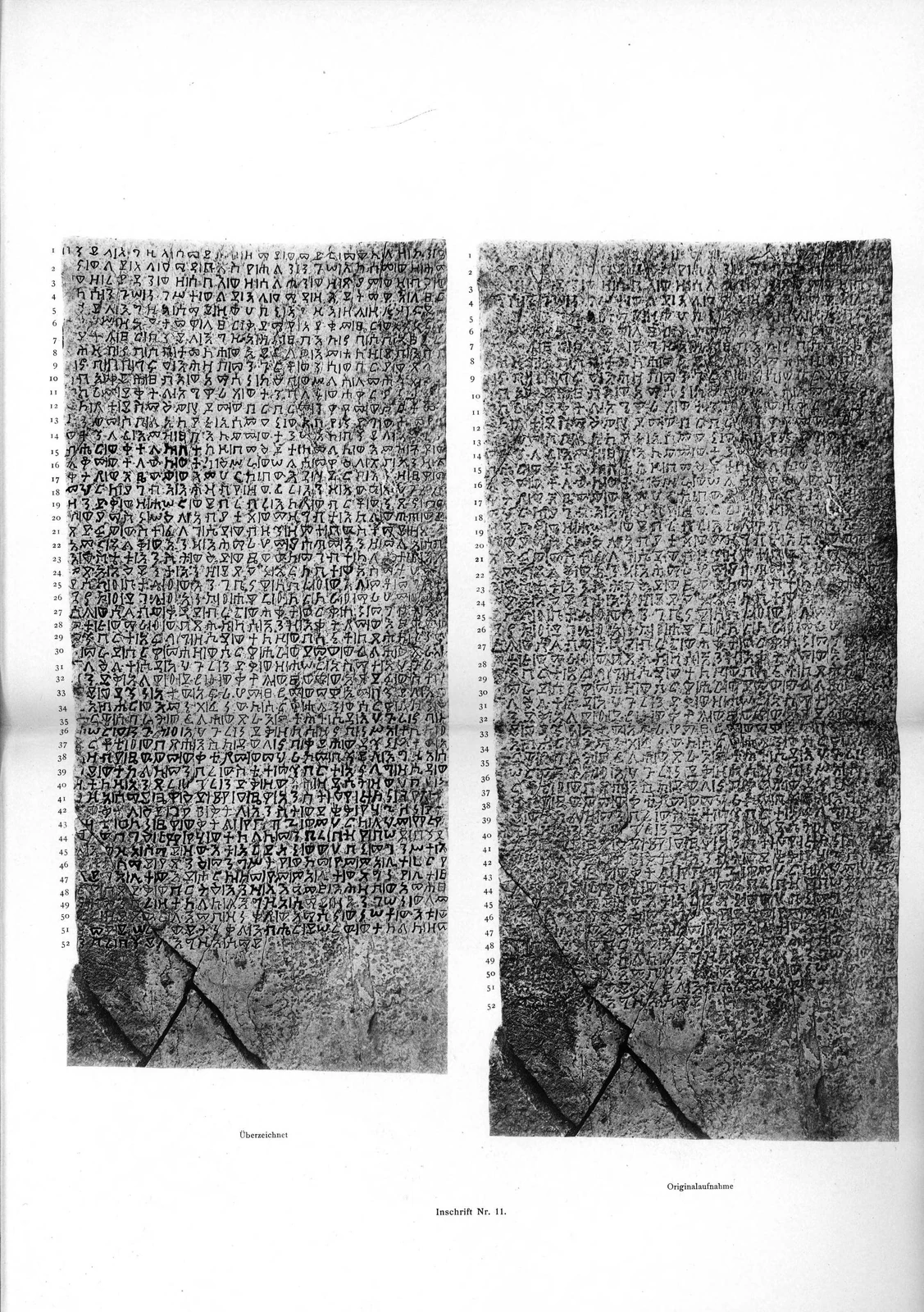
418 inscriptions in chronological order
RIÉ 198 · DAE 17 · FacsimileRIÉ 198Aksumite corpus; date uncertainʾAksum
This bassin from ʾAksum preserves complete published translation of three inscription units.
Native-script transcription is not available here.
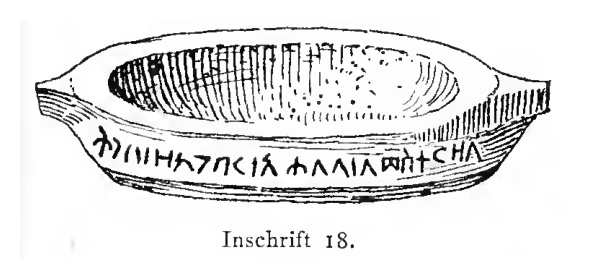 RIÉ 199 · DAE 18 · Artifact drawing
RIÉ 199Aksumite corpus; date uncertainʾAksum
This bassin from ʾAksum preserves complete published translation.
Native-script transcription is not available here.
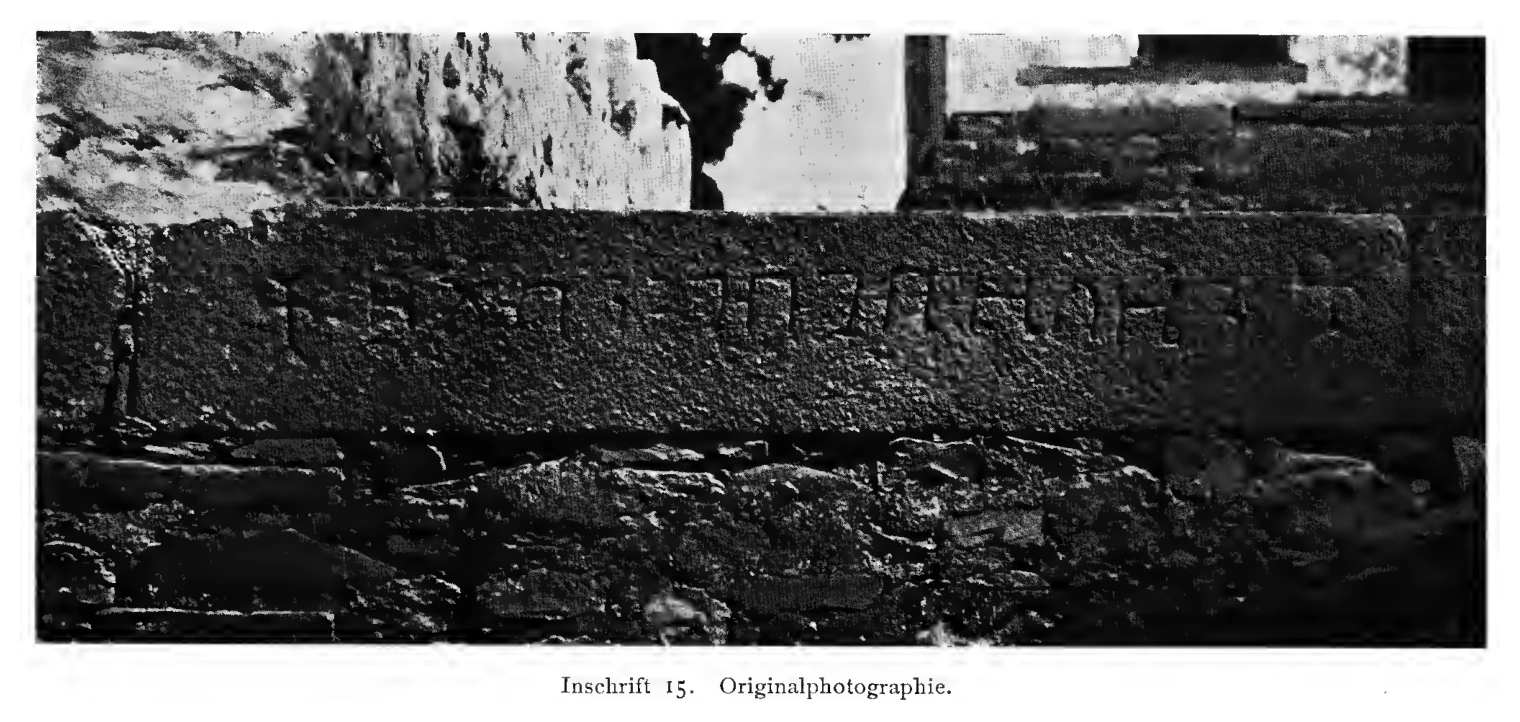 RIÉ 200 · DAE 15 · Photograph
RIÉ 200Aksumite corpus; date uncertainʾAksum
This block from ʾAksum preserves complete published translation.
Native-script transcription is not available here.
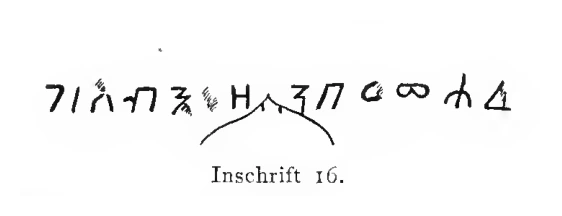 RIÉ 201 · DAE 16 · Facsimile
RIÉ 201Aksumite corpus; date uncertainʾAksum
This pierre from ʾAksum preserves complete published translation.
Native-script transcription is not available here.
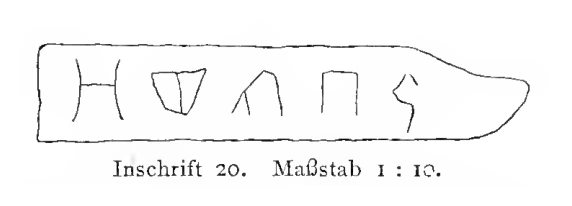 RIÉ 203 · DAE 20 · Facsimile
RIÉ 203Aksumite corpus; date uncertainʾAksum
This pierre from ʾAksum preserves complete tentative ownership or maker’s formula. The reading or interpretation remains uncertain.
z-Walbanā / z-Walobanā (?)
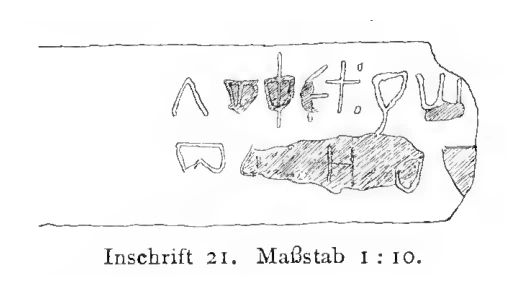 RIÉ 204 · DAE 21 · Facsimile
RIÉ 204Aksumite corpus; date uncertainʾAksum
This pierre from ʾAksum preserves partial published translation of a broken two-line text. The reading or interpretation remains uncertain.
Native-script transcription is not available here.
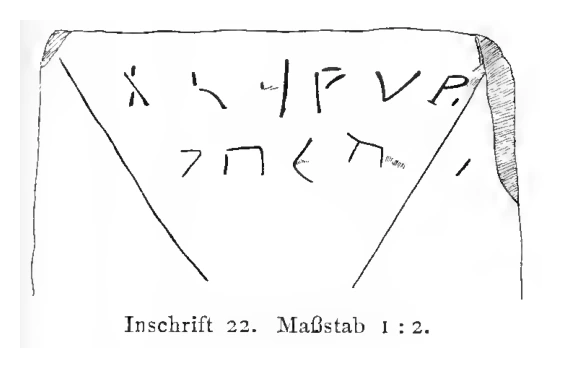 RIÉ 205 · DAE 22 · Facsimile
RIÉ 205Aksumite corpus; date uncertainʾAksum
This plaque from ʾAksum preserves complete published translation of two lines.
Native-script transcription is not available here.
No verified photograph or facsimile is available here. The cited edition identifies the object.
RIÉ 206Aksumite corpus; date uncertainʾAksum
This fragment from ʾAksum preserves alternative interpretations of a two-line fragment. The reading or interpretation remains uncertain.
ʾana […] / gb[…]
No verified photograph or facsimile is available here. The cited edition identifies the object.
RIÉ 208Aksumite corpus; date uncertainʾAksum
This bloc from ʾAksum preserves single mason’s mark.
s-shaped mark
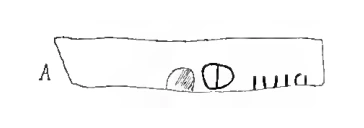 RIÉ 209 · DAE 25 A · Facsimile
RIÉ 209Aksumite corpus; date uncertainʾAksum
This mur from ʾAksum preserves possible inscription fragment or mason’s mark. The reading or interpretation remains uncertain.
w / ḥ / r (?)
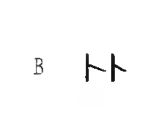 RIÉ 210 · DAE 25 B · Facsimile
RIÉ 210Aksumite corpus; date uncertainʾAksum
Drewes rejects the proposed South Arabian reading and identifies the signs as probable mason’s marks.
Native-script transcription is not available here.
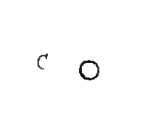 RIÉ 211 · DAE 25 C · Facsimile
RIÉ 211Aksumite corpus; date uncertainʾAksum
This bloc from ʾAksum preserves single mason’s mark.
ʿ-shaped mark
No verified photograph or facsimile is available here. The cited edition identifies the object.
RIÉ 212Aksumite corpus; date uncertainʾAksum
This bloc from ʾAksum preserves selected interpreted marks from a composite catalogue of sixty-four inscribed building stones. The reading or interpretation remains uncertain.
Stone 28: z-MʿR Stone 38: z-[personal name?] Stone 49: ŚRB Stone 54: z-[…]
No verified photograph or facsimile is available here. The cited edition identifies the object.
RIÉ 213Aksumite corpus; date uncertainMeʾelan Debbas
This bloc from Meʾelan Debbas preserves complete three-line text with one conjectural noun.
z-qśw z-[m]qbr z-HMN
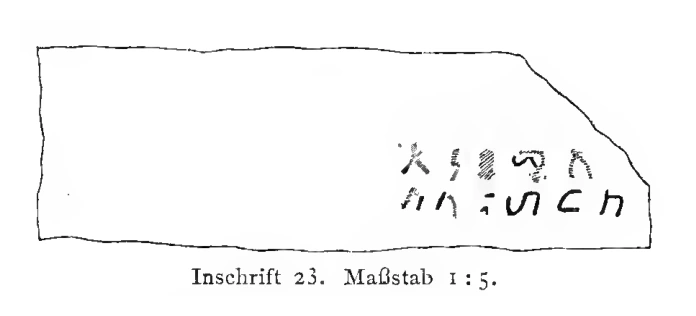 RIÉ 214 · DAE 23 · Facsimile
RIÉ 214Aksumite corpus; date uncertainAbba Liqanos
This pierre from Abba Liqanos preserves tentative interpretation of a two-line fragment. The reading or interpretation remains uncertain.
ʾana [name lost] / gb[rku] (?)
No verified photograph or facsimile is available here. The cited edition identifies the object.
RIÉ 215Aksumite corpus; date uncertainAbba Mäṭaʿ
This basin from Abba Mäṭaʿ preserves complete short text with alternative grammatical analyses. The reading or interpretation remains uncertain.
z-lwd
No verified photograph or facsimile is available here. The cited edition identifies the object.
RIÉ 217Aksumite corpus; date uncertainʾAmbā ʾAddi Māqdās
This bloc from ʾAmbā ʾAddi Māqdās preserves complete published translation.
Native-script transcription is not available here.
No verified photograph or facsimile is available here. The cited edition identifies the object.
RIÉ 218Aksumite corpus; date uncertainʿAnza
This stele from ʿAnza preserves complete published translation of eight lines.
Native-script transcription is not available here.
No verified photograph or facsimile is available here. The cited edition identifies the object.
RIÉ 219Aksumite corpus; date uncertainNāzret Māryām
This basin from Nāzret Māryām preserves complete published translation across four faces, with a lost sculptor’s name.
Native-script transcription is not available here.
No verified photograph or facsimile is available here. The cited edition identifies the object.
RIÉ 221Aksumite corpus; date uncertainMay Mbio
This roc from May Mbio preserves complete short graffito with alternative readings. The reading or interpretation remains uncertain.
z-lbby / z-lbbʿ
No verified photograph or facsimile is available here. The cited edition identifies the object.
RIÉ 222Aksumite corpus; date uncertainDǝḵana
This bloc from Dǝḵana preserves complete published translation of two lines.
Native-script transcription is not available here.
No verified photograph or facsimile is available here. The cited edition identifies the object.
RIÉ 224Aksumite corpus; date uncertainMaṭarā
This pierre from Maṭarā preserves ownership or workman’s formula.
zwd
No verified photograph or facsimile is available here. The cited edition identifies the object.
RIÉ 225Aksumite corpus; date uncertainMaṭarā
This pierre from Maṭarā preserves line 1 only.
Native-script transcription is not available here.
No verified photograph or facsimile is available here. The cited edition identifies the object.
RIÉ 226Aksumite corpus; date uncertainMaṭarā
This pierre from Maṭarā preserves published interpretation of the single word.
Native-script transcription is not available here.
Source register
RIÉ 1–443, with separately numbered text versions, supplements, and Arabian witnesses from the checked corpus and DASI. Dates and uncertain identifications follow the cited editions; missing texts, translations, and images are recorded below.
61–120 of 512 entries. Copies and language versions retain their own references.
Early 1st millennium–5th/4th c. BCE (DASI Period A) · Matara, Senafe, Eritrea · Early Sabaic (Ethiopia/Eritrea)
Early highland dedication, private inscription, or fragment.
Pre-Aksumite period; precise date uncertain · Matara during the excavation of the mound B · Early highland inscription; Old South Arabian alphabet
Surviving dedicatory fragment. The beginning, ending, and part of the divine name are lost; brackets retain the edition’s restoration.
Pre-Aksumite period; precise date uncertain · Matara during the excavation of the mound B · Early highland inscription; Old South Arabian alphabet
Uninterpreted inscription. The edition offers no interpretation.
Pre-Aksumite period; precise date uncertain · Matara during the excavation of the mound B · Early highland inscription; Old South Arabian alphabet
Uninterpreted inscription. The edition offers no interpretation.
Early 1st millennium–5th/4th c. BCE (DASI Period A) · Matara, Senafe area, Eritrea; excavated in Mound B room 33, not in situ · Early Sabaic (Ethiopia/Eritrea)
Cultic or royal names; DʿMT is not named in the surviving text.
Early 1st millennium–5th/4th c. BCE (DASI Period A) · Matara, Senafe, Eritrea · Early Sabaic (Ethiopia/Eritrea)
Early highland dedication, private inscription, or fragment.
Early 1st millennium–5th/4th c. BCE (DASI Period A) · Matara, Senafe, Eritrea · Early Sabaic (Ethiopia/Eritrea)
Early highland dedication, private inscription, or fragment.
Early 1st millennium–5th/4th c. BCE (DASI Period A) · Matara, Senafe, Eritrea · Early Sabaic (Ethiopia/Eritrea)
Early highland dedication, private inscription, or fragment.
Pre-Aksumite period; precise date uncertain · Matara during the excavation of the mound E2 · Early highland inscription; Old South Arabian alphabet
Probable personal name. The same letter sequence names the tribe Bakīl elsewhere, but the edition considers a personal name more likely here.
Pre-Aksumite period; precise date uncertain · Matara during the excavation of the mound E 1, locus 43 · Early highland inscription; Old South Arabian alphabet
Uninterpreted inscription. The edition offers no interpretation.
Pre-Aksumite period; precise date uncertain · Matara during the excavation of the monument C · Early highland inscription; Old South Arabian alphabet
Probable mason’s mark. No linguistic translation is given.
Pre-Aksumite period; precise date uncertain · Matara during the excavation of the mound F · Early highland inscription; Old South Arabian alphabet
Possible mason’s mark. No linguistic translation is given.
Pre-Aksumite period; precise date uncertain · Matara · Early highland inscription; Old South Arabian alphabet
Name; other marks uninterpreted. Two m signs on the right-hand stone remain uninterpreted.
Pre-Aksumite period; precise date uncertain · Dibdib · Early highland inscription; Old South Arabian alphabet
Published translation of the three-line dedication. DWL may designate a locality, region, people, or tribe; the edition does not resolve which.
Early 1st millennium–5th/4th c. BCE (DASI Period A) · Dibdib, Senafe, Eritrea · Early Sabaic (Ethiopia/Eritrea)
Early highland dedication, private inscription, or fragment.
Early 1st millennium–5th/4th c. BCE (DASI Period A) · Feqya, Senafe, Eritrea · Early Sabaic (Ethiopia/Eritrea)
Early highland dedication, private inscription, or fragment.
Early 1st millennium–5th/4th c. BCE (DASI Period A) · Feqya, Senafe, Eritrea · Early Sabaic (Ethiopia/Eritrea)
Early highland dedication, private inscription, or fragment.
Early 1st millennium–5th/4th c. BCE (DASI Period A) · Feqya, Senafe, Eritrea · Early Sabaic (Ethiopia/Eritrea)
Early highland dedication, private inscription, or fragment.
Early 1st millennium–5th/4th c. BCE (DASI Period A) · Feqya, Senafe, Eritrea · Early Sabaic (Ethiopia/Eritrea)
Early highland dedication, private inscription, or fragment.
Pre-Aksumite period; precise date uncertain · Feqya, engraved on a stone · Early highland inscription; Old South Arabian alphabet
Surviving dedication with editorial restoration. The lost verb could have been singular or plural. <This stone> is supplied from the object, not a surviving word.
Pre-Aksumite period; precise date uncertain · Feqya, engraved on a stone · Early highland inscription; Old South Arabian alphabet
Published translation of the surviving three-line dedication. <This stone> is supplied from the object. HYW is probably a co-dedicant.
Early 1st millennium–5th/4th c. BCE (DASI Period A) · Feqya, Senafe, Eritrea · Early Sabaic (Ethiopia/Eritrea)
Early highland dedication, private inscription, or fragment.
Early 1st millennium–5th/4th c. BCE (DASI Period A) · Feqya, Senafe, Eritrea · Early Sabaic (Ethiopia/Eritrea)
Early highland dedication, private inscription, or fragment.
Early 1st millennium–5th/4th c. BCE (DASI Period A) · Feqya, Senafe, Eritrea · Early Sabaic (Ethiopia/Eritrea)
Early highland dedication, private inscription, or fragment.
Early 1st millennium–5th/4th c. BCE (DASI Period A) · Feqya, Senafe, Eritrea · Early Sabaic (Ethiopia/Eritrea)
Early highland dedication, private inscription, or fragment.
Pre-Aksumite period; precise date uncertain · Feqya, engraved on a stone · Early highland inscription; Old South Arabian alphabet
Uncertain personal-name fragment. A damaged word may be a personal name; the letters in the second line remain uninterpreted.
Early 1st millennium–5th/4th c. BCE (DASI Period A) · Feqya, Senafe, Eritrea · Early Sabaic (Ethiopia/Eritrea)
Early highland dedication, private inscription, or fragment.
Early 1st millennium–5th/4th c. BCE (DASI Period A) · Feqya, Senafe, Eritrea · Early Sabaic (Ethiopia/Eritrea)
Early highland dedication, private inscription, or fragment.
Early 1st millennium–5th/4th c. BCE (DASI Period A) · Barachit, Debub, Eritrea · Early Sabaic (Ethiopia/Eritrea)
Early highland dedication, private inscription, or fragment.
Early 1st millennium–5th/4th c. BCE (DASI Period A) · Dera, Eritrea · Early Sabaic (Ethiopia/Eritrea)
Early highland dedication, private inscription, or fragment.
Pre-Aksumite period; precise date uncertain · Tokhonda, engraved on a stone · Early highland inscription; Old South Arabian alphabet
Published translation of two short texts. The divine names in Text II are probable readings; the etymology of YGDY is uncertain.
Pre-Aksumite period; precise date uncertain · Tokhonda, engraved on a stone · Early highland inscription; Old South Arabian alphabet
Probable personal name. The name is otherwise unknown; its proposed compound structure has no convincing etymology.
Pre-Aksumite period; precise date uncertain · Tokhonda, engraved on a stone · Early highland inscription; Old South Arabian alphabet
Preferred identification within an uncertain text. Drewes prefers a personal-name interpretation of ḤYWT over Littmann’s tentative ‘for the life of ʾAgʷabat’; the exact form and etymology of the other names remain doubtful.
Pre-Aksumite period; precise date uncertain · Tokhonda, engraved on a stone · Early highland inscription; Old South Arabian alphabet
Alternative readings of a personal name. Both readings are offered; the root is secure but the final consonant is not.
Pre-Aksumite period; precise date uncertain · Kelette Afa, engraved on a stone · Early highland inscription; Old South Arabian alphabet
Published translation. GʿSY may be a local name; its etymology is uncertain.
Pre-Aksumite period; precise date uncertain · Laʿlay ʿAddi, engraved on a stone · Early highland inscription; Old South Arabian alphabet
Preserved personal name. The same name occurs in RIÉ 91 and 124–126.
Pre-Aksumite period; precise date uncertain · Laʿlay ʿAddi, engraved on a stone · Early highland inscription; Old South Arabian alphabet
Two preserved personal names. The etymology of ḤDBR remains uncertain.
Pre-Aksumite period; precise date uncertain · Laʿlay ʿAddi · Early highland inscription; Old South Arabian alphabet
Two partly legible names from four texts. Only the names in Texts II and III are more or less legible; the reading and derivation of both remain doubtful.
Pre-Aksumite period; precise date uncertain · Laʿlay ʿAddi · Early highland inscription; Old South Arabian alphabet
Two surviving words. Only the kinship phrase and name remain legible.
Pre-Aksumite period; precise date uncertain · Laʿlay ʿAddi · Early highland inscription; Old South Arabian alphabet
Preserved personal name. The same name occurs in RIÉ 97 and has South Arabian parallels.
Pre-Aksumite period; precise date uncertain · Laʿlay ʿAddi · Early highland inscription; Old South Arabian alphabet
Published translation. WDGLY is considered a local name of uncertain etymology; MʿDʾL is well attested in South Arabia.
Pre-Aksumite period; precise date uncertain · Laʿlay ʿAddi · Early highland inscription; Old South Arabian alphabet
Alternative readings of a personal name. Both readings are possible; the inscription does not decide between them.
Pre-Aksumite period; precise date uncertain · Laʿlay ʿAddi · Early highland inscription; Old South Arabian alphabet
Preserved personal name. The same name occurs in RIÉ 94.
Pre-Aksumite period; precise date uncertain · Laʿlay ʿAddi · Early highland inscription; Old South Arabian alphabet
Preserved personal name. Its grammatical form and interpretation remain uncertain.
Pre-Aksumite period; precise date uncertain · Laʿlay ʿAddi · Early highland inscription; Old South Arabian alphabet
Surviving first line and proposed name gloss. The patronymic is lost after the kinship term.
Pre-Aksumite period; precise date uncertain · Laʿlay ʿAddi · Early highland inscription; Old South Arabian alphabet
Alternative readings of a personal name. Neither reading is otherwise attested as a South Arabian personal name.
Pre-Aksumite period; precise date uncertain · Laʿlay ʿAddi · Early highland inscription; Old South Arabian alphabet
Preserved personal name. The edition compares related names in RIÉ 9, 12, and 79.
Pre-Aksumite period; precise date uncertain · Laʿlay ʿAddi · Early highland inscription; Old South Arabian alphabet
Probable local personal name. Drewes rejects Jamme’s reading and the translation ‘ʾAbih has slept [here].’
Pre-Aksumite period; precise date uncertain · Laʿlay ʿAddi · Early highland inscription; Old South Arabian alphabet
Uninterpreted fragment. The fragmentary text does not permit an interpretation.
Pre-Aksumite period; precise date uncertain · Laʿlay ʿAddi · Early highland inscription; Old South Arabian alphabet
Partly legible personal name. A personal name is probable, but it is only partly readable and is not transcribed securely.
Pre-Aksumite period; precise date uncertain · Laʿlay ʿAddi · Early highland inscription; Old South Arabian alphabet
Uninterpreted text. The edition offers no interpretation.
Pre-Aksumite period; precise date uncertain · Laʿlay ʿAddi · Early highland inscription; Old South Arabian alphabet
Published translation. The verb is interpreted from the root wdd, ‘love’; the linguistic classification remains discussed in the commentary.
Pre-Aksumite period; precise date uncertain · Laʿlay ʿAddi · Early highland inscription; Old South Arabian alphabet
Two probable personal names. Both etymologies remain uncertain.
Pre-Aksumite period; precise date uncertain · Ruba Kodo · Early highland inscription; Old South Arabian alphabet
Published formula with abbreviated divine name. The preserved letters DḤ are understood as an abbreviation of the goddess DṮ ḤMN.
Pre-Aksumite period; precise date uncertain · Ruba Kodo · Early highland inscription; Old South Arabian alphabet
Possible remains of a known formula. The graffito is incomplete and difficult to read; the formula depends on the tentative reading of its first two letters.
Pre-Aksumite period; precise date uncertain · Ruba Kodo · Early highland inscription; Old South Arabian alphabet
Probable personal name and lexical gloss. The related Arabic root can also mean ‘be indulgent.’
Pre-Aksumite period; precise date uncertain · Ruba Kodo · Early highland inscription; Old South Arabian alphabet
Alternative readings of a personal name. Neither reading is otherwise attested in South Arabia; QṢRY has a different possible derivation.
Pre-Aksumite period; precise date uncertain · Ruba Kodo · Early highland inscription; Old South Arabian alphabet
Uncertain possible personal name. If the word is read ḥwʾr, it may share a root with WʿRN, but the reading itself is uncertain.
Pre-Aksumite period; precise date uncertain · Ruba Kodo · Early highland inscription; Old South Arabian alphabet
Probable personal name and preferred gloss. The edition prefers derivation from the Ethiopian root ʾkl, ‘suffice,’ over a root meaning ‘eat’; a pronominal suffix would yield ‘it will suffice for him.’
Pre-Aksumite period; precise date uncertain · Ruba Kodo · Early highland inscription; Old South Arabian alphabet
Probable personal name. The final r is not certain and the exact meaning of the underlying verb remains unresolved.