RIÉ 123
No verified photograph or facsimile of this artifact has been retrieved.
RIÉ 123Pre-Aksumite period; precise date uncertainZeban Mororo
Inscription from Zeban Mororo
Preserved personal name. The name is well attested in South Arabia.
BRRM
418 inscriptions
DʿMT and Aksumite texts in their attested scripts, with published translations and exact sources.
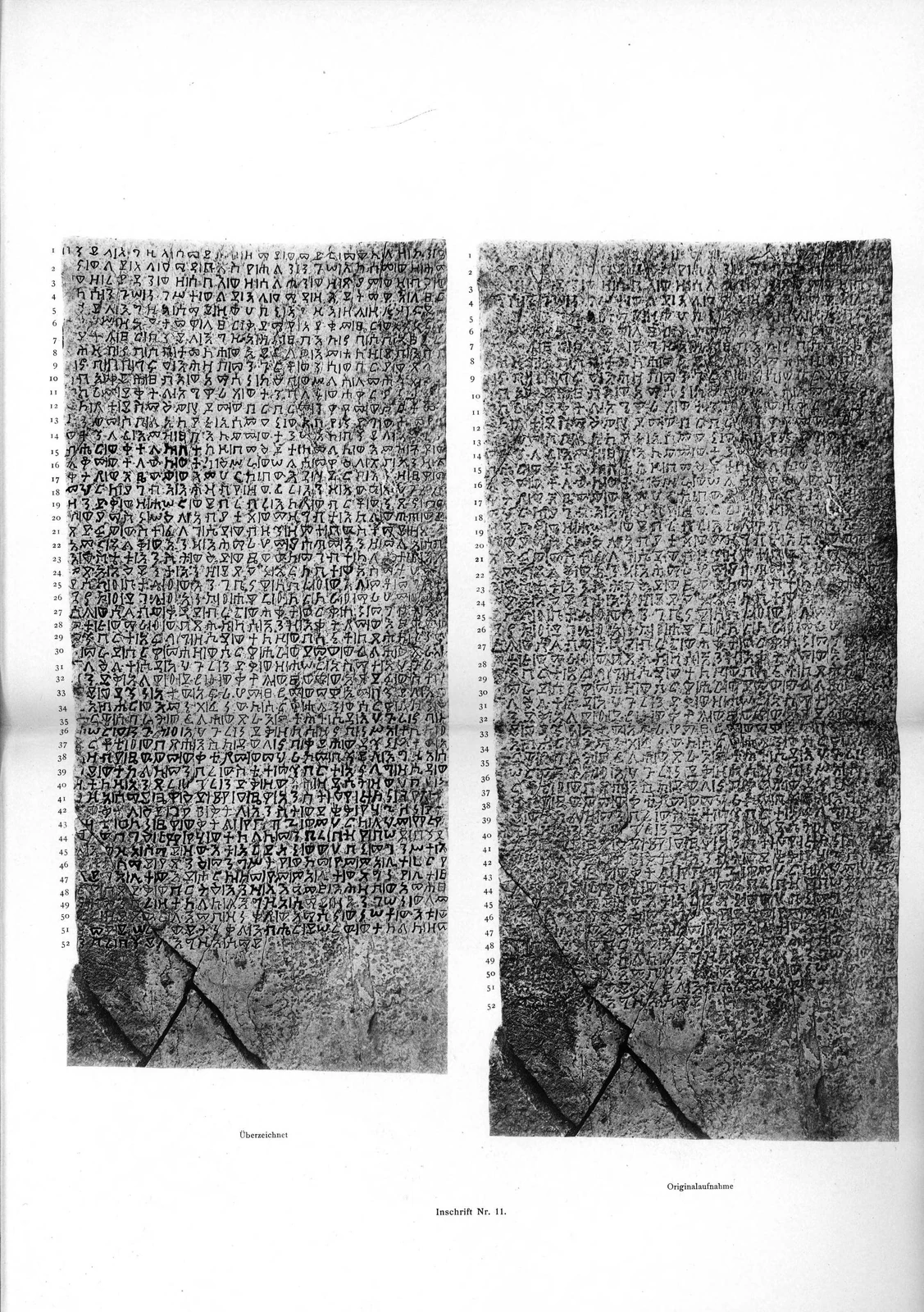
418 inscriptions in chronological order
No verified photograph or facsimile of this artifact has been retrieved.
RIÉ 123Pre-Aksumite period; precise date uncertainZeban Mororo
Preserved personal name. The name is well attested in South Arabia.
BRRM
No verified photograph or facsimile of this artifact has been retrieved.
RIÉ 124Pre-Aksumite period; precise date uncertainZeban Mororo
Published translation. The father’s name is local and of uncertain etymology.
GBRN bn WDGL[Yʾ]
No verified photograph or facsimile of this artifact has been retrieved.
RIÉ 125Pre-Aksumite period; precise date uncertainZeban Mororo
Preserved personal name. The name is discussed under RIÉ 90.
GBRN
No verified photograph or facsimile of this artifact has been retrieved.
RIÉ 126Pre-Aksumite period; precise date uncertainZeban Mororo
Preserved personal name. The name is discussed under RIÉ 90.
GBRN
No verified photograph or facsimile of this artifact has been retrieved.
RIÉ 127Pre-Aksumite period; precise date uncertainZeban Mororo
Preserved personal name. The etymology is uncertain; the same name occurs in RIÉ 95, 124, and 128.
WDGLY
No verified photograph or facsimile of this artifact has been retrieved.
RIÉ 128Pre-Aksumite period; precise date uncertainZeban Mororo
Published translation with restored patronymic. The father’s name is restored from RIÉ 95.
WDGLY bn Mʿ[DʾL]
No verified photograph or facsimile of this artifact has been retrieved.
RIÉ 129Pre-Aksumite period; precise date uncertainZeban Mororo
Published translation of a fragmentary text. The first name’s completion is uncertain and the remaining names are too fragmentary for etymological interpretation.
ʿSB[…] bn KR[…] / […]ʿNN
No verified photograph or facsimile of this artifact has been retrieved.
RIÉ 130Pre-Aksumite period; precise date uncertainZeban Mororo
Published translation. The same text occurs in RIÉ 89.
WKLʾL bn GʿSY
No verified photograph or facsimile of this artifact has been retrieved.
RIÉ 133Pre-Aksumite period; precise date uncertainZeban Mororo
Conditional interpretation of line 1. The reading depends on treating the initial aleph as a symbol; line 2 is uninterpreted.
YNK bn DMʿN (?)
No verified photograph or facsimile of this artifact has been retrieved.
RIÉ 134Pre-Aksumite period; precise date uncertainZeban Mororo
Single recognizable word. Only the kinship term bn is recognized.
bn
No verified photograph or facsimile of this artifact has been retrieved.
RIÉ 135Pre-Aksumite period; precise date uncertainZeban Mororo
Published translation. ʿWB is identified as a local divinity.
ʾNʿN bn WHBM / l-ḥyw ʿWB
No verified photograph or facsimile of this artifact has been retrieved.
RIÉ 136Pre-Aksumite period; precise date uncertainGobo Fentseh
Preserved personal name. The cited Arabic derivations, ‘bind’ or ‘gift,’ are proposals rather than a settled gloss.
SFDN
No verified photograph or facsimile of this artifact has been retrieved.
RIÉ 137Pre-Aksumite period; precise date uncertainGobo Fentseh
Alternative readings of a personal name. Both the reading and etymology are uncertain.
HNYR / RYNH
No verified photograph or facsimile of this artifact has been retrieved.
RIÉ 138Pre-Aksumite period; precise date uncertainGobo Fentseh
Possible personal-name fragment. The edition compares YLM elsewhere, but the surviving reading here is incomplete.
YL[M] (?)
No verified photograph or facsimile of this artifact has been retrieved.
RIÉ 139Pre-Aksumite period; precise date uncertainGobo Fentseh
Preserved but not fully certain personal name. The name is probably South Arabian in origin, but the reading and etymology are not fully certain.
ʾNʿTH
No verified photograph or facsimile of this artifact has been retrieved.
RIÉ 140Pre-Aksumite period; precise date uncertainGobo Fentseh
Preserved personal name. The same name appears in the preceding entry.
ʾNʿTH
No verified photograph or facsimile of this artifact has been retrieved.
RIÉ 141Pre-Aksumite period; precise date uncertainGobo Fentseh
Published translation. SFḤN is probably a local personal name despite its South Arabian ending.
SFḤN / ʾBʾBD
No verified photograph or facsimile of this artifact has been retrieved.
RIÉ 143Pre-Aksumite period; precise date uncertainGobo Fentseh
Published translation. Both names may be local. Several verbal glosses are discussed for MRḤK, including ‘he protected you’ and ‘he guided you,’ but none is certain.
TWMN bn MRḤK
No verified photograph or facsimile of this artifact has been retrieved.
RIÉ 144Pre-Aksumite period; precise date uncertainGobo Fentseh
Published translation of Text I. GRWHTN is considered a local name of uncertain etymology; Text II is too fragmentary to identify its name.
[…] bn GRWHTN
No verified photograph or facsimile of this artifact has been retrieved.
RIÉ 145Pre-Aksumite period; precise date uncertainGobo Fentseh
Preserved personal name. Several South Arabian and Ethiopian lexical comparisons are discussed without a definitive gloss.
DBY
No verified photograph or facsimile of this artifact has been retrieved.
RIÉ 146Pre-Aksumite period; precise date uncertainGobo Fentseh
Published translation. ḤBS is considered South Arabian in origin; WHBM also occurs in RIÉ 135.
ḤBS bn WHBM
No verified photograph or facsimile of this artifact has been retrieved.
RIÉ 147Pre-Aksumite period; precise date uncertainGobo Fentseh
Preserved personal name. The name is also attested in South Arabia.
ḤBM
No verified photograph or facsimile of this artifact has been retrieved.
RIÉ 149Pre-Aksumite period; precise date uncertainGobo Fentseh
Recognizable remains of a formula. Only remnants of the formula are preserved.
Native-script transcription is not available here.
No verified photograph or facsimile of this artifact has been retrieved.
RIÉ 150Pre-Aksumite period; precise date uncertainGobo Fentseh
Preserved personal name. The name probably derives from the same root as ḤQN in RIÉ 107.
ḤQM
Source register
RIÉ 1–443, with separately numbered text versions, supplements, and Arabian witnesses from the checked corpus and DASI. Dates and uncertain identifications follow the cited editions; missing texts, translations, and images are recorded below.
181–240 of 512 entries. Copies and language versions retain their own references.
Pre-Aksumite period; precise date uncertain · Saro · Early highland inscription; Old South Arabian alphabet
Preserved personal name and preferred vocalization. The internal ʿ may represent a vowel; the causative interpretation is preferred but remains an etymological proposal.
Pre-Aksumite period; precise date uncertain · Awalo · Early highland inscription; Old South Arabian alphabet
Published translation. Both names may be local; the proposed South Arabian connection of DʿMN remains conditional.
Pre-Aksumite period; precise date uncertain · provenance unknown · Early highland inscription; Old South Arabian alphabet
Published translation. The object appears much later than the other monumental Sabaic inscriptions from Ethiopia and may have originated in South Arabia.
Pre-Aksumite period; precise date uncertain · provenance unknown · Early highland inscription; Old South Arabian alphabet
Uninterpretable fragment. The text is too fragmentary to interpret.
Pre-Aksumite period; precise date uncertain · provenance unknown · Early highland inscription; Old South Arabian alphabet
Reported word in an unpublished inscription. The inscription remained unpublished; Littmann’s information says it contained dedications to ʿAstar and the word ʿrkn, but no text or translation is available for verification.
Early 1st millennium–5th/4th c. BCE (DASI Period A) · ʿAddi ʾAkawǝḥ / Addi Amiq, Wuqro area, Ethiopia; farmer-found in 1995, preserved at Abba Garima church · Early Sabaic (Ethiopia/Eritrea)
The surviving royal title explicitly names DʿMT.
Early 1st millennium–5th/4th c. BCE (DASI Period A) · Mäqabər Ga‘əwa, Wuqro, Ethiopia · Early Sabaic (Ethiopia/Eritrea)
Early highland dedication, private inscription, or fragment.
Early 1st millennium–5th/4th c. BCE (DASI Period A) · Mäqabər Ga‘əwa, Wuqro, Ethiopia · Early Sabaic (Ethiopia/Eritrea)
Early highland dedication, private inscription, or fragment.
Early 1st millennium–5th/4th c. BCE (DASI Period A) · Mäqabər Gaʿəwa, Wuqro area, Ethiopia; in situ in the temple of ʾlmqh, now Wuqro Museum · Early Sabaic (Ethiopia/Eritrea)
Royal name; DʿMT is not named in the surviving text.
Early 1st millennium–5th/4th c. BCE (DASI Period A) · Mäqabər Ga‘əwa, Wuqro, Ethiopia · Early Sabaic (Ethiopia/Eritrea)
Early highland dedication, private inscription, or fragment.
Early 1st millennium–5th/4th c. BCE (DASI Period A) · Mäqabər Ga‘əwa, Wuqro, Ethiopia · Early Sabaic (Ethiopia/Eritrea)
Early highland dedication, private inscription, or fragment.
First half of the 1st millennium BCE · Ṣ́ǝrḥan, Aḥfärom, Tǝgray, Ethiopia · Ethio-Sabaean
Altar dedication by Taʿattarat naming kings ḏū Lakkān and Lāmān.
Early 1st millennium BCE (no exact date verified from the unavailable primary chapter) · Grat Beʿal Gibri, Yeha, Tǝgray, Ethiopia · Old Sabaic
Dedication; the primary edition has not been retrieved.
Early 1st millennium BCE (DʿMT-period context; no narrower date stated by Weninger) · Parakleitos monastery, near the old Adigrat–Däbrä Damo road, Tǝgray, Ethiopia · Ethio-Sabaean (Old Sabaic ductus)
Fragmentary dedication.
Early 1st millennium BCE (DʿMT-period context; no narrower date stated by Weninger) · Abba Afṣe monastery exhibition room, Yeha, Tǝgray, Ethiopia · Ethio-Sabaean (Old Sabaic ductus)
Fragmentary dedication.
Early 1st millennium BCE (archaic ductus; no narrower date stated by Weninger) · Abba Afṣe monastery exhibition room, Yeha, Tǝgray, Ethiopia · Ethio-Sabaean (Old Sabaic ductus)
Short name inscription; interpretation uncertain.
About the 7th century BCE or earlier (palaeographic) · Found at Guldam near Yeha; kept at Färäs May, Tǝgray, Ethiopia when published · Ancient Sabaic
Ownership inscription on a bronze vessel.
Possibly 8th–7th century BCE; a later date cannot be excluded · ʿAddi Baʿekel, Daʾero area north of Feresmay, Tǝgray, Ethiopia · Local Semitic language close to Sabaic
Fragmentary text in a local Semitic language.
Early 1st millennium BCE context (joined date not independently verified) · Gobo Čela / Melazo area, Ethiopia (reported association with RIÉ 28) · Ethio-Sabaean
Reported join to RIÉ 28; the joined reading has not been verified.
fifth or sixth century CE · Gumalē, near Aksum, Ethiopia · Ancient Greek
Aksumite corpus supplement; date uncertain
Aksumite corpus; date uncertain · Provenance uncertain · Geʿez
Aksumite corpus supplement; date uncertain
Aksumite corpus; date uncertain · Provenance uncertain · Geʿez
Aksumite corpus supplement; date uncertain
early Aksumite; before 300 CE on palaeographic grounds · ʿAddi Gälämo · Geʿez
early Aksumite; before 300 CE on palaeographic grounds
Aksumite corpus; date uncertain · Zǝban Kutur · Geʿez
Aksumite corpus; individual date uncertain
Aksumite corpus; date uncertain · ʾAksum · Geʿez
Aksumite corpus; individual date uncertain
fourth-century Aksumite royal inscription · Provenance not resolved · Geʿez
fourth-century Aksumite royal inscription
fourth-century Aksumite royal inscription · Provenance not resolved · Geʿez
fourth-century Aksumite royal inscription
fourth century CE · Aksum, Ethiopia · Geʿez in South Arabian-derived script
fourth-century Aksumite royal inscription
fourth-century Aksumite royal inscription · It was recorded by Rüppel in in the 1830s; by the time of the Deutsche Aksum-Expedition 1906 it had been moved to the Aksum Cathedral. · Geʿez
fourth-century Aksumite royal inscription
early sixth century CE · Aksum, Ethiopia · Geʿez in South Arabian-derived script
early sixth century; reign of Kaleb
Aksumite corpus; date uncertain · Meʾelan Debbas · Geʿez
Aksumite corpus; individual date uncertain
seventh–twelfth/thirteenth century CE · Provenance not resolved · Geʿez
seventh to twelfth/thirteenth century
probably seventh–ninth century CE · ʾAksum · Geʿez
Probably post-Aksumite; retained for comparison.